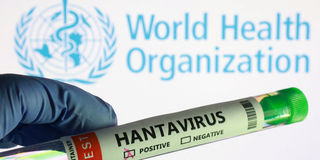
The outbreak of hantavirus on a ship sailing in the Atlantic Ocean has become the latest setback for cruise tourism, which had been recovering slowly since the end of the Covid-19 scourge.
But Kenyan health officials said they had already set in motion adequate protocols to arrest any suspected case on its territory.
This week, the World Health Organization (WHO) confirmed five new cases of hantavirus, bringing the total to eight, with three deaths since the outbreak first emerged on a cruise ship in the Atlantic early this month.
At a press briefing on Thursday, WHO Director-General Tedros Adhanom Ghebreyesus said three other cases are being treated as linked to the Andes strain of the virus.
WHO warned that more cases are possible in the deadly outbreak aboard the MV Hondius in the Atlantic, but assessed the overall risk to public health as low.
“While this is a serious incident, WHO assesses the public health risk as low,” said Mr Ghebreyesus.
The cases could deal a blow to cruise tourism, which has been recovering in East Africa in recent months.
In Kenya, officials said the incidents on the ship are “not a threat” to the country. The Ministry of Health and Port Health authorities at Moi and Jomo Kenyatta International Airports in Mombasa and Nairobi respectively are on high alert, with rigorous checks being conducted at entry points.
Over the past four months, Mombasa has recorded a rising number of cruise ship arrivals, marking a surge since the Covid-19 pandemic was scaled down as more countries vaccinated their populations. Vessels docking include MV Viking Sky , MS Crystal Symphony , MS SH Diana , MS Europa , MS Ambiance , Norwegian Dawn , and MV Crystal Symphony from Mahé, Seychelles.
“You are instructed to rigorously inspect all incoming cargo at all port entries, including Mombasa and other ports, to avert any spread of the hantavirus outbreak. Any suspicion should be communicated as per protocol,” read an internal communication to port health personnel from the Ministry of Health.
Bwanaheri Lali, operations manager at Inchcape Shipping Services, a clearing agent handling cruise ships in Mombasa, said he was confident the measures in place would ensure tourist safety.
“We expect a high cruise ship season from August and September. Health protocols are reviewed whenever there is such a threat, and we hope it will be contained in time. With the new reports of the virus, the sector faces a double hit, considering cruise costs have already risen due to the ongoing Iran–US–Israel conflict,” said Mr Lali.
Meanwhile, medical experts at the Kenya Medical Research Institute (KEMRI) are being equipped to sequence and identify hantavirus strains, according to sources within the agency.
Most cruise ships operate between the Atlantic and Indian Ocean circuits. The Indian Ocean circuit is a vibrant, growing destination, especially in East Africa and surrounding islands, with the 2024–2026 season seeing multiple luxury arrivals in Mombasa and other regional ports. These itineraries often connect the Seychelles, Zanzibar, Mombasa, and South Africa, catering to tourists seeking beach relaxation, cultural exploration, and wildlife safaris.
The chilling development, which has already claimed three lives, revives dark memories of the early days of the coronavirus pandemic. With global travel deeply interconnected, the possibility of the rare rodent-borne pathogen crossing borders has prompted immediate reviews of epidemiological surveillance at major East African entry points.
As of Wednesday, three of the ship’s 147 passengers had died since it sailed from Argentina to its current berth off Cabo Verde, according to WHO.
The statistics surrounding hantavirus infections paint a grim picture for global health security planners, demanding an uncompromising response from border control agencies worldwide.
International health reports indicate that a 70-year-old Dutch national was the first to succumb to the severe respiratory illness. His 69-year-old wife later died in a Johannesburg hospital after being medically evacuated. A third passenger perished aboard the vessel, while a British national remains in intensive care in South Africa.
Hantavirus Pulmonary Syndrome (HPS) carries a global mortality rate of up to 38 percent. The virus is primarily transmitted through aerosolised excrement of infected rodents.
There are 38 recognised species of hantavirus globally, with 24 known to cause severe disease in humans.
HPS mostly affects the lungs. Symptoms usually appear one to eight weeks after contact with an infected rodent. Early signs include fatigue, fever, and muscle aches, particularly in large muscle groups such as the thighs, hips, back, and shoulders.
About half of patients also experience headaches, dizziness, chills, and abdominal problems such as nausea, vomiting, diarrhoea, and pain, according to the WHO. Four to 10 days after the initial phase, late symptoms emerge, including coughing and shortness of breath. Patients may experience chest tightness as the lungs fill with fluid.