Matatu owners warn of fare hikes as fuel prices soar
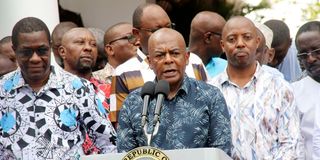
Matatu Owners Association (MOA) Chairperson Albert Karakacha (centre) spaeks to the media after President William Ruto met with transport stakeholders at the State House, Mombasa on May 22, 2026.

Matatu owners have warned that commuters will bear the cost of the latest fuel price increases, with the industry accusing President William Ruto of breaking a commitment to protect diesel prices following negotiations that ended the transport protests in May.
The Energy and Petroleum Regulatory Authority (EPRA) has increased the price of Super Petrol by Sh12.93 per litre, diesel by Sh9.90 and kerosene by Sh28.49 in its latest monthly review, with the new rates taking effect on October 15 and running until November 14.
In Nairobi, a litre of Super Petrol will retail at Sh226.96, diesel at Sh227.76 and kerosene at Sh219.87. In Mombasa, Super Petrol will cost Sh223.81 per litre, diesel Sh224.61 and kerosene Sh216.71.


The increases come as households and businesses continue to grapple with the cost of living, reviving concerns over transport fares and the cost of moving essential goods across the country. EPRA attributed the adjustments to higher international costs of imported petroleum products amid disruptions linked to the conflict in the Middle East.
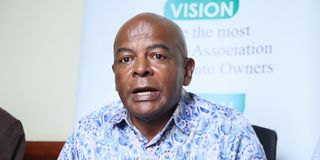
Albert Karakacha, National Chairman of the Matatu Owners Association (MOA), addresses the media at their Nairobi CBD offices, announcing a 25 percent increase in bus fares following the recent rise in fuel prices.
Matatu Owners Association president Albert Karakacha has condemned the review, accusing the government of reneging on assurances made during a meeting with transport sector stakeholders at State House, Mombasa, in May.
“In Mombasa with the President, he promised us that he would not increase diesel prices. We sat with him as stakeholders in the transport sector. He assured us that diesel, which is the backbone of public transport, would be protected from arbitrary increases. Today, diesel is up by Sh9.90 per litre. That promise has been broken. What are we supposed to tell our members?” he said.
Mr Karakacha wants President Ruto to honour what he describes as the Mombasa agreement and reverse the diesel increase, warning that operators cannot continue absorbing rising costs while fares remain unchanged.
“Mr President, we believed you in Mombasa. You gave us your word. You told us you understand that diesel is the fuel for the hustler, for the matatu, for the farmer, for the bus. We are asking you to keep that word. Please honour the Mombasa agreement. Withdraw this increase on diesel. Kenyans are suffering,” he said.
The dispute recalls the transport shutdown in May, when a sharp increase in fuel prices triggered a nationwide strike that paralysed commuting in Nairobi and disrupted transport in other towns.
The protests followed an earlier EPRA review that raised diesel prices by 23.5 per cent to Sh242.92 per litre for the May 15 to June 14 pricing period, while Super Petrol rose to Sh214.25 per litre in Nairobi.
The two-day strike on May 18 and 19 left commuters stranded and was accompanied by violent confrontations with police. Interior Cabinet Secretary Kipchumba Murkomen said four people had been killed and more than 30 injured.
Negotiations between transport operators and the government initially failed to produce a breakthrough, with industry representatives demanding a reduction of Sh46 per litre. The government proposed bridging the price difference between diesel and kerosene to discourage fuel adulteration, but operators said the offer did not adequately address their concerns.
The impasse prompted further engagement involving senior government officials and transport industry representatives, culminating in talks convened by President Ruto at State House in Mombasa.
On May 22, the President announced a further Sh10 reduction per litre of diesel for the June-July pricing cycle, on top of a reduction already made earlier that week. Transport industry leaders who stood alongside him during the televised announcement called off a planned resumption of the strike.
The President said the government had committed at least Sh28.1 billion towards reducing fuel prices between April and June, through stabilisation measures and tax relief. The intervention eased the immediate confrontation, but the latest increase has reopened questions about the durability of the relief and the government's commitments to transport operators.
Mr Karakacha said the latest adjustment would have consequences beyond the transport sector, pointing to the cumulative effect of fuel, insurance, tyres and spare parts on operators already struggling to service vehicle loans.
He said tyres that previously cost Sh25,000 now sell for between Sh38,000 and Sh45,000, while comprehensive insurance premiums have risen from about Sh180,000 to Sh250,000.
“All the other promises on electric vehicles to remove duty have not been done. We were told that duty on electric vehicles, batteries and charging infrastructure would be removed to encourage transition and reduce dependence on fossil fuels. Nothing has happened. Duty is still there, vehicles are expensive, and now you increase diesel. Where do you want us to go?” he asked.
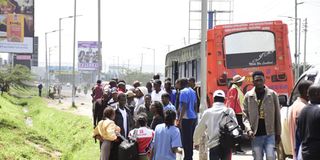
A super metro bus alights to pickup commuters along Namanga road in Kitengela after the suspension of the Matatu strike for one week.
Mr Karakacha warned that the latest fuel price increases would force matatu operators to raise fares with "immediate effect" saying they could no longer absorb rising operational costs without making losses.
He said commuters should brace for higher fares as operators move to pass on the additional cost of diesel, which powers a large share of public service vehicles.
“We are businessmen, we will pass it on to the consumer. We cannot be the ones cushioning the expenses while making losses. We are making the common Mwananchi cushion the expenses and that is not right, but we have been pushed to the wall,” he said.
Read: Brace for high pump prices: Kenya’s shrinking subsidy budget forces 90-day tax relief extension
The warning raises the prospect of higher commuting costs for workers, students and other passengers already struggling with the cost of living. However, Mr Karakacha did not specify the amount by which fares would increase, saying the association would convene an urgent meeting of its members to agree on a unified position following the EPRA review.
He also raised concerns about parents facing transport expenses as schools close, saying families that had already budgeted for travel could be forced to find additional money.
The association is calling for the government to consider measures to shield the sector and consumers from fuel price volatility, including a return to fuel subsidies or the establishment of a stabilisation fund. It also wants the government to review taxes on petroleum products.
Mr Karakacha said the association would convene an urgent meeting to agree on its response to the latest review.
"But one thing is clear, we cannot absorb this increase. The consumer will have to bear the cost. We are sorry to Kenyans, but we are also victims,” he said.
Follow our WhatsApp channel for breaking news updates and more stories like this.