Members of Parliament have drastically cut funding for the repatriation of Kenyans stranded in conflict zones in the Middle East and Russia, reducing the allocation from Sh400 million to Sh26.77 million amid escalating global tensions.
Instead, the committee approved a significantly lower figure, increasing the foreign travel budget under the Diaspora Welfare and Rights sub-programme by Sh22.77 million to cater for urgent repatriation needs.
“The proposed changes in the Supplementary Estimates I for the 2025/26 financial year, comprising an increase of Sh14 million in recurrent expenditure, be approved with amendments, including an increase of Sh22.77 million to support urgent repatriation needs,” committee chairperson Nelson Koech said in a report.
The report was tabled before the Budget and Appropriations Committee, chaired by Alego Usonga MP Samuel Atandi, which is currently reviewing the Sh287.4 billion supplementary budget.
The State Department for Diaspora Affairs had appealed for Sh400 million to facilitate the evacuation of Kenyans caught up in the escalating conflict involving Israel, the United States and Iran, as well as those affected by the prolonged Russia-Ukraine war.
Appearing before the committee last week, Ambassador Hellen Gichuhi, representing Diaspora Affairs Principal Secretary Roslyn Njogu, urged MPs to approve the funding, warning of growing risks for Kenyans abroad.
She revealed that 15 Kenyans, among them five children and two students, had already been evacuated from Iran. The group included workers who had been based in the country.
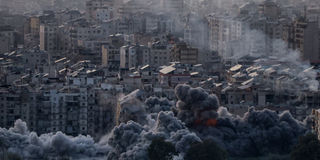
A Red Crescent rescue team works next to a building that was damaged by a strike, amid the U.S.-Israeli conflict with Iran, in Tehran, Iran, March 17, 2026.
Photo credit: REUTERS/Alaa Al-Marjani/File Photo
“We appeal to the committee to consider allocating Sh400 million for repatriation following the emerging situation in the Middle East and Russia,” said Ambassador Gichuhi.
She noted that more than 500,000 Kenyans work in the Middle East many of whom are now seeking evacuation as tensions escalate.
The Israel-US–Iran conflict, which began on February 28, 2026, has intensified, with Israeli airstrikes targeting Iranian gas and oil facilities, while Iran has retaliated with attacks on gas plants in Qatar and other US-allied countries.
Ambassador Gichuhi said the requested funds would primarily facilitate evacuation logistics rather than fully cover return air tickets.
“We have an evacuation policy that prioritises children, the elderly and other vulnerable groups. Many Kenyans are still adopting a wait-and-see approach as we continue to monitor the situation,” she said.
She added that no Kenyan fatalities had been reported so far, crediting diplomatic missions for providing guidance and support to citizens in affected regions.
On the Russia-Ukraine war, she said the government was engaged in talks with Russia over the reported conscription of Kenyans into the conflict, adding that assurances had been given to halt the practice.
Mr Koech, who was part of a delegation to Russia led by Prime Cabinet Secretary and Foreign Affairs Cabinet Secretary Musalia Mudavadi, said not all reports from the region were negative.
“We met Kenyans living in Moscow who shared positive experiences about working and living in Russia,” he said.
“It is not just the negative stories about those fighting in Ukraine. Many Kenyans are gainfully employed, and we will be tabling a report on the situation.”
Despite the growing risks abroad, the sharp reduction in evacuation funding raises questions about the government’s preparedness to respond to a potential escalation of crises affecting Kenyans overseas.