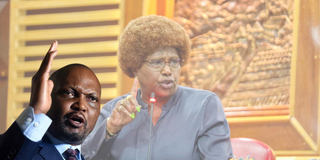
Naivasha MP Jayne Kihara has filed a lawsuit against former Cabinet Secretary Moses Kuria, accusing him of orchestrating a damaging online campaign that she claims destroyed her reputation.
The suit, filed at the High Court in Kiambu, illustrates how a single evening on social media can trigger widespread reputational harm, amplified by digital platform algorithms, online influencers and digital news platforms.
According to court documents, the conflict stems from events on January 3, 2026, following a funeral service in Kigumo, Murang’a, attended by several senior politicians, including former Deputy President Rigathi Gachagua.
Naivasha MP Jayne Kihara in Parliament.
Photo credit: Dennis Onsongo | Nation Media Group
Ms Kihara alleges that what followed was not a mere political exchange but a deliberate effort to demean, intimidate, and silence her through statements posted on Mr Kuria’s X (formerly Twitter) account.
The third-term legislator asserts that she had maintained an “unblemished reputation” before Mr Kuria’s posts, which she describes as a calculated attack on her character.
In her affidavit, Ms Kihara states that the online publications were “false, malicious, and baseless,” targeting “the very core of my dignity as a widow, a mother, and a public leader.”
The case extends beyond the original posts, examining how quickly the remarks spread from Mr Kuria’s personal account to digital news outlets.
Screenshots attached to the court filings show several news online platforms republishing the claims, some presenting them as factual news.
Ms Kihara contends that this secondary circulation worsened the damage, lending false credibility to the allegations and exposing her to “nationwide ridicule, contempt, and public condemnation.”
She describes the personal toll, recalling frantic calls from constituents, colleagues and family members seeking clarification.
“I was utterly shocked, devastated, and deeply traumatised,” she told the court, expressing fear for her safety due to what she perceived as threatening language.
Beyond personal harm, the lawsuit raises broader questions about accountability in Kenya’s digital political landscape.
Mr Kuria, a seasoned politician with a large verified following online, is accused of knowingly making statements that would be widely disseminated and believed. The suit argues that his influence made the resulting harm both foreseeable and severe.
The Kenya Women Parliamentary Association publicly condemned the online attacks at the time, describing them as “violent, misogynistic, and dehumanising” and warning that such rhetoric normalises abuse against women leaders. The statement is part of her documentary evidence.
Ms Kihara’s lawyers say demands for an apology and retraction were ignored, prompting legal action.
“Despite formal notice, the defendant failed, refused, or neglected to retract the statements or apologise, demonstrating continued malice and disregard for my rights,” she states in her affidavit.
She seeks a permanent injunction against further publications, a court-ordered public apology on the same platform, and aggravated and exemplary damages for what she terms reckless and malicious conduct.
Former Cabinet Secretary Moses Kuria.
Photo credit: File | Nation Media Group
The case may set a precedent on how Kenyan courts balance free expression, political speech, and the growing influence of social media.
It also highlights the role of digital publishers who amplify inflammatory posts without verification.
The reputational dispute underscores a harsh reality of modern politics: in an era of instant sharing, reputations can be made or ruined within minutes.