Blow to Opposition as High Court upholds legality of national tallying centre
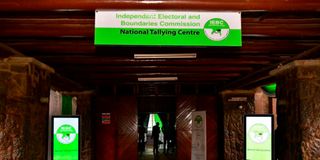
Bomas of Kenya, which was the Independent Electoral and Boundaries Commission's national tallying centre in the 2022 General Election.

The opposition has suffered a setback after the High Court upheld the legality of the national tallying and verification of presidential election results, rejecting a challenge that sought to limit the electoral commission to merely collating results declared at constituency level.
Justice Gregory Mutai ruled that the Independent Electoral and Boundaries Commission (IEBC) is constitutionally required to tally and verify presidential results at the national level to determine whether a candidate has met the threshold for election as President.
The ruling preserves the National Tallying Centre and the IEBC's collective role in verifying presidential results, although the court placed strict limits on what the commission can do with figures declared at constituency level. The commission may aggregate and verify the results but cannot alter, cancel or vary certified constituency figures, the judge ruled.


The decision came in two consolidated petitions filed in November 2025 by activist Okiya Omtatah Okoiti and opposition leaders Kalonzo Musyoka, Rigathi Gachagua and Fred Matiang'i, who challenged the legality of the National Tallying Centre and the further verification of presidential results.
The petitioners had argued that presidential results declared and certified by constituency returning officers are final and should not be re-tallied, re-verified or subjected to alteration at higher levels.
The heart of the case was Section 39 of the Elections Act (2011), which empowers the electoral commission to re-tally and verify the presidential election results at the National Tallying Centre. The case also concerned Regulation 83(2) of the Elections (General) Regulations, 2012, which requires the IEBC to tally and verify presidential election results and confirm that the candidate declared elected has met the constitutional threshold.
The petitioners argued that these procedures were unlawful and "create redundancy and open avenues for manipulation". They contended that the National Tallying Centre introduces unnecessary delays in the processing of presidential election results and risks manipulation, pointing to past election disputes in 2013, 2017 and 2022 as evidence of systemic flaws.
Omtatah: It invites chaos
The current system invites chaos," asserted Mr Omtatah.
"If results are final at the constituency, why does IEBC need to re-tally them?" he asked. He claimed that this process of re-tallying presidential results undermines the constitutional principle of finality at the constituency level.
"The Constitution is clear and it envisions a straightforward process where results announced by constituency returning officers are final," Omtatah argued in court documents. "The votes must be counted, tallied, and declared at the constituency level, and the IEBC Chairperson's role under Article 138(10) is purely ministerial—to collate those results, not to re-verify or alter them."
However, the court found that the Constitution requires the IEBC collectively to tally and verify the already final constituency results at the national level to determine whether the presidential threshold has been met.
"The tally and verify function is accordingly, in the view of this court, not an unconstitutional intrusion upon constituency finality. It is a constitutionally mandated mechanism by which 290 final discrete constituency results are lawfully aggregated into a single national outcome and tested against the requisite standard," said Justice Mutai, adding that the constitutional questions concerning constituency finality had already been settled by previous binding court decisions.
Mr Omtatah's petition specifically challenged the establishment and operation of the National Tallying Centre, seeking declarations that the IEBC chairperson's role is limited to collating constituency results and declaring the winner once the national threshold is established.
Justice Mutai rejected the central challenge to Section 39 and Regulation 83(2). He said Article 138(3)(c) of the Constitution requires the IEBC to tally and verify the presidential count after polling-station counting, while Article 138(10) gives the chairperson the separate duty of declaring the result. He held that Section 39(1C)(b) is consistent with Article 138(3)(c), while Regulation 83(2) is constitutional only when confirmation means checking whether the aggregated figures meet the presidential threshold.
That threshold requires a candidate to receive more than half of all votes cast nationally and at least 25 percent of votes cast in more than half the counties. The court said only a national exercise can establish compliance with that requirement. The judgment reiterated earlier case law declaring that constituency-level results are final and may only be challenged before an election court.
Court: IEBC cannot alter result
The court ordered that "neither the Commission nor its chairperson nor any returning officer has the power to alter, cancel, or otherwise vary those certified figures" at county or national tallying centres, except under a court order. It further ruled that the tally-and-verify mandate belongs to the IEBC collectively, rather than the chairperson alone. At national level, certified Forms 34A, 34B or their successors displayed at constituency centres must be the reference point.
"No other document, database, entry or electronically transmitted figure may be treated superior to it," the judge said. He also held that where electronic transmission conflicts with the physical result, the accurate record declared at the polling station prevails.
The Elections (Amendment) (No. 2) Bill, 2024, already before Parliament, proposes changes to Section 39, including electronic transmission, physical delivery, tallying, verification and publication of polling forms. Parliament told the court that an ongoing legislative process addressed some petitioners' concerns.
The court declined to order the proposed public-notice-board publication system, finding that the petitioners had not shown that online publication of results had actually denied any citizen or class of citizens access to election results. Justice Mutai said the claim was not sufficiently particularised or linked to an actual or imminent violation of the right to access information under Article 35. He noted that electronic publication was ordinarily an addition to, rather than a substitute for, publication and display of results at constituency tallying centres, as already required by the Elections Act.
The court also rejected the proposed ballot-reconciliation framework and the demand for specific timelines requiring polling stations to be gazetted at least six months before an election and the final voters register published at least three months before polling. Justice Mutai held that these proposals sought specific administrative and procedural safeguards that fell within the IEBC's technical mandate and Parliament's legislative role, noting that the Elections (Amendment) Bill No. 2 of 2024 was already before Parliament and had undergone public participation on related concerns. The court said the petitioners could pursue the issues through Parliament, or return to court if the legislative process stalled unreasonably or failed to address their concerns.
On alleged discrimination contrary to Article 27, Justice Mutai said presidential results receive different treatment because the presidency has a unique national threshold that cannot be tested at constituency level. The petitioners had argued that subjecting presidential results alone to national-level reverification imposed a different degree of finality on presidential voters and candidates, amounting to arbitrary differentiation prohibited by Article 27. The court, however, found a clear constitutional distinction between the presidential election and other electoral results, and held that the different treatment did not amount to unconstitutional discrimination.
The court recommended that lawmakers and political actors apply John Rawls's "veil of ignorance" when designing election rules, so that rules are framed without knowing who may benefit from them.
It also directed that the construction adopted in the judgment — particularly on documentary primacy and collective decision-making — be considered when Parliament finalises electoral legislation ahead of 2027.
Follow our WhatsApp channel for breaking news updates and more stories like this.