The National Cohesion and Integration Commission (NCIC) has expressed concern over escalating political tensions, rising hate speech, and recent inter-community conflicts, including those witnessed in Kitui.
Established under the National Cohesion and Integration Act of 2008 to reduce inter-ethnic conflict, promote national identity, and foster reconciliation following the 2007 post-election violence, the commission has warned MPs that the country is likely to witness intense political rivalry as it approaches the 2027 General Election.
Of greater concern to the commission is the lack of adequate financial resources to begin early monitoring and response to conflict hotspots across the country in order to prevent communities from turning against one another.
In its submission to the National Assembly Committee on Administration and Internal Security on the 2026/2027 budget estimates, the commission said it had only been allocated Sh711 million against a requirement of Sh1.5 billion.
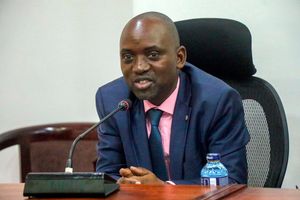
NCIC Chief Executive Officer and Commission Secretary Daniel Mutegi said the allocated funds are insufficient to sustain the commission’s operations ahead of the election period.
“We are expecting high-tech political activities across the country, which require significant financing to support early warning and response mechanisms, hotspot mapping, and sustained community dialogue,” Dr Mutegi told the committee.
National Cohesion and Integration Commission Chief Executive Officer Dr Daniel Mutegi Giti before the Senate Committee on National Cohesion, Equal Opportunity and Regional Integration on November 3, 2025.
Photo credit: Dennis Onsongo | Nation Media Group
Dr Mutegi further told the committee, chaired by Narok West MP Gabriel Tongoyo, that most hate speech is now spread through social media platforms, making it necessary for the commission to acquire modern monitoring tools.
He regretted that the commission may not effectively curb online hate speech without such technology.
“Without proper tools to sustain convictions in a court of law, we may not be able to deter the crime of social media hate speech,” Dr Mutegi told lawmakers.
Hate speech refers to speech, publications, or actions that incite hatred, violence, or discrimination against a person or group based on ethnicity, race, religion, or nationality. NCIC monitors media, political speeches, and online platforms to address such cases.
According to Section 96 of the Penal Code, individuals found guilty of propagating hate speech are liable to imprisonment for a term not exceeding five years.
However, the lack of clarity on how technological evidence can be admitted in court continues to pose challenges for prosecutors pursuing hate speech cases.
Some past cases have been dropped due to insufficient evidence, while others collapsed because the prosecution failed to produce witnesses who heard the accused make inflammatory remarks, especially in cases involving videos sourced from the internet.
Members of the committee, however, questioned the commission’s effectiveness in combating hate speech.
Lawmakers accused NCIC of lethargy, saying that despite seeking increased funding every financial year, its impact remains questionable.
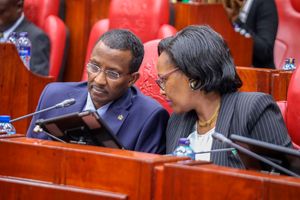
Committee vice-chairperson Dido Raso (Saku) accused the commission of failing to act firmly against inflammatory political statements and online abuse directed at national leaders.
“We are heading towards a General Election, and if NCIC is not going to up its game, this committee is unlikely to allocate it funds because it is not doing anything in the public sphere,” Mr Raso said.
Mr Raso expressed concern over growing impunity in online political discourse, noting that people were openly insulting the President without consequences.
“Kenyans are abusing the President and nobody follows them up; no file is opened. Then tomorrow something bigger is going to happen,” Mr Raso said.
“We expect funds to be utilised effectively for the protection of Kenyans, service delivery, and the promotion of equity so that citizens can go about their business without fear,” he added.
“We do not want a lot of English. We want to know how this country can be saved from the problems we are seeing,” Mr Sigei said.
Members of the youth-led ‘Niko Kadi’ initiative march through the streets of Kisumu City on March 26.
Photo credit: Alex Odhiambo| Nation Media Group
The MP also faulted the commission for previously failing to appear before the committee despite being summoned, raising concerns over accountability.
However, Interior Principal Secretary Raymond Omollo told the committee that NCIC has faced operational challenges, partly due to the absence of a fully constituted commission.
“There has been a serious challenge, part of it being the lack of full composition of the commission,” he said.
Under Article 27 of the Constitution, the commission is mandated to promote peaceful co-existence, tolerance, respect, understanding, and acceptance of diversity in all aspects of life, while encouraging appreciation among ethnic communities of each other’s social, economic, cultural, and political life.
The commission is also mandated to eliminate all forms of ethnic or racial discrimination and discourage individuals, institutions, political parties, and associations from advocating or promoting discrimination, while promoting tolerance and national cohesion.
Further, the commission is tasked with developing policies aimed at promoting national values and principles of governance.
The recent Tuesday matatu strike, which turned violent in parts of the country as goons took advantage to loot businesses, torch premises, and burn private vehicles, has also emerged as a worrying trend as the country heads towards the elections.
Rioters in Kiratina, Nakuru County, take to their heels after anti-riot police engage them in running battles. They blocked the Nakuru-Nairobi Highway as the matatu strike entered day two.
Photo credit: Boniface Mwangi| Nation Media Group
The commission is keen to avoid a repeat of the 2007/2008 post-election violence, which left more than 1,300 people dead and displaced thousands.
The violence erupted after the Electoral Commission declared Mwai Kibaki the winner following a prolonged counting and tallying process for the presidential election results.
Kibaki was sworn in amid opposition protests and widespread concerns over the credibility of the tallying process.
Individuals and groups allied to both PNU and ODM, as well as members of the security services, were accused of committing crimes against humanity. The International Criminal Court (ICC) indicted six individuals, including former President Uhuru Kenyatta, President William Ruto, and four others.
The cases against Mr Ruto and Mr Kenyatta were later terminated after the court cited witness interference.