Former Deputy President Rigathi Gachagua is pursuing an ambitious political experiment that could reshape the opposition’s battle for State House in 2027.
But the very strategy designed to make him indispensable to the anti-government coalition is exposing him to fresh challenges over leadership, regional interests and the question of who controls the Mt Kenya vote.
From his Wamunyoro base, the Democracy for the Citizens Party (DCP) leader is selling a message of consultation, partnership and opposition unity.
Behind the public diplomacy, however, is a more combative blueprint, dubbed Operation Okoa Kenya, built around consolidating regional voting blocs, restricting President William Ruto’s political options and forcing opposition players to negotiate from positions of strength.
At the centre of the plan is an alliance bringing together his DCP, Kalonzo Musyoka’s Wiper and Edwin Sifuna’s Linda Mwananchi Movement, with Mt Kenya, Ukambani, Western and Nyanza forming the proposed electoral backbone.
Mr Gachagua told the Sunday Nation that the arrangement would begin with geographical consolidation, with Wiper and DCP helping Mr Sifuna secure the traditional Raila Odinga strongholds of Western, Nyanza and Coast before joining forces with Mt Kenya and Eastern.
“It starts with geography. The understanding is that both DCP and Wiper will help Edwin Sifuna's Linda Mwananchi Movement lock the traditional Raila Odinga strongholds, especially Western and Nyanza. Once Sifuna secures a majority of that block, we will partner with Mt Kenya and Eastern region to form prime alliance,” he said.
The three formations, he added, could subsequently consolidate Nairobi and Coast, creating what his allies believe would be a formidable national coalition.
Linda Mwananchi Movement Party leader Edwin Sifuna (second right) with DCP leader Rigathi Gachagua (right), Wiper Party leader Kalonzo Musyoka (second left), LMM deputy party leader Faith Odhiambo at the party headquarters in Nairobi on October 30, 2026.
Photo credit: Wilfred Nyangaresi | Nation Media Group
DCP Secretary-General-designate John Methu says the objective is to create a political wall that makes it difficult for Kenya Kwanza to campaign freely in the targeted regions.
The strategy goes beyond presidential negotiations. It involves identifying and endorsing strong candidates early, even where they may not immediately win, to establish political resistance against government allies.
“That wall is to be enforced on the ground. The plan calls for the early unveiling and endorsement of strong aspirants, not necessarily to win immediately, but to create sustained hostility against Ruto loyalists,” Mr Methu said.
The approach is already being tested in Mt Kenya, where DCP has sought to elevate its candidates and challenge the political influence of government loyalists.
In Western, Mr Gachagua wants allies of the President, including Farouk Kibet, Francis Atwoli, Musalia Mudavadi and Moses Wetang’ula, to encounter organised resistance.
Trans Nzoia Governor George Natembeya, who heads Mr Sifuna's presidential campaigns, has taken up the assignment, declaring that the opposition intends to prevent President Ruto from inheriting Mr Odinga's traditional voting blocs.
“Mr Gachagua has the main weapon that is Mt Kenya votes that made Dr Ruto the president in 2022. For President Ruto to recover the loss in Mt Kenya, he is plotting to inherit Mr Odinga’s voting blocs. Mr Sifuna and Mr Musyoka are the ones to thwart him. We want to restrict President Ruto to about 30 percent of the votes he garnered in 2022,” he said.
But this is where Mr Gachagua's gamble becomes complicated. His ambition to organise the opposition around regional bargaining power rests on his ability to deliver Mt Kenya, yet the region is increasingly becoming a battleground of competing political interests.
His own political future remains uncertain following the High Court's refusal to quash the Senate resolution that removed him from office. He has an appeal to pursue, but the legal cloud complicates his attempt to position himself as the region's undisputed presidential choice.
Political analyst Geoffrey Mboya argues that the challenge facing Mr Gachagua is no longer simply whether he can contest the presidency.
“It is about whom he can support, how he can negotiate a place for the region in an opposition government and whether he can prevent emerging rivals from taking over the influence he has built in the mountain,” he says.
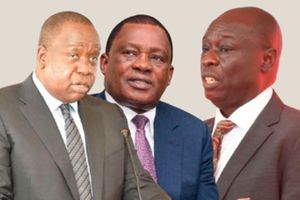
The dilemma is particularly evident in the growing competition from People’s Party of Kenya leader Ndindi Nyoro, who has teamed up with People’s Liberation Party leader Martha Karua and Jubilee chief Fred Matiang’i, as well as other Mt Kenya presidential hopefuls Justin Muturi (Democratic Party) and Jimi Wanjigi (Safina).
Mr Nyoro's political resurgence through his People's Party of Kenya and joint engagements with Ms Karua and Dr Matiang'i is creating an alternative centre of opposition mobilisation and threatening to tear apart the Mt Kenya region.
People's Party Leader and Kiharu MP Ndindi Nyoro address residents of Subukia in Nakuru County on September 26, 2026.
Photo credit: Boniface Mwangi | Nation
This, coupled with increased mobilisation activities by President Ruto’s Deputy, Prof Kithure Kindiki, in the region, is posing a huge threat to Mr Gachagua’s quest for control.
Mr Nyoro, Ms Karua and Dr Matiang’i’s latest joint rallies, pundits say, underscore the possibility that Mt Kenya's opposition politics could develop beyond Mr Gachagua's DCP.
Jubilee Party leader Fred Matiang’i addresses residents of Kware in Ongata Rongai, Kajiado County on October 25, 2026.
Photo credit: Pool
Dr Matiang'i has also resisted the former Deputy President's emphasis on regional voting blocs, warning against ethnic mobilisation.
“The leadership and future of our country is not to be decided on ethnic balkanisation,” he has said, insisting that the opposition's presidential candidate should emerge through the voters' choice.
Ms Karua, meanwhile, brings her own political credentials, having contested alongside Mr Odinga in 2022. Her presence in the emerging grouping complicates any assumption that Mt Kenya's opposition leadership can be reduced to a contest between Mr Gachagua and Prof Kindiki.
The former Deputy President also faces resistance from Mr Muturi and Mr Munya, who have rejected demands for smaller Mt Kenya parties to dissolve into DCP, arguing that cooperation should not mean surrendering their political identities.
Mr Munya has questioned why coalition negotiations should be conducted at Mr Gachagua's Wamunyoro home instead of on a neutral platform.
The resistance exposes a fundamental weakness in Mr Gachagua's strategy: he wants to be the principal organiser of the opposition's Mt Kenya vote, but some of the politicians whose support he needs are unwilling to accept his leadership.
Deputy President Kindiki is meanwhile exploiting the uncertainty to defend the region's place within Kenya Kwanza.
The government argues that Mt Kenya already has a senior representative in the country's leadership and risks surrendering that influence by joining an opposition coalition without a regional presidential principal.
Prof Kindiki recently warned that the region could be relegated to the bottom of the opposition hierarchy.
“After William Ruto, we are next. In the other team, we are number 20; it will take 200 years before our turn comes,” he said.
Deputy President Kithure Kindiki during a public engagement rally at Kigio Shopping Center after inspecting construction works on the Jogoo Kimakia-Kigio-Kirwara road in Gatanga Constituency, Murang'a County on October 08, 2026.
Photo credit: DPCS
Analysts say the warning speaks to a central question in Mr Gachagua's calculations: can he persuade Mt Kenya voters to abandon an administration in which one of their own occupies the second-highest office for an opposition arrangement whose leadership and power-sharing formula remain unsettled?
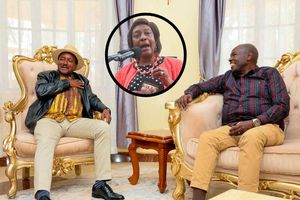
The uncertainty has also informed his outreach to former Kitui Governor Charity Ngilu, whose political influence could help him challenge Wiper leader Kalonzo Musyoka's dominance in Lower Eastern should the former Vice-President refuse to play ball.
Mr Gachagua has invoked the 2002 National Rainbow Coalition model, in which Mwai Kibaki brought together leaders including the late Michael Kijana Wamalwa, Mr Odinga and Ms Ngilu to defeat Kanu.
His proposed Coalition of the Mountains seeks to connect Mt Kenya with Western and other regions, while the Ngilu engagement has been interpreted by insiders as an attempt to widen his influence in Ukambani.
One official familiar with the discussions said the strategy was intended to use the voting strength of Mt Kenya and Western to build a national coalition and potentially “wrest Lower Eastern through Ngilu” if Mr Musyoka refused to compromise.
But the move has unsettled some Wiper allies. Kitui Senator Enoch Wambua accused Ms Ngilu of undermining Mr Musyoka's presidential ambitions, describing the Wamunyoro meeting as an attempt to derail his bid.
Makueni Senator Dan Maanzo, however, dismissed suggestions that the engagement was intended to weaken Wiper, arguing that the opposition could not afford to exclude any party or presidential aspirant.
The contradiction is apparent. Mr Gachagua needs Mr Musyoka's political machinery and regional support to construct a winning coalition, but is simultaneously cultivating alternative power centres that could dilute the Wiper leader's influence.
Mr Musyoka, however, appears to downplay this, noting that he appreciates Mr Gachagua's willingness to support whoever secures the joint opposition ticket.
“What particularly makes me happy about Gachagua is his commitment to the liberation cause where he has promised to take over campaigns for the one who will be given the joint presidential ticket if not him,” he said.
Mr Gachagua is reportedly proposing that former President Uhuru Kenyatta remain a respected retired statesman who can bless the opposition project from afar but should not participate directly in negotiations over the 2027 ticket.
His allies also want to abandon the title of “principals”, which they believe has generated unnecessary competition, in favour of “consolidators”, with Mr Gachagua, Mr Sifuna and Mr Musyoka occupying the apex.
Former Deputy President Rigathi Gachagua welcomes Democratic Action Party of Kenya (DAP-K) leader Eugene Wamalwa, who brought a bull to Gachagua's Wamunyoro residence in Nyeri County.
Photo credit: Pool
Mt Kenya DCP aspirant caucus coordinator Joseph Waweru says Mr Gachagua wants the final coalition bargain delayed until after party primaries in March 2027, when the strength of each formation can be assessed through the candidates it has secured.
However, the militant approach has attracted criticism from within the opposition and the government.
Embakasi East MP Babu Owino, a member of Mr Sifuna’s camp, has raised concerns over the delay, noting that any move to declare the opposition presidential candidate beyond December this year could be detrimental to their cause.
Laikipia East MP Mwangi Kiunjuri also warned Mr Sifuna and Mr Musyoka against entering an arrangement in which Mr Gachagua could eventually subordinate their ambitions to his interests.
Political scientist John Okumu believes that if the proposed alliance succeeds in bringing Mt Kenya together with Mr Sifuna and Mr Musyoka, it could present a serious challenge to the incumbent.
Other analysts, however, opine that the former Deputy President faces a difficult balancing act: he must demonstrate that he can deliver Mt Kenya without alienating other regional leaders, build a national coalition without appearing to dictate its leadership and negotiate a meaningful place for the mountain without creating rivals who could displace him.
“For a politician whose greatest bargaining asset is the voting power of Mt Kenya, the danger is that in trying to control the opposition's electoral arithmetic, he could end up losing control of the very constituency on which his political future depends,” Advocate Chris Omore observes.