When Deputy President Kithure Kindiki joined United Democratic Alliance (UDA) candidates on the campaign trail ahead of the February 26 by-elections, he framed the contests as a test of organisation rather than noise.
“We are not here for rallies alone. We are here to work with the people, listen to them and build structures that will last beyond this election,” Prof Kindiki told supporters at a roadside stop in Embu. “UDA is a party of systems. We plan, we mobilise and we deliver.”
Those remarks captured the method behind UDA’s back-to-back by-election wins in November 2025 and February 2026 — victories party insiders attribute largely to two of President William Ruto’s closest aides: Farouk Kibet and Dennis Itumbi.
While public perception in parts of Mt Kenya and Western Kenya has suggested that the ruling party is under pressure, the mini-polls told a different story.
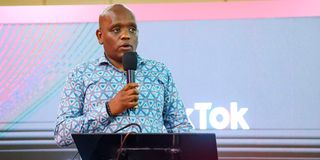
Dennis Itumbi takes oath of office as a CAS on March 23, 2023.
Photo credit: PCS
Behind the scenes, Mr Kibet and Mr Itumbi ran what insiders describe as an intense, village-by-village grassroots machine that delivered victories where it mattered — at the ballot.
According to UDA sources, the two aides practically relocated to the ground months before voters cast their ballots.
“They both literally camped in villages for two months ahead of the November poll,” a party insider said. “And for the February 26 by-elections, they were on the ground for about a month. This was not remote control politics.”
Their strategy was simple but demanding: design campaign plans with local leaders, negotiate with rival aspirants, attend funerals and church services, storm markets, knock on doors and take the microphone at every opportunity.
Mr Kibet focused heavily on Western Kenya, starting with the Malava parliamentary by-election last year before turning to Kabras Ward in February.
Fluent in Luhya, he addressed gatherings in the local language, projecting himself as accessible and hands-on.
Mr Itumbi, on the other hand, concentrated much of his energy in Embu County and parts of Mt Kenya East, where the stakes were high for UDA.
In the November 2025 Mbeere North contest, party insiders say Mr Itumbi played a decisive role in settling a crowded nomination battle.
Seven aspirants had shown interest in flying the UDA flag. Tensions were rising, and there were fears of a bruising nomination that could fracture the vote.
A high-level meeting was convened in Naivasha. Present were Embu Governor Cecily Mbarire, Cabinet Secretary Geoffrey Ruku and several county leaders.
At the meeting, Mr Itumbi tabled internal polling data. The numbers, sources say, showed that Leo Wamuthende had the clearest path to victory.
One by one, senior aspirants — including Embu County Speaker Justus Thiriku, Kinji Kwayo, Kariuki Mate, Dan Bongo, Stephen Makindu, former MP Njagagua and his brother Murage — agreed to step down.
“The poll was presented and the case was made,” said a source familiar with the discussions. “It was about unity and winning. In the end, the party walked out with one candidate.”
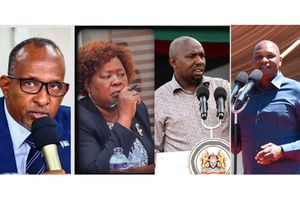
UDA wins four by-elections as Mohamed Tubi (7,352) bags Isiolo South MP seat; Peterson Njeru (3,207 - Muminji ), Duncan Muratia (7,853 - Evurore) and Elphas Shalakha (3,317 - West Kabras) win ward seats.
Photo credit: David Muchui, George Munene, Rushdie Oudia | Nation
If Mbeere North was about strategy and negotiation, the February double MCA by-elections in Evurore and Muminji were about raw mobilisation.
From mid-January until polling day, Mr Itumbi was based in the area without a break, according to campaign insiders.
His days began before sunrise and ended late at night. He moved from market to market, addressing traders in what locals call “market storms” — impromptu rallies where candidates interact directly with voters.
Door-to-door visits became routine. Small meetings in homes, tea kiosks and boda boda stages replaced large rallies.
Several residents recounted instances where, during meetings, Mr Itumbi would call senior government officials on speaker phone to address stalled electricity connections, water projects or job applications.
In some cases, hospital bills were settled and school fees paid for needy families, actions that campaigners said built goodwill.
“Without Itumbi I would not have won. He brought new energy and a new way of doing grassroots politics,” said Peterson Njiru Weche after clinching the Muminji MCA seat.
At a separate victory press conference, the Evurore MCA praised the strategist’s approach.
“Itumbi brought science and art into my campaign. He guided us and took over the campaign machinery,” he said.
While Mr Itumbi worked the public-facing side of the campaigns, Mr Kibet carved out his own niche as what some in government call the administration’s political “Mr Fix It”.
He is credited with smoothing relations between local leaders, calming rival factions and ensuring that the President’s message reached even the smallest gatherings.
In Western Kenya, his ability to speak Luhya fluently allowed him to connect with elders and youth groups alike. Party sources say he played a central role in harmonising campaign teams and ensuring turnout on voting day.
“He knows how to sit down with leaders who don’t see eye to eye and get them to agree,” said a UDA official. “That’s a big part of why we avoided chaos in nominations.”
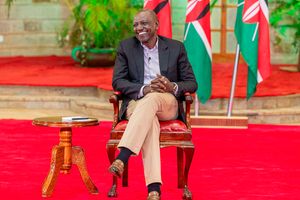
Deputy President William Ruto’s personal assistant Farouk Kibet. He has a baby face – perhaps because of his monolid eyes.
Photo credit: File | Nation Media Group
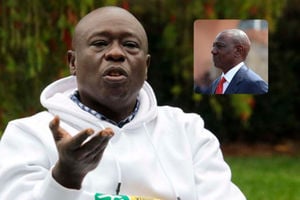
Former Deputy President Rigathi Gachagua, previously blamed Mr Kibet and Mr Itumbi for his political troubles, describing them as “the most powerful around the President.”
In an interview in Sagana, President Ruto downplayed the claims, referring to the two as his “hands-on men” and insisting they were junior officials who posed no threat to anyone.
“My job is simple — come here, go there,” he has said in previous forums, portraying himself as an errand-runner executing instructions.
Yet critics have labelled him the administration’s chief propagandist, comparing his communication style to aggressive political messaging models.
Supporters counter that he brings structure and data to campaigns traditionally driven by emotion and last-minute deals.
The November 2025 and February 2026 by-election wins have given UDA confidence as attention slowly shifts to the 2027 General Election.
Party insiders say the grassroots template — early deployment, internal polling to manage nominations, door-to-door engagement and rapid response to local problems — will likely be replicated nationally.
“Politics is not about noise. It is about organisation and service,” he said during one of the February campaign stops. “If we organise ourselves well and work with wananchi every day, elections will take care of themselves.”
In parts of Mt Kenya, there has been a visible political realignment following tensions within the Kenya Kwanza coalition. In Western Kenya, opposition figures continue to command significant support.