Members of the second and third generation of families that have dominated Kenyan politics — in some cases since independence — have declared interest in elective seats in the 2027 polls.
Their reasons for doing so vary, ranging from a desire to ensure the continuation of their family names to protecting their vast empires.
They are not merely inheriting their parents’ names; they are staking claim to the political turf, resources and networks that have been carefully built up over decades.
Moses Mudamba Mudavadi.
Photo credit: Pool
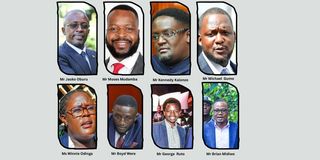
The latest entrant into the fray is Mr Moses Budamba Mudavadi, the son of Prime Cabinet Secretary Musalia Mudavadi. He is eyeing the Westlands parliamentary seat. He caught the attention of seasoned political strategist Mutahi Ngunyi during a recent door-to-door campaign in Nairobi. Mr Ngunyi jokingly offered him “12 votes at his disposal.” This highlights the quiet networks shaping Kenya’s next generation of leaders.
Mudavadi’s and Gumo’s sons
Moses — named after his grandfather, Moses Substone Mudamba Mudavadi — a school inspector in the 1950s, who later became an influential Cabinet minister in the government of Daniel arap Moi, is not alone.
Mr Mike Gumo, the son of former Cabinet minister and veteran politician Mr Fred Gumo, is also in the Westlands race. Mike is looking to reclaim the seat that his father once dominated.
Mr Mike Gumo, the son of former Cabinet minister and veteran politician Mr Fred Gumo.
Photo credit: Lucy Wanjiru | Nation Media Group
In Lang'ata Constituency, Mr Brian Midiwo, the son of the late Gem MP, Jakoyo Midiwo, has expressed interest in the seat.
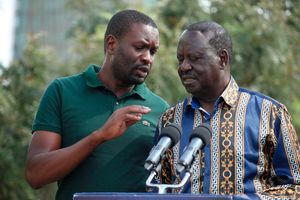
The young Midiwo has aligned himself with East African Legislative Assembly (Eala) member, Ms Winnie Odinga, the daughter of former Prime Minister Raila Odinga . Raila, who died in October 2025, was the former Gem MP’s cousin.
Winnie Odinga addresses a political rally at Kamukunji Grounds in Kibera, Nairobi, on January 18,2026.
Photo credit: Evans Habil | Nation Media Group
Ms Odinga is positioning herself as a third-generation leader in one of Kenya’s most visible political families.
Mr Brian Midiwo is emphatic that Ms Winnie Odinga should be involved when key decisions are made in the Orange Democratic Movement (ODM), a party her father led since its inception.
“We are not going to allow people to manipulate the party. Winnie Odinga must have a space at the party roundtable. Her performance will determine what comes next,” he said.
Kennedy Musyoka Kalonzo.
Photo credit: File | Nation Media Group
Former Vice President Kalonzo Musyoka’s son, Kennedy Musyoka, has also carved out a presence at the Eala, strengthening his family’s regional influence. There has been speculation that he could “graduate” from Eala and go for an elective position in Kitui County. But he is yet to make any public announcement.
In Nyanza, the family of ODM leader and Raila’s elder brother, Dr Oburu Oginga, continues to make waves. Mr Jaoko Oburu, now one of President William Ruto’s advisers, and his brother, Mr Elijah Oburu — both sons of the Siaya senator — have expressed ambitions to enter elective politics.
In 2022, Mr Jaoko Oburu considered standing for the Lang’ata MP seat, while his brother was interested in the Kisumu Central seat. However, neither of them was successful.
Mr Jaoko Oburu.
Photo credit: File | Nation Media Group
President Ruto’s sons are also quietly building political capital as well. Mr Nick Ruto has appeared increasingly in political forums, especially during the 2022 General Election, while his younger brother, Mr George Ruto, has endeared himself to the youth through sponsoring sports events. He officially unveiled his high-end matatu christened Mood at the Kenyatta International Convention Centre in 2025—a clear signal of an emerging political brand targeting the youth.
Deputy President William Ruto's son, Nick Ruto, (left) at Nyayo stadium on August 6, 2022.
Photo credit: Jeff Angote I Nation Media Group
The launch of the Sh14 million nganya (slang for stylish matatu) was widely seen as a strategy to attract young Kenyan voters, either into his or his father’s political fold.
Another notable entry into elective politics is Mr Boyd Were, who succeeded his father, Ong’ondo Were, as Kasipul MP in a by-election. His father was shot dead last year.
Kasipul MP Boyd Were Ong'ondo.
Photo credit: Dennis Onsongo | Nation Media Group
Mr Boyd Were’s rise underscores a broader trend where political influence is increasingly inherited, often accelerated by name recognition, networks, and established party machinery. This illustrates the growing wave of political heirs reshaping Kenya’s electoral landscape. Their emergence is emblematic of a wider phenomenon observed globally.
Prof Gitile Naituli, lecturer at Multimedia University, said: “The emergence of sons and daughters—or even spouses—of prominent political figures is not unusual. Growing up in political households exposes them to campaigns, policy debates, and party networks from an early age, so it is natural that some eventually step into the arena.”
A political dynasty, he noted, becomes problematic only when access to leadership is effectively closed to outsiders.
“In a functioning democracy, the ballot remains the ultimate test. Kenyan voters have repeatedly shown they can reject candidates from well-known families. A surname may open the door, but it does not guarantee victory.”
Political analyst Mr Dismas Mokua concurs, noting that the phenomenon is not unique to Kenya.
“Political families are found worldwide—from the Clinton, Bush, and Kennedy families in the US to the Milibands in the UK. Kenya’s Kenyattas, Mois, Mudavadis, Onyonkas, and Kihikas are part of this global pattern. When individuals grow up in political households, they are naturally exposed to campaigns, policy debates and public leadership from an early age,” Mr Mokua said.
Indeed, Kenya’s political dynasties have shaped the country since independence.
Mzee Jomo Kenyatta, the founding president, set the stage. His son, Mr Uhuru Kenyatta, followed in his footsteps. He contested the Gatundu South MP’s seat in 1997, but lost. However, eventually he was elected Kenya’s fourth president in 2013.
Similarly, the Moi family cemented its legacy in Baringo and Nakuru counties. Mr Gideon Moi, the former president’s youngest son, represented Baringo Central Constituency before becoming the senator for Baringo. His elder brother, Mr Raymond Moi, is a former MP for Rongai.
But it is the Odingas who exemplify political continuity. Raila Odinga took over the political mantle from his father, Jaramogi Oginga Odinga, who was Kenya’s first vice president. Raila was a long-serving MP for Lang’ata, a Cabinet minister and later PM. Dr Oginga served as Bondo MP before being elected to the Senate. Ms Winnie, along with her cousins Jaoko and Elijah, now represent the third generation of Odinga political heirs.
Analysts said that the young leaders inherit more than names—they gain a network, credibility, and visibility— all crucial assets in the highly competitive Kenyan political environment.
Prof Naituli said: “What these second-generation politicians inherit is an advantage at the starting line, not the finish line. To remain politically relevant, they must build grassroots credibility and demonstrate that they understand the concerns of ordinary citizens.”
“Today’s political environment is different from that of their parents. Younger voters are far more sceptical of entitlement and are increasingly demanding authenticity, competence and issue-based leadership,” he added.
“We don’t take anything for granted. Building a credible political identity is essential. A family name is a starting point, not the finish line,” he said.
Nakuru Governor Susan Kihika
Photo credit: File | Nation Media Group
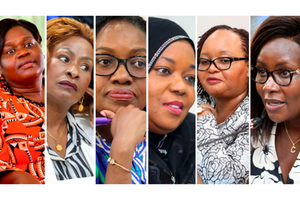
In Nakuru County, Governor Susan Kihika is the daughter of former Kanu MP Kihika Kimani. She previously served as the Nakuru County Assembly Speaker before being elected governor.
Former Vihiga Senator George Khaniri.
Photo credit: File | Nation Media Group
Other notable political heirs are: Mr George Khaniri, who succeeded his father, Newton Khaniri, and served as Hamisi MP before becoming the Vihiga senator, while Mr Augustine Lotodo, the son of former Cabinet minister, Francis Lotodo, contested the Kapenguria MP’s seat and later represented Kenya in the Eala, while Homa Bay Senator Moses Kajwang’ succeeded his brother, Otieno Kajwang’ after he passed away. His brother Mr TJ Kajwang’ is the MP for Ruaraka.
Makueni Governor Mutula Kilonzo Junior.
Photo credit: File| Nation Media Group
Tragedy has also accelerated political succession. When former Nakuru Town MP Mirugi Kariuki died in 2006, his son Mr William Kariuki Mirugi won the subsequent by-election. Similarly, Mr Mohammed Khalif succeeded his father, former Wajir West MP Ahmed Mohamed Khalif, at the age of 23. Ahmed died in a plane crash in Busia County barely weeks after his appointment to the Cabinet by former President Mwai Kibaki.
On the other hand, Mr Mutula Kilonzo Jr, inherited the Makueni Senate seat after his father’s Mutula Kilonzo’s death. He was elected Makueni governor in the 2022 polls. Mr Stephen Kariuki, the son of evangelist and politician, Bishop Margaret Wanjiru, represented the Mathare constituency. Ms Wajiru is a former MP of Starehe.
Critics argue that political dynasties entrench elite dominance and reduce opportunities for first-generation politicians. But supporters feel these families bring continuity and experience.
As Kenya edges closer to the 2027 elections, the trend is unlikely to change. Analysts argue that younger voters are increasingly demanding authenticity and competence.
Political analyst Chris Omore said: “A name can open the door, but performance is what keeps you inside. In a competitive political environment, relying solely on family legacy is insufficient.”
The influence of political dynasties is also evident in Cabinet appointments. Ms Raychelle Omamo, the daughter of former Agriculture minister William Odongo Omamo, served as Cabinet Secretary for Defence in Mr Kenyatta’s government and later became Foreign Affairs CS.
Former Foreign Affairs Cabinet Secretary Raychelle Omamo.
Photo credit: Jeff Angote | Nation Media Group
Kenyan voters have shown willingness to judge candidates on performance rather than pedigree alone. Yet political families retain advantages, particularly through brand recognition, fundraising capacity, and networks.
“Brand recognition is a powerful asset, but a name alone is not enough. Political heirs must demonstrate competence, articulate their ideas, and develop a unique narrative to connect with voters. Otherwise, legacy can become a liability,” political analyst Dismas Mokua said.