Ruto’s packed business agenda at Russia-Africa Summit

President William Ruto touched down in Moscow on Wednesday morning with a packed 48-hour agenda ahead of him, according to a provisional programme.
The President is making his first visit to Moscow since he came to power in 2022, changing an earlier approach where he delegated Kenya’s resident ambassador to attend when the summit was held in St Petersburg in 2023.
From the outset, he could be mending fences with one of Kenya’s biggest grain suppliers, notwithstanding the geopolitical tensions surrounding Russia’s war in Ukraine. At the Third Russia-Africa Economic and Humanitarian Forum, State House says the visit will be strictly business, with the President expected to advance Kenya’s economic and strategic interests by expanding export markets and attracting investment.


Kenya says it will seek greater market access for tea, coffee, cut flowers, fresh produce and value-added products, while pursuing investment in agro-processing, manufacturing, energy and infrastructure.
“He will also explore partnerships in artificial intelligence, digital innovation and technology transfer to equip young people with emerging skills, support businesses and strengthen Kenya’s digital economy,” said Mr Hussein Mohamed, the President’s spokesman.
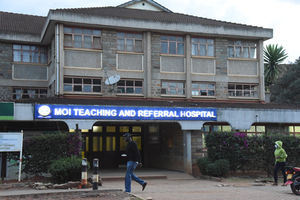
For all its global power projection, Russia’s influence on the Kenyan economy has been limited. It was the second country to recognise Kenya’s independence in 1963, after Germany, which is why Russian diplomatic vehicles carry the number 2 on their red registration plates. The Soviet Union also helped build Kisumu’s Jaramogi Oginga Odinga Teaching and Referral Hospital, which is why some locals refer to it simply as “Russia”.
Those remain among the most significant imprints Moscow has left on Kenya, a country that has traditionally looked to the West.
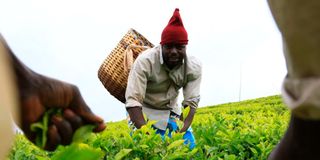
A farmer plucking tea.
Although Russians consume Kenyan tea, they rarely buy it directly from Kenya, instead sourcing it through Pakistan and other intermediary markets. Part of the challenge stems from sanctions imposed on Russia over the years, particularly following its invasion of Ukraine. The absence of direct flights has also made transport more expensive.
The President’s first item on the agenda is a roundtable meeting between Russian and Kenyan businesses to discuss opportunities in Kenya. Areas of interest include fertiliser production, energy, oil and affordable housing.
Many of the companies targeted in these engagements include fertiliser manufacturers Uralchem and PhosAgro, technology giant Yandex, scientific and research institutions, and energy major Gazprom. Russia’s leading firms have encountered difficulties expanding into other markets because of Western sanctions. Africa now presents a significant opportunity, provided they can compete with established players from China and Europe.
State House said the President is seeking affordable agricultural inputs and stronger food security. Russia has long been a major supplier of wheat to Kenya, competing largely with Ukraine. When war broke out between the two countries, grain supplies tightened, contributing to higher food prices, including the cost of chapati.
Both Russia and Ukraine have also used grain donations across Africa as a tool of humanitarian diplomacy.
The summit, to be held at the Gostiny Dvor Exhibition Centre in the heart of Moscow, carries a humanitarian theme because Russia is seeking to play a humanitarian and mediation role in several African conflicts, including the recent tensions between Ethiopia and Eritrea and the war in Sudan.
During the main conference, Russian President Vladimir Putin is expected to lead delegates through an exhibition showcasing advanced Russian solutions in sectors including technology, manufacturing and agribusiness.
Ruto is also expected to tour Russian housing projects, an area that could resonate with his flagship affordable housing programme back home.
There are tentative indications of a bilateral meeting with Putin, which would be Ruto’s first with the Russian leader.
Such a meeting could mark a shift from the position Ruto articulated years ago when he criticised the practice of African leaders being summoned to foreign capitals to discuss Africa’s development.
Since then, however, the Kenyan President has accepted invitations to Washington, London, Berlin, Beijing, New Delhi and Brussels, all of which have hosted Africa-focused summits.
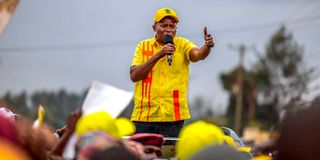
Deputy President Kithure Kindiki during a public engagement rally at Kigio Shopping Center after inspecting construction works on the Jogoo Kimakia-Kigio-Kirwara road in Gatanga Constituency, Murang'a County on October 08, 2026.
Nairobi argues that this evolution in approach does not signal weakness. Deputy President Kithure Kindiki made that point last week when he told a gathering of African leaders that the continent should abandon permanent loyalties to any global power.
“I argue, and I respectfully submit, that we must not be aligned with the old ways of doing things, where you stick to one partner or the other for life,” Prof Kindiki told the 12th Tana High-Level Forum on Security in Africa on Saturday in the Ethiopian city of Bahir Dar.
The annual forum was discussing Africa’s sovereignty and its implications for governance and stability.
“If the world has become transactional, Africa must become transactional. We must engage with everyone, not isolating anybody, but also not committing long term to anybody. I call this eclectic diplomacy, on a case-by-case basis.”
Some of the leaders who attended that forum are now in Moscow, including Ethiopian Prime Minister Abiy Ahmed, Ghanaian President John Mahama, Mozambican President Daniel Chapo and Burundian President Evariste Ndayishimiye.
In Moscow, Kenya will also pitch itself as a competitive investment destination and a gateway to African markets, promoting joint ventures and commercial partnerships that strengthen local industries, create jobs and increase the value of Kenyan exports.
At the continental level, Kenya will join representatives from 48 African countries who confirmed participation in the summit, in discussions on global peace, regional security and reform of the United Nations system.
Eastern Africa’s expected attendance in Moscow
Kenya: President William Ruto
Eritrea: President Isaias Afwerki
South Sudan: President Salva Kiir
Burundi: Evariste Ndayishimiye
Ethiopia: Prime Minister Abiy Ahmed
Uganda: Vice-President Jessica Alupo
Tanzania: President Samia Suluhu
Sudan: Transitional Sovereignty Council Chairman Abdel Fattah al-Burhan
Rwanda: Prime Minister Justin Nsengiyumva
Follow our WhatsApp channel for breaking news updates and more stories like this