As leaders struggle to fulfil their 2022 pledges, the race for 2027 has quietly roared to life, kicking off more than 500 days ahead of schedule.
Across the country, the political tempo has shifted into campaign mode, with roadside addresses, strategic defections and high-profile rallies becoming the order of the day.
Politicians have erected giant billboards nationwide, with persuasive messages asking Kenyans to register as voters. Helicopters have begun landing in remote trading centres as Kenya is once again gripped by the fever of premature campaigns.
At the national level, cracks within the Orange Democratic Movement (ODM), renewed anti-government offensive by the United Opposition, and attempts to forge alternative coalitions have injected fresh urgency into political mobilisation.
The emergence of the Edwin Sifuna-led Linda Mwananchi (Protect the People) platform — which is shaking the country — has further heightened political temperatures.
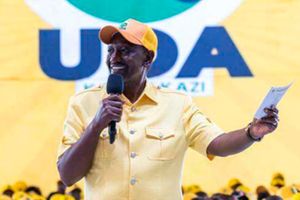
ODM Secretary-General Edwin Sifuna addresses supporters in Kitengela on Sunday, February 15, 2026.
Photo credit: Stanley Ngotho | Nation Media Group
But beyond the optics of energised democracy lies a deeper question about the cost of early campaigns — economically, legally, socially and perhaps, institutionally.
Kenya’s electoral laws have clear timelines for official campaigns, yet politicians have devised tactics to break the rules.
The Elections Act and subsidiary regulations state that campaigns may only be conducted within a specific period declared by the Independent Electoral and Boundaries Commission (IEBC).
That campaign period typically begins after the commission gazettes the election timetable, and it closes 48 hours before polling day.
Rallies, public canvassing and the display of campaign materials are regulated during this period. However, outside the officially sanctioned period, the legal framework becomes murkier.
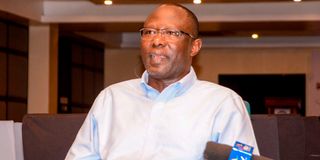
The Independent Electoral and Boundaries Commission (IEBC) chairman, Mr Erastus Ethekon, told Sunday Nation that indeed, the issue of early campaigns needs “deeper examination.”
He said that it cannot be addressed superficially, because it touches on legal, constitutional and operational dimensions of electoral management. He said that the commission needs to undertake a thorough review before issuing a definitive position.
“This is a complex issue that requires a comprehensive review and response,” Mr Ethekon told Sunday Nation.
In a landmark 2025 ruling, the High Court found that campaigns conducted outside the gazetted timeframe violate constitutional principles of fairness and equality because there is no explicit statutory authority regulating such activity.
The court directed the Attorney-General to develop laws to address the gap. It is easy for politicians to defend their actions by saying that they were promoting their parties or launching development projects — not campaigning.
The campaigns come in the form of impromptu roadside addresses, politicians standing atop vehicles and addressing crowds without “formally convening rallies.” Others organise structured events and frame them as civic engagements or economic empowerment forums. Billboards that have mushroomed along major highways and towns bearing portraits of politicians serve the classic function of name recognition and brand positioning.
The scale of resources deployed is striking, as helicopters ferry leaders between counties; convoys of SUVs snake through urban centres and branded merchandise is openly distributed.
But while politics fuels excitement, it also imposes economic costs.
Wherever major political rallies are held, traders are forced to close their businesses hours in advance to avoid looting. Transport services are disrupted as roads are sealed off or clogged by politicians’ motorcades. Traffic congestion disrupts movement, thereby reducing productivity.
United Opposition rally in Masii, Machakos County.
Photo credit: Photo | Pool
The Kenya Association of Manufacturers (KAM) has warned that prolonged political uncertainty dampens business confidence.
Manufacturers have reported logistical disruptions during major political events, especially in urban centres. A day of shutdown in Nairobi can translate into losses of millions of shillings across supply chains. The ripple effect can significantly shake small-scale traders, transport operators and informal sector workers.
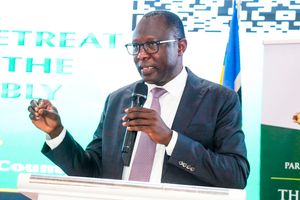
KAM Chief Executive Officer Tobias Alando said: “At present, the Kenya Association of Manufacturers has not recorded major disruptions directly attributable to the ongoing political activities. Industrial operations, supply chains and market performance remain generally stable.”
However, he warns against complacency. He said that from experience, political gatherings and protests have hit economic activity, particularly in the surrounding areas.
Some of the consequences are ; supply chain delays due to road blockages, absenteeism of employees arising from safety concerns and transport disruptions, as well as temporary closure of businesses.
“During that period, the manufacturing sector recorded tangible losses as reflected in the KAM Barometer. Key impacts included reduced productivity driven by worker absenteeism, restricted movement and safety concerns; supply chain disruptions caused by road closures and logistical delays; vandalism and looting that compromised business continuity and heightened security costs; and production downtime and property damage that imposed direct financial losses,” he said.
“Those experiences highlighted the vulnerability of industrial productivity, investor confidence and overall economic performance to prolonged political disruptions, even when the initial impact appears localised.”
On the effect of weekday rallies, Mr Alando said the impact varies by location and intensity, but it is nonetheless measurable. Areas directly affected often experience partial or full shutdowns, shortened production shifts and delayed dispatch of goods.
“From an operational standpoint, frequent political rallies held on productive weekdays affect factory output, logistics and workforce attendance,” Mr Alando said. “Transport challenges and safety concerns contribute to worker absenteeism and late reporting, while delayed delivery of raw materials and finished goods undermines production schedules and customer commitments.”
ODM party leaders at Sameta grounds in Kisii County during the 'Linda Ground' event on January 25, 2026.
Photo credit: Ruth Mbula | Nation Media Group
Data from the KAM Barometer for the third quarter of 2025 paints a sobering picture of the risks associated with political unrest.
According to the survey, 64.3 per cent of manufacturers reported receiving fewer than normal purchase orders as traders avoided stockpiling amid uncertainty. Only 15.4 per cent of firms operated at near full capacity, while 61.5 per cent were forced to run at half capacity or less.
“Even a single day of disruption can derail weekly and monthly production targets, resulting in cumulative revenue losses,” Mr Alando said. “While precise quantification of sector-wide losses over the past six months remains challenging due to varying regional impacts, repeated disruptions erode productivity, weaken investor confidence and constrain revenue growth.”
On policy interventions, he emphasises balance. KAM, he said, respects constitutional rights, including peaceful assembly, even as he called for structured dialogue mechanisms to minimise economic harm.
Mr Alando proposes protection of critical infrastructure and uninterrupted access to industrial areas, ports, highways and logistics hubs to maintain supply chain continuity. He also encourages scheduling political rallies outside peak production hours or on non-working days.
“Manufacturing thrives on stability and predictability to remain competitive regionally and globally,” he notes. “Democratic freedoms and economic productivity must go hand in hand to ensure inclusive growth and national prosperity.”
Cabinet secretaries, principal secretaries, MPs, governors and senators have increasingly become visible at political events. The line between official duty and partisan mobilisation grows thinner by the day.
Critics argue that the time spent on political platforms detracts from policy implementation. When public officials blur the line between State and party, service delivery inevitably suffers. In counties, governors face pressure to balance development priorities with participation in national political movements. Some MPs have been accused by constituents of skipping parliamentary sessions to attend rallies.
The optics matter. When citizens perceive that leaders are more invested in 2027 than in fulfilling 2022 pledges, public trust erodes.
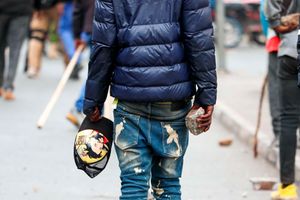
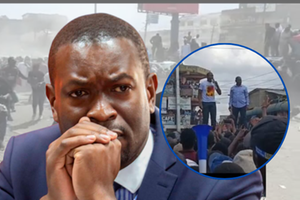
Early campaigns also carry a more painful dimension: security risks. Political gatherings in Kenya have occasionally degenerated into violence. In Kitengela, Vincent Ayomo lost his life during chaos linked to a rally.
In Utawala, a youth official affiliated with Martha Karua’s political outfit was stabbed. Such incidents underscore the volatility that can accompany intense mobilisation.
Research by scholars Prof Karuti Kanyinga and Tom Mboya on the cost of politics in Kenya paints a sobering picture. Running for parliamentary and gubernatorial contests costs tens of millions of shillings.
“The result is a high entry barrier that favours wealthy candidates or those backed by financiers. Prolonged informal campaigns increase the risk of opaque funding arrangements and patronage networks,” they say.
“We have evidence that at times State has mobilised goons to attack rival supporters. This is a backward move that must stop because we shall not relent in our push to send this government home,” quipped Embakasi East MP Babu Owino.
Equally, the Directorate of Criminal Investigations (DCI) has accused organisers of Mr Owino’s Linda Mwananchi rally of arming their supporters following the death of one follower, George Olande Otobe, at a rally in Kakamega on Saturday, February 21.
Destruction of property, skirmishes between rival supporters and the emboldening of criminal elements have remained a recurring risk.
Security agencies often find themselves stretched thin managing crowds, escorting leaders and containing potential clashes.
When politics becomes permanent, emotions remain permanently heightened. That environment can easily be exploited by opportunistic actors.
Research by scholars Prof Karuti Kanyinga and Tom Mboya on the cost of politics in Kenya paints a sobering picture.
Running for office is already prohibitively expensive, with parliamentary and gubernatorial contests costing tens of millions of shillings.
Early campaigns extend this spending cycle by months — even years. Aspirants must maintain visibility long before official timelines. They fund community events, pay for publicity, sponsor local initiatives and maintain campaign teams. For incumbents, the pressure to remain visible is equally intense.
“The result is a high entry barrier that favours wealthy candidates or those backed by financiers. Prolonged informal campaigns increase the risk of opaque funding arrangements and patronage networks. The longer the unofficial campaign period, the more money circulates without transparency.”
Kenya witnessed similar early campaign momentum ahead of the 2017 and 2022 elections, with experts warning that extended political contestation contributed to business slowdowns and postponed investment decisions.