Matatu operators have renewed their threat to paralyse public transport across the country beginning Monday as they push for the return of fare liberalisation and protest what they describe as unsustainable government controls and rising fuel prices.
On Saturday, Matatu Owners Association Chairman Albert Karakacha said operators from across the transport sector, including buses, matatus and other public service vehicle investors, are united in the planned industrial action.
Mr Karakacha said all public transport investors had agreed to immediately implement a 50 per cent increase in fares to cushion themselves against escalating fuel prices and other operational expenses.
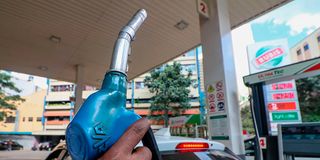
Motorists queue for fuel at a TotalEnergies petrol station in Nairobi on May 14, 2026.
Photo credit: Reuters
“It is not only matatu operators. Bus companies and all public transport investors are on board. Everybody will participate, even if it means bringing operations to a halt. We are still on course with the strike. We held a meeting yesterday and we are meeting again tomorrow to finalise our plans,” Mr Karakacha told the Nation.
Mr Karakacha said the association’s main demand is the restoration of a fully liberalised fare system, where transport charges are determined by market forces rather than government regulation.
“Our demand is that we go back to liberalisation, where demand and supply decide how much you can charge for your services. The more we increase fares, the more the common mwananchi suffers. But at the same time, we cannot afford to continue operating at a loss,” he said.
Mr Karakacha said the public transport sector has been pushed to the brink by escalating operating costs and warned that matatu services across the country will come to a standstill unless the government addresses their grievances.
“On Monday, there will be strictly no movement of any vehicles; all the roads will be blocked until the government listens to our cry because we have been promised, but everything we are promised has not come to fulfilment,” said Mr Karakacha.
He said all public transport operators had been directed to immediately increase fares by 50 per cent, saying the adjustment was necessary to cushion the sector against the sharp rise in fuel prices and keep operations running.
Fuel prices on display at a Rubis Energy service station on Koinange Street in Nairobi on May 15, 2026.
Photo credit: Wilfred Nyangaresi | Nation Media Group
“All transport network companies, wherever they are, be aware that we are going to increase our prices by 50 percent because we don’t have the mechanism. I caution you not to block any driver. If you don’t want to go the hard way, make sure you cooperate,” said Mr Karakacha.
According to Mr Karakacha, operators in Nairobi alone are losing more than Sh30,000 per vehicle every month, money that would ordinarily go towards loan repayments and vehicle maintenance.
“That money was meant to service loans and keep the vehicles running, but now it is no longer available because of the rising fuel costs,” he said.
“We have talked and presented our concerns, but the government is not listening. That is why we have no option but to proceed with the strike,” he said.
The announcement comes just hours after the government, through the Energy and Petroleum Regulatory Authority (EPRA), revised retail fuel prices upward in its latest pricing cycle.
According to EPRA, the price of diesel increased by Sh46.29 per litre, while super petrol went up by Sh16.65 per litre.
In Nairobi, the prices of petrol and diesel currently retail at Sh214.25 and Sh242.92 respectively.
“EPRA was set with the hope that it would regulate these industries with the hope that it would actually benefit these industries to the benefit of society. Now it has become the biggest place for cartels to tax Kenyans to death,” said Karakacha.
Rising fuel prices have prompted Kiharu Member of Parliament Ndindi Nyoro to request the recall of the National Assembly from recess in order to urgently deliberate on proposed legislative amendments aimed at lowering the cost of fuel in the country.
Kiharu Member of Parliament Ndindi Nyoro during a press briefing on fuel prices at his office in KICC, Nairobi on May 15, 2026.
Photo credit: Bonface Bogita | Nation Media Group
Mr Nyoro said the proposed changes were intended to lower the cost of fuel and ease the burden on Kenyans grappling with high transport and living expenses.
“I respectfully write to request your consideration for the recall of the National Assembly from recess, pursuant to its mandate under the Constitution and the Standing Orders, to deliberate on urgent proposed legislative amendments aimed at reducing the cost of fuel in the country,” Mr Nyoro said.
The legislator noted that the detailed amendments had been submitted separately to the Clerk of the National Assembly to facilitate tabling and deliberation once the House is reconvened.
He urged the Speaker to exercise his authority to summon MPs back to Parliament, saying the matter was urgent and required immediate legislative attention.
“In the circumstances, I humbly request your office to favourably consider exercising its authority to recall the National Assembly from recess for the purpose of facilitating the tabling, deliberation, and consideration of the said proposed amendments,” he wrote.