On Wednesday, February 18, Muslims and Christians across the world will begin a season of fasting, reflection, and introspection on the very same day.
While the origins of the two observances are very different, such an alignment has not been experienced in more than three decades. For Christians, the day marks Ash Wednesday, the beginning of Lent, a 40-day period commemorating the 40 days Jesus spent in the wilderness before starting his ministry.
Muslims, meanwhile, will start the holy month of Ramadan, based on the sighting of the new crescent moon anticipated on February 17. Ramadan commemorates the month in which Prophet Muhammad received the Quranic revelations from the archangel Gabriel (Jibreel), and involves daily fasting from dawn to sunset.
Ramadan is expected to run from February 18 to March 19, while Lent leads up to Easter on April 5. Scholars say this rare timing, last witnessed in the early 1990s, results from the overlap of lunar and solar calendars, with the next similar occurrence expected in the late 2050s.
However, there are other previous years when Lent and Ramadan aligned for some days. For instance, in 2025, Lent was observed from March 5 to April 17, while Ramadan was from March 1 to March 30.
“Ramadan is much more movable; it rotates through the year every 33 years, falling about 11 days earlier each year. It last overlapped with Lent in the early 90s, and now it has come around again,” a scientific journal by the Astronomical Applications Department of the US Naval Observatory stated.
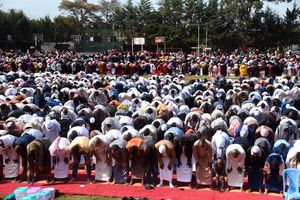
Muslims during Idd-Ul-Fitr prayers at Jamia Mosque in Eldoret City, Uasin Gishu County, to mark the end of the Holy Month of Ramadhan on March 30, 2025.
Photo credit: Jared Nyataya | Nation Media Group
For Catholics, the Lenten season includes fasting from Ash Wednesday to Good Friday, as well as abstaining from meat on all Fridays of Lent.
“If you count the days from Ash Wednesday to Holy Thursday’s Mass of the Lord’s Supper, you’ll find more than forty days. That’s why it’s not exactly forty days,” explained Lillian Japanni, Executive Secretary of the Catholic Justice and Peace Department (CJPD), Archdiocese of Mombasa.
She added, “This year, the penitential season coincides with Ramadan. Maybe it's God’s plan for Muslims and Catholics to begin fasting together. We should see this as a unique opportunity for interfaith dialogue and shared community reflection.”
Christians observing the fast are allowed one full meal with the possibility of two smaller meals that together do not equal a full one, and no eating between meals. These obligations are set for adults aged 18–59 for fasting while those aged from 14 years should abstain from meat.
Additionally, the Church teaches that Lent is a period for prayer, works of charity and spiritual conversion in preparation for Easter. The faithful are encouraged to undertake personal acts of penance, pray more, and focus on growing closer to God.
Muslim cleric Sheikh Mohamed Khalifa noted that the convergence of Lent and Ramadan this year is a reminder of shared humanity and a call for peace, empathy, and understanding.
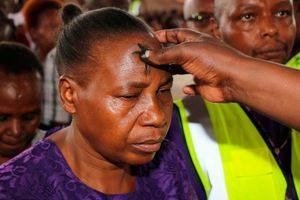
Nyeri Catholic Archbishop Anthony Muheria applies ashes on a worshiper’s forehead at Our Lady of Consolata Catholic Cathedral, Nyeri, on March 5, 2025, during the Ash Wednesday service.
Photo credit: File| Nation Media Group
“Ramadan is one of the most important observances in Islam and one of the Five Pillars. All Muslims, except the very young, very old, pregnant, or traveling are required to fast daily, abstain from sex, and avoid wrongdoing from sunrise to sunset,” he said.
He urged authorities to provide security, noting that prayers often take place late at night.
During Ramadan, Muslims abstain from all food, drink, smoking and sexual activity from dawn (fajr) until sunset (maghrib) every day. Before dawn, believers eat suhoor, a pre‑fast meal and at sunset, they break the fast with iftar, traditionally beginning with dates and water followed by a full meal.
In preparation for Ramadan, the National Treasury approved waivers on Import Declaration Fee (IDF) and Railway Development Levy (RDL) for dates imported for Ramadan, easing access for the Muslim community. The facilitation applies from February 12 to March 20, 2026.
In addition to fasting, Muslims intensify prayers and recitation of the Qurʾān, seeking greater devotion and God‑consciousness. Special nightly prayers called taraweeh are held at mosques after the Isha prayer, often involving sequential recitation of the entire Qurʾān over the month.
Charity is strongly emphasised during Ramadan. Zakat al‑Fitr is a required almsgiving given at the end of Ramadan to ensure all can celebrate the concluding festival, Eid al‑Fitr, and Muslims are encouraged to give additional charity (sadaqah) and help the needy throughout the month.
In towns with large populations of both Muslim and Christian faithful, business is expected to slow, particularly in eateries. Some hotel owners are already seeking alternative ways to utilise the period.
“I will have to close down for a month for renovations since there will be no business,” said Albert Mwaghesha, a hotel owner in Tudor, Mombasa.