Ambitious tax projections are behind the persistent shortfall in government revenue, as the Parliamentary Budget Office (PBO) urges the National Treasury to review its tax and expenditure plans.
The office notes that overtaxing Kenyans encourages tax evasion and avoidance, ultimately undermining revenue targets.
In its Budget Watch report for the 2025/26 financial year presented to Parliament, the PBO shows that the government missed its revenue targets by Sh342 billion over the past two financial years, largely due to overly ambitious tax measures.
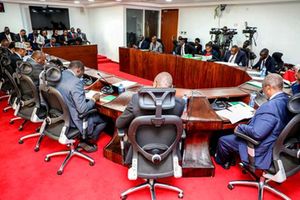
The National Assembly Departmental Committee on finance and National Planning chaired by Molo MP Francis Kuria Kimani during the session at the Bunge Tower Nairobi.
Photo credit: File| Nation Media Group
This amount exceeds what the National Treasury had projected Kenya Revenue Authority (KRA) would collect through new tax laws during the 2024/25 period.
To remedy the situation, the budget office—a technical body advising Parliament and its committees on fiscal matters—has called for a reconsideration of taxation strategy to balance revenue generation with investment incentives.
“The government has, in recent years, embarked on an ambitious strategy to expand the tax base and strengthen revenue collection through the annual tax amendment laws. However, it has witnessed poor revenue collection and widespread public dissatisfaction with the introduction of new tax proposals,” the PBO report states.
In addition to public dissatisfaction, the PBO attributes lower revenue to inefficiencies in tax administration, poor implementation of new policies, weak enforcement, and widespread compliance issues.
Revenue shortfalls and public unrest peaked in the 2023/24 and 2024/25 fiscal years following the introduction of new tax proposals.
For instance, the Finance Act 2023 aimed to collect Sh211 billion through amendments to various tax measures.
However, the target was missed by Sh205 billion. Similarly, the Finance Bill 2024 projected Sh346 billion in additional revenue, but widespread public protests—including the storming of Parliament on June 25, 2024—derailed the plan.
To respond, the government introduced the Tax Laws (Amendment) Act 2024, targeting Sh79 billion.
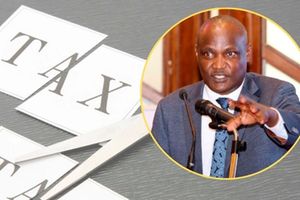
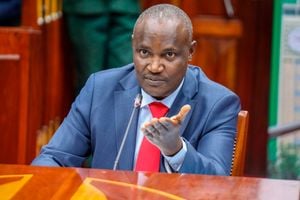
National Treasury Cabinet Secretary John Mbadi.
Photo credit: Billy Ogada | Nation Media Group
Despite this, the revenue target was missed by Sh137 billion, forcing the government to increase both local and foreign borrowing to meet expenditure obligations.
In the 2025/26 financial year, the government has reconsidered its taxation approach, projecting Sh30 billion in additional revenue while aiming for a total of Sh3.3 trillion.
“The Finance Act 2025 marked a strategic shift from previous tax amendments. Instead of imposing new tax burdens, it focused on strengthening revenue collection through administrative reforms and improved taxpayer compliance,” the PBO notes.
To achieve the Sh3.3 trillion target, the budget office says the government must enhance tax administration through robust enforcement, integration of advanced data analytics and adoption of technology to improve compliance and operational efficiency.
Key reforms identified by the PBO include full digital transformation of revenue administration, upgrades to ICT infrastructure, streamlined tax procedures, improved data governance, and enhanced service delivery standards.
“These measures will create a more transparent, responsive, and efficient tax ecosystem that aligns with the evolving needs of Kenya’s economy,” the report states.
Curbing tax evasion remains a top priority. This will require enhanced audit capabilities, collaboration with other government agencies to ensure accurate taxpayer profiling, and widespread deployment of digital tools such as the Electronic Tax Invoice Management System (eTIMS) to foster real-time compliance and secure consistent revenue flows.