President William Ruto has convened a crisis meeting with oil marketers and transport sector players for a possible review of the current high fuel prices, Deputy President Kithure Kindiki has said.
Prof Kindiki said the President, through an online meeting, directed four Cabinet secretaries to address the fuel crisis following Monday’s countrywide transport sector protests that left the nation paralysed.
Cabinet secretaries for Energy and Petroleum Opiyo Wandayi, John Mbadi (Treasury), Davis Chirchir (Transport) and Kipchumba Murkomen (Interior) were on Monday evening in a closed door meeting with private sector stakeholders.
“I will personally lead this meeting to ensure we come up with a solution to the high prices of fuel,” DP Kindiki said.
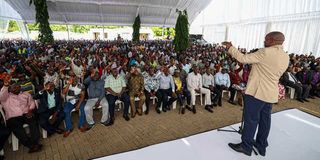
Addressing Tharaka leaders at his Irunduni residence on Monday afternoon, Prof Kindiki said the government is ready to further cut fuel taxes to ease disquiet.
“As a government, we are seized of the matter and will take measures to reduce suffering among Kenyans. We have so far provided a Sh12 billion stabilisation fund to avert sharp rise in prices and cut VAT on fuel by half. However, we are ready to reduce taxes further to preserve our nation and safeguard the interests of Kenyans,” Prof Kindiki said.
CS Mbadi also confirmed the meeting, even as he defended the government for pulling all the stops in cushioning Kenyans from the vagaries of the ongoing geopolitical tension in the Gulf nations.
Mr Mbadi said the meeting was to “to discuss, understand, and explore any possible further action that can be taken.” He said billions had been used to reduce the impact of the surging prices.
“The government should be appreciated for ensuring a continuous supply of fuel. Other countries have taken desperate measures like not taking more than 30 litres of fuel per week. The levies and taxes are meant to support the development agenda of our economy,” said the CS.
On the nationwide protests which turned chaotic in several parts of the country leading to shooting, looting and damage of property, Prof Kindiki condemned unnamed politicians for inciting Kenyans to take to the streets.
“It is unpatriotic for anyone to incite Kenyans to sabotage the economy for political interests. Demonstrations cannot provide a solution to the high cost of living. The protests did not reduce the high cost of maize flour – we did it through deliberate government policies such as subsidising fertiliser prices,” he said.
He condemned the blocking of roads, looting and destruction of property during the transport sector strike.
“The security officers should be uncompromising when dealing with looters. Those demonstrating have a right but blocking roads being used by ambulances and other Kenyans cannot be entertained. We will not be intimidated through name calling to allow Kenya to be destroyed,” Prof Kindiki said.
Earlier, Prof Kindiki said efforts to suppress price hikes have been affected by unavailability of fuel, transport challenges and high insurance costs.