Sarah Cohen, who is charged with murdering her billionaire Dutch husband, has lost her spirited legal bid to have the ongoing trial declared a mistrial.
Following the dismissal of her application, Sarah will now proceed with the hearing which is scheduled to run between May and July 2026.
Sarah, the widow of Dutch billionaire Tob Cohen, is accused of murdering her husband in July 2019 before allegedly dumping his body in a septic tank at their Lower Kabete home in Nairobi County.
While dismissing the application, the Kibera High Court trial judge on Thursday ruled that the request to declare the proceedings null and void, order a retrial and recuse herself lacked merit.
In her application, Sarah claimed that the judge was biased against her and had made rulings on preliminary issues raised by her lawyers in a manner that favoured the prosecution.
However, Justice Diana Kavedza ruled that the court lacked jurisdiction to grant the reliefs sought including nullifying the proceedings and declaring the trial a mistrial.
“If the applicant (Sarah Wairimu Cohen) believes that constitutional legal errors have occurred, the proper recourse lies in an appeal. Accordingly, this court finds that it lacks jurisdiction to grant the principal prayers seeking nullification of proceedings, rulings and expungement of evidence,” ruled Justice Kavedza.
She further noted that the mere fact that the accused had changed advocates was “not a cogent reason” to have the case start afresh.
Six-year-old murder trial
Through Senior Counsel Pravin Bowry, Sarah had sought to have the matter referred to the Presiding Judge of the Criminal Division of the High Court to appoint a different judge to hear the case anew.
Justice Kavedza upheld the objection raised by Director of Public Prosecutions (DPP) Renson Ingonga who argued that the application lacked merit and was intended to delay the conclusion of the six-year-old murder trial.
In the application filed by Mr Bowry, Sarah asked the court to declare the proceedings a mistrial, vacate all rulings made so far, expunge all evidence already tendered and order that the case start afresh before a different judge.
She claimed that incurable prosecutorial and judicial improprieties had rendered the trial unfair and unconstitutional.
However, the DPP dismissed the claims, arguing that the defence strategy amounted to “searching for mistakes” allegedly made by the prosecution and the court without presenting any evidence of bias, impropriety or personal interest on the part of the trial judge.
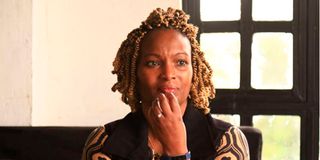
Sarah Wairimu, the widow of Tob Cohen, at the Kibera Court in Nairobi on Friday, January 24, 2025.
Photo credit: Wilfred Nyangaresi | Nation Media Group
“The defence has not demonstrated any partiality or conflict of interest that would warrant the judge’s recusal,” prosecuting counsel Vincent Monda told the court.
He added that a judge can only step aside where there is proof of bias or personal interest, which had not been demonstrated in the present case.
The prosecution further argued that issues relating to denial of bail are already before the Court of Appeal and cannot be re-litigated before the High Court. The DPP maintained that the trial judge has no jurisdiction to revisit matters currently under appeal.
The prosecution also disputed claims that the defence was denied disclosure of evidence, noting that Sarah was previously represented by competent counsel, including Conrad Maloba, who raised no objections.
According to the prosecution, Mr Maloba attended disclosure sessions, received all evidentiary materials, and never complained that the Office of the DPP had failed to supply documents before trial.
Mr Monda told the court that the judge properly handled all pre-trial and trial processes, including scene visits and the hearing of protected witnesses. He said the defence was given the opportunity to attend the crime scene, where witnesses were sworn in and cross-examined without objection.
On the issue of mental assessment, the prosecution said it had proposed that Sarah undergo evaluation, but the defence declined. The court subsequently ruled in agreement with the defence position.
The victims’ lawyer supported the prosecution’s position, arguing that the application was meant to delay justice and urging the court to prioritise the hearing so the matter can be concluded.
In her application, Sarah alleged that her constitutional rights under Articles 20, 25, and 50 were violated, citing unlawful uploading of evidence, improper court orders, denial of cross-examination, and the conduct of “mini-trials.”
So far, the prosecution has called three witnesses, with about 37 others lined up to testify.