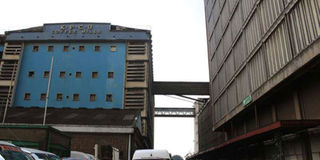
Even at its nethermost, the Kenya Planters Co-operative Union (KPCU) could access close to Sh1 billion ($9 million) from the Kenya Commercial Bank to ostensibly lend to farmers as advance payments for their unsold beans.
While this was supposed to be the rule, it became the window for wayward directors and managers to lend cash to politically-correct individuals — even those who had not delivered coffee. It is still the biggest commercial fraud ever carried out in the history of the 83-year-old organisation. It meant that such advances had no collateral and only added to KPCU’s burden.
Inside KPCU, fictitious codes were created for purposes of securing funds from the bank while some advances were approved without going through the board. As a result, KPCU’s non-performing loans spiralled out of control.
At the Kenya Commercial Bank (KCB), then under chairman Alexander Kaminchia and General Manager Elijah arap Bii, collecting bad debts was not one of their strengths.
KPCU directors took advantage of this, after all the bank was being mismanaged too. KCB directors and senior managers had taken huge unsecured and unserviced loans from the bank, and by 1999 the provision of these debts at KCB was put at Sh2 billion.
The bank had a shady past after it was used, between April and July 1993, to make illegal Sh5.3 billion to Kamlesh Pattni’s Goldenberg International.
After Mr Kaminichia and Mr Bii were removed in March 1998 by new Finance minister Simeon Nyachae, the new team led by former Cabinet minister Peter Nyakiamo started applying pressure on KPCU to pay up its debts. It could not.
KPCU’s financial problems are said to date back to 1992 when then Company Secretary Samuel Chepkonga and Managing Director JM Nyaga took a Sh150 million loan from Coffee Board for the organisation “at the request of the government”, according to the minutes.
In December 1992, the government further “advanced” KPCU another Sh125 million “to pay farmers”. This was during a period when President Moi and ruling party Kanu were fighting for political survival at the December 1992 multi-party elections.
Its lobby groups — Youth for Kanu’92 and Operation Moi Wins — awash with unexplained cash were spending millions of shillings to buy defectors.
“This money was never paid to farmers,” says Mr Patrick Muiruri, a KPCU board member during that period. “There was nothing we could do.”
“The money never came to KPCU,” says a former general manager who still fears being quoted on KPCU. “I have been threatened with death so many times I don’t want to speak on record.”
What happened to this Coffee Board loan money is not clear from KPCU records but minutes show that the KPCU board protested after Coffee Board deducted this money.
The KPCU board claimed it had not been “consulted” when Mr Chepkonga and Mr Nyaga took the loan. In those days, Coffee Board received all the money from coffee sales conducted at the Nairobi Coffee Exchange and deducted its marketing levies and other advances.
Angry with the turn of events, KPCU board — or rather those who did not sit at the Coffee Board — threatened to close down the KPCU mills and thus deny Coffee Board any revenue.
It never happened since both organisations shared very powerful directors among them Pithon Mwangi, Chairman of Coffee Board and Abraham Mwangi of KPCU.
Coffee Board was no better. From 1992, when it became a playground for Kanu carpetbaggers, it started going through its own problems — thanks to opaque financial dealings.
While it operated a record 32 bank accounts in 12 banks, Coffee Board never presented audited accounts to Parliament after 1992 and there was “lack of bank reconciliation statements and refusal to prepare them” for the next 10 years, according to a statement by Agriculture minister Bonaya Godana dated June 2002.
At the heart of this mischief at Coffee Board was the powerful Nandi District Kanu chairman Ezekiel Barngetuny, whose links with State House were well known. He was a long-serving Coffee Board member.
“I think Barngetuny was put there to enable directors have access to State House. He was very close to Moi,” says a former KPCU General Manager.
As a result, industry insiders say, Coffee Board became a rogue body and continued to sell farmers’ coffee and withhold payments while KPCU continued to take money from banks and loan to co-operative societies and plantation farmers who never repaid.
It also continued to deliver milled beans to Coffee Board which would not pay either after the auction. It never accounted for “coffee sweepings” (spilt beans in warehouses) worth hundreds of millions of shillings which was supposed to be passed over to the farmers. A corrupt circus was put in place between KPCU and Coffee Board where the farmer was the end loser.
With all these, a false narrative emerged: KPCU was doing badly because it could not get a marketing license from Coffee Board. To outsiders, the two bodies seemed to be at loggerheads and that was what the media seemed to concentrate on.
But with Murang’a-born Abraham Mwangi and Murang’a-born Pithon Mwangi sitting at the helm of these two organisations, KPCU was being sabotaged from within by wealthy coffee barons who wished to buy its multi-billion assets for a song – or sell to politically-correct individuals.
“It was not to their advantage to have KPCU get a marketing license. Their interest was to rake in millions of shillings from sales,” says a former board member of Coffee Board.
The sinking - and personal disagreements- within KPCU board never stopped and by November 1997, a report prepared by Gill and Johnson observed that the organisation had an accumulated deficit of Sh708 million and its liabilities exceeded assets by Sh181 million.
What that meant was that KPCU was walking dead. Its survival now depended on its financiers and Coffee Board which was deliberately not remitting KPCU’s money. What was not known was that even Coffee Board could not get the Sh600 million that was due to the farmers. Its coffers were milked dry too.
Every time both organisations faced criticism from outside, the separate boards would constitute probe committees and task forces. Coffee Board had between 1992 and 2002 established 11 such probe committees: “These”, according to last Kanu Agriculture minister the late Bonaya Godana in a statement, “consisted of most of the members of the board for purposes of manoeuvring decisions of the Board and also earning extra allowances for participants”.
Mr Abraham Mwangi used to do the same at KPCU. To save himself from the wrath of farmers, he always engineered the formation of probe committees to look at the problems facing the organisation in particular and coffee industry in general. What many farmers never knew was that this was a ruse; a style borrowed from President Moi every time he faced a crisis.
One such probe was started in 1997 and was led by Mr Mwangi’s business partner and politician Zachariah Gakunju. In essence, Mr Mwangi was probing himself via a probe committee “initiated by farmers”.
“Every time Mwangi wanted to achieve something, he initiated a probe headed by his own supporters,” says an insider.
Ironically, farmers always bought into this lie and voted blindly every time these pseudo-probe teams tabled their reports.
“After staying at KPCU for years, I came to pity the poor farmers. They could be bribed to vote for things they did not understand,” says a former KPCU general manager.
By 1997, the KPCU coffee debts stood at Sh1.2 billion.
It was this 1997 committee’s report which recommended the removal of several managers – privy to the dark secrets of the organisation. A newcomer to the coffee wars Ruth Wangari Mwaniki, the company secretary, was given the task to implement the probe committee’s recommendation.
Ms Mwaniki was intrepid, albeit naïve, and thought she would make a difference. But that way, she stood at the cash till where barons were raking in money.
Although in February 2001 she was promoted to become the General Manager, at a time when the all-powerful Mwangi was ill and had relinquished his position as KPCU chairman, Ms Mwaniki did not make any headway. After all, the structure was rotten.
A 1989 law graduate from the University of Nairobi, Ms Mwaniki took over at a time when KPCU was going through intense competition from three licensed millers and the cartel networks had entrenched themselves within the industry.
The pressure to carry out reforms in the public sector had increased since Mr Moi was finishing his last term. Her proposals to rectify the industry were at odds with the cartels.
“I think she was a bit young and naïve about the depth of KPCU problems and the interests at play,” says a source.
With pressure from the new KCB management to pay up the debts, some KPCU board members then did the unthinkable. They approached a Mauritius company Associated Consultants and incorporated Kahawa Credit International Limited.
This new company was registered in Port Louis, certificate no. C31043 on April 22, 1999, and then in Nairobi as a foreign company (Reg. No. F.41/99).
The aim of the company, with a registered office at 5th Floor of KPCU’s Wakulima House, was to buy the KPCU debts under a repurchase agreement, according to May 2000 minutes.
Debt buying is a multi-billion dollar business where companies pay a low percentage of the face value of the debt and take off with the balance.
So did KPCU form a company to buy its own debts? How much of the KPCU debts were sold to this company? Former insiders say that the deal brought via Mr Abraham Mwangi flopped.
The registration of Kahawa Credit came at a time Coffee Board was also refusing to pay $299,859 to KPCU with the regulator only admitting owing $64,595. With poor record keeping at both organisations, it will never be known what happened.
It was during this period that the Moi government was under pressure from the opposition-led Coffee and Tea Parliamentary Association (Cotepa) to reform the sector.
Although then Minister Bonaya Godana had managed to put in place a new Coffee Act 2001, the coffee marketing cartels led by Mr Abraham Mwangi panicked fearing that they would lose their marketing and dealer licences.
They lobbied and won. The reforms promised by Mr Godana allowed coffee millers to register different marketing companies with different directors.
By denying KPCU a chance to have a marketing monopoly — since it was owned by farmers — the government naively supported the coffee barons desire to bring down a body that was standing between them and the multi-billion coffee industry.
In the dying years of Kanu regime, everyone thought that the new Narc administration under President Mwai Kibaki would offer a solution.
“We had almost managed to bring down these cartels but the Narc regime sabotaged everything,” said Mr Njehu Gatabaki, the man who had led a nationwide campaign to rectify the wrongs within the coffee industry.
The appointment of Mr Kipruto arap Kirwa as Kibaki’s agriculture minister had brought hopes that the previous mistakes would be undone. “What we found was that some of Kibaki’s close friends were coffee barons too,” says Mr Gatabaki.
Inside KPCU, some officials complained to Mr Kirwa that companies associated with Ms Mwaniki’s relatives were doing business with the organisation. He demanded an answer and the chairman, Mr Stephen Kirubi, wrote saying the “CEO has never interfered with the procument of goods…the three companies alleged to be associated with CEO have been roughly paid Sh13 million against KPCU’s total expenditure of Sh114 million. There is no justification therefore to claim that the companies were favoured,” wrote Mr Kirubi. The matter was also investigated by Kenya Anti-Corruption Commission but nothing came out of it.
By this time, KPCU already had crippling debts and board minutes show desperate efforts to negotiate with KCB to regularise the borrowing facilities. The board had in 2001 noted that KPCU was in a “serious financial position” and had only three options: “serious and aggressive debt collection, restructuring of banking facilities and sale of idle assets”.
Although it had been part of KPCU’s problems, KCB in March 2001 letter put KPCU “on notice” in a letter signed by Mr Daniel Iriga, then relationship manager with a threat: Unless arrears are cleared…we will call up the entire debt and cancel the limits of your overdraft accounts.”
That year, according to records, KPCU reported a loss of Sh484 million. KCB was in more of a mess.
Records were also falsified and in 2002, the audit firm of Waithaka Kiarie and Mbaya Company was under investigation by the Institute of Certified Public Accountants for failing to qualify the accounts of the giant miller.
If a company’s accounts are qualified by its auditors it means they doubt that the picture of the company’s activities presented is true, complete and fair. Media reports also indicated that two separate audits had been done. This was later denied by KPCU.
But still, it could not pay the KCB debts. The expected fall was coming sooner than later.