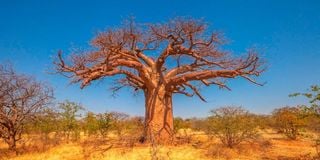
Baobab trees grow in arid and semi-arid parts of Africa, and have deep cultural and ecological significance. Some of these trees are thousands of years old. Global demand for baobab products has surged in recent years, driven by the fruit’s nutritional and health benefits.
However, this growing demand has become a double-edged sword, raising concerns about the sustainability of these ancient trees. Patrick Maundu, who is part of a research project to document the heritage of the baobab tree in Kenya, explains what can be done to protect the tree for future generations.
The tree is native to at least 37 countries in Africa and two in the Arabian Peninsula. The African baobab (Adansonia digitata ) is the most widespread of the eight known baobab species . It endures in some of the harshest conditions, from salty water-bathed ocean shores to vast dry savannahs and forests. Of the rest of the baobabs, six are native to Madagascar , and one to northern and western Australia.
Baobabs are unique trees. They are among the world’s longest-living trees, with some being over 2,000 years old. They can survive prolonged droughts thanks to their ability to store water in their huge trunks, which can attain a diameter of 10 metres or more. The trunk has amazing regenerative ability, easily growing back after damage by humans in search of fibre or from wildlife like elephants trying to quench their thirst.
Unlike most trees, which are adorned with lush leaves, the baobab often stands bare for the greater part of the year. Its thick, leafless branches stretch out like skeletal arms, creating a weird and almost mystical appearance.
The tree has a slow growth rate. It starts to flower and produce fruits from about 20 years of age. In many cases, however, especially in arid regions, trees give their first fruit much later, with some known to start at 60 years.
What is the baobab’s significance?
In African cultures, every part of the baobab is valuable.
The leaves are consumed as a nutritious vegetable. The fruit pulp, with its tangy taste, adds flavour to foods and beverages. Baobab pulp is rich in antioxidants, vitamins (like C and B complex), fibre and minerals (such as calcium, iron and magnesium).
The seeds are a source of oil in the cosmetic industry. The inner bark is harvested for its fibre, which is woven into ropes and baskets. Hollows in the trunk provide shelter for honey bees. The fruit shell is made into utensils and other household items. The baobab’s bark and root extracts are widely used in traditional medicine .
Because of its value, the baobab has attracted folklore and myths. Many African communities consider the tree sacred, often associating it with spirits. As a result, various ceremonies and rituals are conducted under it.
Ecologically, the baobab holds an important position in the landscape, supporting a wide range of wildlife, including fungi, insects, birds, reptiles, bats and monkeys. Its large trunk serves as a water reservoir. The elaborate root system stabilises the soil, preventing erosion. Fallen leaves enrich the soil with nutrients.
Additionally, the baobab acts as a carbon sink . This means it absorbs carbon dioxide from the atmosphere and packs it away, helping mitigate climate change.
Why is global demand for baobabs spiking?
The baobab’s reputation as a superfood is spreading. This has mainly been fuelled by the recognition of baobab pulp as a food ingredient by the European Union and the US Food and Drug Administration in 2008 and 2009, respectively. This opened the way for its use as an ingredient in drinks, foods, natural remedies and cosmetics.
Zimbabwe has become a trailblazer in this industry, aggressively targeting the lucrative European market.
Why is the tree under threat?
The baobab is under threat on several fronts. Its slow growth rate, huge size, long life and economic value expose the tree to many risks. Although some Madagascan baobab species are listed as either critically endangered or endangered , the African baobab is not. Yet, there is evidence that specific unique populations may be declining in parts of Africa, calling for more conscious conservation measures to be taken.
Climate change is already reshaping the ecosystems baobabs rely on. These ancient giants need a specific range of soil and air humidity. They also depend on specific pollinators, like bats and bush babies, for reproduction . However, rising temperatures and shifting rainfall patterns are disrupting these balances, affecting the overall health of the tree and reproductive capacity.
Changing community belief systems and local values are having an effect, too. The baobab’s sacred status is waning as modernity spreads. In some communities, the tree is now seen as a relic of the past. Further, the baobab’s expansive canopy and roots compete for space and nutrients with food crops amid shrinking agricultural space . This has intensified the tendency of communities to cut the tree .
The surge in commercial interest is a double-edged sword. The high demand for baobab pulp raises serious concerns about interference with natural regeneration, loss of genetic diversity and the health of baobab populations. Baobab is still harvested using crude methods – such as hitting the fruits from the ground or climbing on pegs inserted into the stem – that harm the tree.
This commercial interest has brought a new threat: biopiracy. This was witnessed in Kenya in 2022 when entire baobab trees were controversially uprooted and exported to Georgia in eastern Europe. Eight trees were exported but later died , signalling the lack of prior research about their viability in their new home.
This incident highlighted the lack of appropriate policies and regulatory frameworks to protect these important trees from exploitation, and underscored the urgent need for specific policies on safeguarding the baobab.
It demands a blend of cultural and community protection, and conservation and management actions at the community level. It also requires strategic policy and regulatory frameworks, and collaboration on the national and global stages.
These policies should also support livelihood programmes for communities by supporting value chains and providing market linkages for baobab products. Promoting sustainable harvesting techniques, like leaving enough fruit for regeneration, will protect the trees and surrounding environments. Integrating indigenous knowledge with tools like genetic research will enhance these efforts.
By Patrick Maundu - Ethnobotanist, National Museums of Kenya
James Kioko, who is part of the research team working with Dr Maundu on documenting the heritage of the baobab in Kenya, is a co-author of this article.