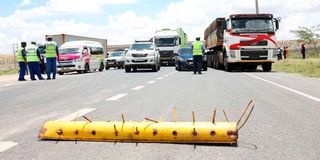
The government's plan to subject millions of private vehicles to mandatory annual inspections has triggered a political and public storm, with motorists and opposition leaders demanding its suspension and accusing the State of imposing another financial burden on struggling Kenyans.
The new regulations significantly expand Kenya's vehicle inspection regime by requiring all privately owned vehicles that are more than four years old from the date of manufacture to undergo annual roadworthiness tests.
Motorists who fail to subject their vehicles to the inspections risk prosecution, fines of up to Sh20,000, imprisonment for up to six months and, in some cases, losing the right to use the vehicles on Kenyan roads.
The regulations, which are set to take effect on July 1, 2026, were announced last Friday through a notice by NTSA.
“All Kenyans with motor vehicles older than four years from the recorded date of manufacture are expected to book for annual inspection through the NTSA service portal accessible through the eCitizen platform,” NTSA Director-General Nashon Kondiwa said in the notice.
The move follows the implementation of the Traffic (Motor Vehicle Inspection) Rules, 2026, gazetted as Legal Notice No. 13 of 2026 in February.
However, the directive has been met with widespread criticism from the opposition leaders and industry stakeholders who want the planned rollout suspended on grounds that it is being implemented without sufficient public participation.
The Motorists Association of Kenya (MAK), through its spokesperson Peter Murima, rejected the new regulations and called for their suspension until a comprehensive public review is conducted.
“We want proper public participation before any such regulations are implemented. The charges are unfair and an additional burden to motorists,” said Mr Murima.
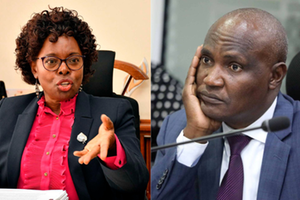
Jubilee Deputy Party Leader Fred Matiang'i on Sunday criticised the new inspection regulations, saying they would pile more hardship on already struggling Kenyans.
While acknowledging that road safety is a legitimate national objective, Dr Matiang'i said public policy must remain transparent, evidence-based and sensitive to prevailing economic realities.
“Kenyans are already burdened by high fuel prices, multiple taxes and levies, rising insurance premiums, expensive spare parts, parking charges, licensing fees and an increasing cost of living. Introducing another compulsory annual payment without demonstrating its necessity places yet another financial burden on households and businesses that are already under immense pressure,” he said.
Dr Matiang'i called for an immediate suspension of the directive to allow for a comprehensive public review and challenged NTSA to provide data justifying the decision.
“Public policy must be evidence-based, proportionate, transparent and sensitive to the economic realities facing citizens. The proposed inspection regime fails that test,” he said.
The former Interior Cabinet Secretary also questioned whether the authority has the capacity to inspect millions of vehicles without triggering delays and creating opportunities for corruption.
He argued that vehicle condition accounts for only a small proportion of road accidents and urged the government to address the broader causes of road carnage.
“Road safety cannot be reduced to the collection of inspection fees. If the government is genuinely committed to saving lives, it must address reckless driving, speeding, drunk driving, poor road design, inadequate road maintenance, weak enforcement of traffic laws and congestion," he said.
Dr Matiang'i further demanded answers from NTSA on the number of vehicles likely to be affected, the amount of revenue expected to be generated and the evidence showing that annual inspections for vehicles older than four years would significantly reduce road accidents.
Democracy for Citizens Party (DCP) leader Rigathi Gachagua also opposed the regulations, terming them unfair and punitive.
Speaking at his Wamunyoro home in Nyeri County while hosting DCP aspirants from Laikipia, Mr Gachagua threatened to mobilise Kenyans to resist the new rules if they are not abandoned.
“The new rules will only compound the struggles of an already burdened citizenry. We will not allow the new inspection rules to take effect," he said.
Former Law Society of Kenya president Nelson Havi claimed the government was attempting to reintroduce the Motor Vehicle Tax that was rejected in 2024 through the new inspection fees.
“The illegal taxation of private vehicles is another way of stealing from Kenyans and should be resisted," he said.
South Rift Mercedes Benz Club spokesperson Robert Kipkalya also faulted the regulations, terming them punitive.
“The new regulations are a burden to motorists already reeling under high fuel prices. They also create avenues for bribery rather than solving structural road safety problems,” he said.
At the heart of the regulations is a mandatory annual inspection requirement for virtually every private vehicle older than four years.
However, in an apparent attempt to calm growing tensions, NTSA later clarified that the inspection of private motor vehicles would not be compulsory.
“Enforcement of mandatory inspection of private motor vehicles shall be communicated to the public in due course. NTSA has not yet licensed any private entity to offer motor vehicle inspection services,” he said.
The authority said it would continue inspecting school transport vehicles and commercial service vehicles at its centres.
School transport operators and school managements have been directed to ensure all vehicles carrying children are roadworthy and have valid inspection stickers.
The gazetted regulations exempt tractors used exclusively for agricultural purposes, golf carts, motorised pedal cycles and all-terrain vehicles from routine inspections, although they must still be inspected before being driven on public roads.
Public service vehicles, commercial vehicles, school buses and vehicles owned by county and national governments will remain subject to annual inspections regardless of age.
The regulations also prohibit motorists from displaying inspection stickers issued for another vehicle or tampering with inspection reports.
Matatu Owners Association chairman Albert Karakacha said the new regulations would not affect the matatu sector because public service vehicles are already subjected to annual inspections.