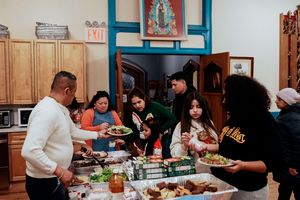
A family takes selfies.

It is December 24, the eve of Christmas Day, and David Okumu does what he has done for decades on such a night. He walks to a small shop near his home in Nyakach, Kisumu County, and asks for two things: a crate of soda and a two kilogramme packet of wheat flour.
At 75, the retired teacher knows the routine by heart. He also knows that sometimes he does not have the money.
“But I must take them. Even if it is on credit,” he says.
For Mr Okumu, Christmas without chapati and soda is not Christmas at all. Yet the festive season brings him more anxiety than comfort.
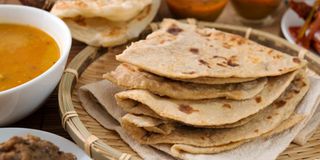
A meal of chapati.
“When Christmas comes, it gives me a headache. It’s like an unplanned loan,” he says.
When he was still employed, he could budget and celebrate without strain. Now, living on limited means, he relies on the goodwill of shopkeepers so his grandchildren can enjoy the day.
“They wait for this season the whole year. I cannot deny them,” he adds.
That quiet pressure is shared by many other homes. For Christine Atieno, a mother of three, chapati and soda are the unmistakable signs that Christmas has arrived.
“When we were growing up, chapati was very rare. You ate it once on Christmas Day and maybe again on New Year’s Day. That’s why it felt special,” she says.
She remembers how difficult it was to prepare even that single meal. Cooking pans were scarce, and borrowing one required days of advance planning.
“I still remember this time when my mother borrowed a pan, but the owner came for it even before we finished cooking and took it away. My mother had to finish the frying in a sufuria. It was so embarrassing,” Ms Atieno recalls.
The experience lingered. “The next year, the first thing my mother bought was her own pan,” she says.
Today, Ms Atieno, 45, finds that expectations have barely shifted. In her home, Christmas must include chapati and soda, regardless of what else is available.
“You can cook meat, ugali, pilau, even pizza. But if chapati and soda are missing, the children will complain all day,” she says.
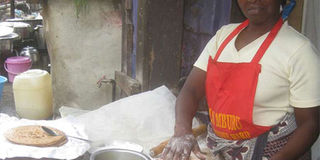
A woman cooks chapati in a kibanda. PHOTO| FILE| NATION MEDIA GROUP
Failing to prepare chapati, she adds, can even create social tension.
“If children know another home is cooking chapati, they will go there. Sometimes they are chased away. To avoid that shame, you just cook it,” she says.
In Kisumu’s Manyatta area, Joan Anyango understands that shame all too well. A mitumba trader in Kibuye market and a single mother of three, she says December is among the hardest months financially.
“Business is very slow. On a good day, I make about Sh300 profit,” Ms Anyango says.
If she lived alone, Christmas would pass like any other day. “I would eat ugali and vegetables and move on,” she says.
But her children expect more. Their father died years ago, and Ms Anyango feels a deep responsibility to make the season feel normal.
“I borrowed Sh5,000 from Sacco. Not because I want luxury, but because I don’t want my children to feel left out,” she says.
Something special
She knows the debt will follow her into the new year. “I will struggle later. But I cannot let my children watch others celebrate while they have nothing special,” the trader adds.
Ms Anyango says that while adults can be reasoned with and will understand economic realities, no amount of persuasion can make a seven-year-old understand why there is no chapati on the menu when every other home has it.
“And so you just have to find a way, even when there is no way,” she says.
According to sociologist Dr Paul Ochieng, the power of chapati and soda has little to do with nutrition or religion, and everything to do with memory and social identity.
“Chapati and soda became festive symbols because they were once rare and affordable luxuries. When something is eaten only once or twice a year, it becomes emotionally powerful,” Dr Ochieng explains.
Families, he says, are not celebrating the food itself, but what it represents. “Chapati symbolises effort, sacrifice and love. Soda represents reward and happiness for children.”
Over time, he adds, these foods have become markers of dignity. “Parents fear that without them, their children will feel poor or different. So the pressure is social, not cultural or religious.”
This belief persists even when families can barely afford it. “People borrow or buy on credit because Christmas has become a performance of care. Missing chapati feels like failing as a parent.”
Follow our WhatsApp channel for breaking news updates and more stories like this.