Evolution of photography: Through the eyes of Bachu Patel
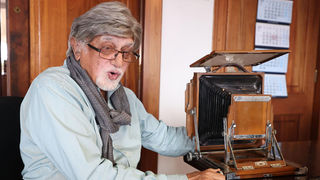
Bachu Patel, Chairman of Vanguard Group of Companies, is a passionate camera enthusiast who has spent decades collecting historic cameras. Here he is pictured holding a Deardorff Manual Large Format Film Camera, among the most iconic wooden field cameras ever made. First introduced in the 1920s, Deardorff cameras remained in production for much of the 20th century, with their reputation as the gold standard of large-format photography firmly established between the 1930s and 1960s. Prized by fine art photographers, studio professionals, and collectors alike, they remain highly respected to this day.
World Photography Day is celebrated every August 19 to honor the art, science, and history of photography. It marks the 1839 public release of the Daguerreotype, the world’s first practical photographic process.
The story of photography in Nairobi stretches back nearly a century, according to Bachu Patel, 80, son of Manibhai B. Patel—the founder of Vanguard Studios, established in 1938 along Government Road -now Kimathi Street.
“In those days, we used all kinds of films—from roll films to sheet films,” Patel recalls. “The biggest size was six by eight inches. Those cameras were huge—heavy wooden bodies, bellows you had to extend, and no automatic focus. You had to be very precise, and very patient.”
On the wall of his modest office—now serving as a small museum—hangs a faded black-and-white portrait. Patel gestures toward it proudly. “That one was taken with a 6x8 sheet film camera. Look at the detail—the stitching on the coat, the reflection in the eyes. You can’t get that on digital unless you’re spending a fortune.”
Back then, photography wasn’t just about pressing a shutter. It was a craft. Lighting had to be set by hand. Film was developed in darkrooms with carefully measured chemicals. Every mistake was costly. “You didn’t waste a shot,” Patel says. “Each frame counted. You took time to compose, to wait for the right moment.”
Over the decades, film slowly gave way to digital. “By the 2000s, you could already see the change. Young photographers didn’t need darkrooms anymore—just a memory card and a laptop.”
Yet for Patel, the soul of photography still lies in film. He continues to maintain his vintage cameras and occasionally loads them with a roll of black-and-white. l“People say film is dead,” he shrugs, a faint smile forming. “But as long as I’m alive, it won’t be.”
Photos and Text | Sila Kiplagat
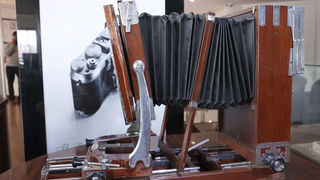
The Korona View Camera, manufactured by Gundlach-Manhattan Optical, was part of a line first introduced in the late 1800s. This particular 1910s example reflects the craftsmanship of early large-format photography, with its wooden construction and bellows design making it a favored tool for both studio and landscape work in the early 20th century.
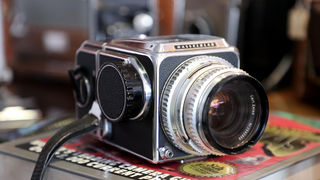
The Hasselblad 500C/M, introduced in 1970, is one of the most iconic medium-format cameras ever produced. Celebrated for its modular design, precision Zeiss lenses, and reputation as a professional workhorse, it remains a benchmark in photographic history.
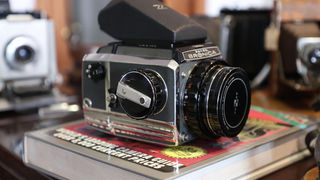
The Zenza Bronica S2A is a classic 6×6 medium format single-lens reflex (SLR) camera, manufactured in Japan by Zenza Bronica from 1969 through the late 1970s. A successor to the Bronica S2, it remains highly valued by collectors and film photographers for its robust engineering and the distinctive character it imparts to images.
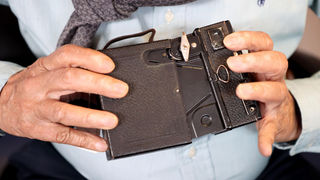
The Box-Tengor is a line of medium-format box cameras produced by Zeiss Ikon, carrying forward a legacy that began with Goerz before the 1926 merger that formed Zeiss Ikon. Manufactured from the mid-1920s through the mid-1950s, it became one of the most widely used and enduring cameras of its era.
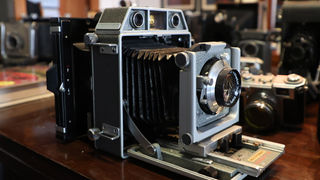
The Horseman Press Camera, introduced in the late 1950s and continuing into the 1960s, is part of a series of 2¼ × 3¼ inch format technical cameras. Compact yet precise, it was designed for versatility in both studio and field photography, exemplifying the craftsmanship of mid-20th-century Japanese camera design.
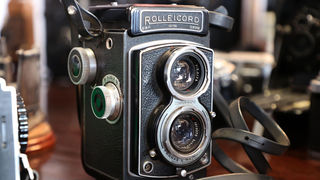
The Rolleicord is a classic twin-lens reflex (TLR) camera produced by Franke & Heidecke (later Rollei) in Braunschweig, Germany. Introduced in the 1930s as a simpler, more affordable alternative to the professional Rolleiflex line, it maintained Rollei’s reputation for excellent build quality and sharp optics. Designed for enthusiasts and semi-professionals, it offered Rollei craftsmanship without the premium price of the Rolleiflex.
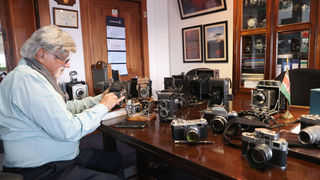
Bachu Patel, Chairman of Vanguard Group of Companies, is a lifelong camera enthusiast who has spent decades collecting historic cameras. His passion for preserving “Old Days Cameras” reflects a deep appreciation for photographic heritage.
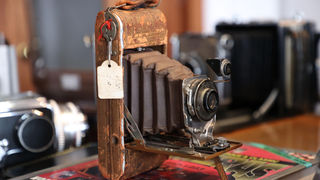
The Ansco No. 1 READYSET Royal Folding Camera is a vintage folding camera produced between 1925 and 1932 by Ansco (Anthony & Scovill Company) in Binghamton, New York. Its ostrich leather covering makes it especially desirable among collectors of early 20th-century cameras.
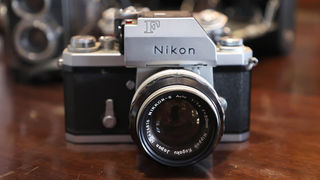
The Nikon F (1959–1973) is one of the most iconic 35mm single-lens reflex (SLR) cameras ever produced, establishing the standard for professional SLRs. Its rugged design, system flexibility, and reliability made it a defining tool for photojournalists and professionals worldwide.
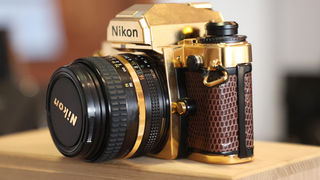
The Nikon FA Gold, released in 1984, is one of the rarest and most collectible Nikon 35mm SLRs ever produced. Created as a special limited-edition to celebrate the Nikon FA winning European Camera of the Year (1984), only 2,000 units were made worldwide. Distinguished by its 24-karat gold-plated body and brown lizard-skin covering, it remains one of the most exclusive Nikon collector’s pieces.
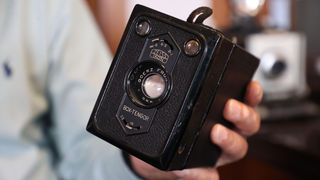
The Box-Tengor is a line of medium-format box cameras produced by Zeiss Ikon, carrying forward a legacy that originated with Goerz before the 1926 merger that created Zeiss Ikon. Manufactured between the mid-1920s and mid-1950s, the Box-Tengor is remembered as one of the most enduring and accessible cameras of its era.
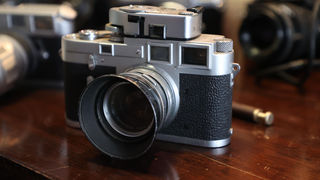
The Leica M3, introduced in 1954, is one of the most iconic 35mm rangefinder cameras ever produced, marking the beginning of Leica’s legendary M-series. Its precision engineering, bright viewfinder, and timeless design set a standard that continues to influence camera design today.
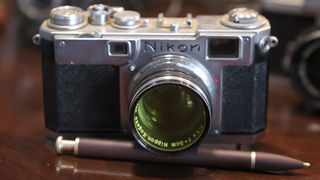
The Nikon S2, released in 1954 by Nippon Kogaku (now Nikon), is a classic 35mm rangefinder camera that marked a major milestone in Nikon’s history. Building on the reputation of its optics—already admired by U.S. photojournalists after World War II—the S2 represented Nikon’s strong push into the international camera market.
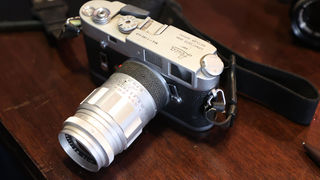
The Leica M2, introduced in 1957 as a more affordable and simplified alternative to the Leica M3, is a classic 35mm rangefinder camera. Though originally positioned as the “budget” model, it has since earned a reputation as a highly respected and collectible camera in its own right.
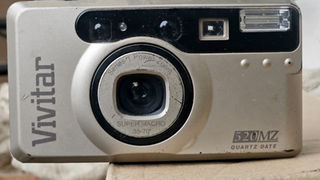
The Vivitar Series 1 Power Zoom Super Macro, part of Vivitar’s ambitious Series 1 line of the 1970s and 1980s, represented the brand’s push into premium optics designed to rival the major camera makers. Manufactured by respected companies such as Kino Precision (Kiron), Tokina, and Komine, these lenses earned a strong reputation for both optical performance and technical innovation.
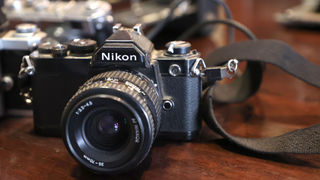
The Nikon FM, introduced in 1977, is a 35mm film SLR designed as a fully mechanical alternative to the more electronically advanced Nikon FE. Durable and dependable, it became a favorite among photographers who valued simplicity, reliability, and full manual control.

