Nairobi’s Hustle and Hope
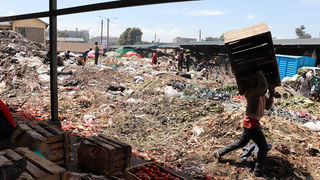
Garbage litters Muthurwa Market on Monday, March 16, 2020, highlighting the growing challenge of waste management in Nairobi.
Photos And Text: Dennis Onsongo
At dawn, Muthurwa Market is already alive. Traders shout over each other, tomatoes blush under the morning sun, onions fill the air with their sharp scent, and cabbages and kales stack like green hills. Bananas sway, fabrics ripple, and buyers weave through the narrow alleys hunting for the best bargains. Every step, every shout, every exchange carries the unmistakable pulse of Nairobi.
But beneath the vibrant chaos lies a darker rhythm. Heaps of uncollected garbage spill onto pathways, stagnant water pools after rains, and the air grows heavy. Street families pick what they can from the refuse—a mango here, some scraps there—resilience etched into every action. Traders struggle with oversupply: tomatoes from Kirinyaga, Kimana, and Tanzania sit longer than usual, forcing prices down.
Still, Muthurwa endures. It is more than a market—it is a lifeline, a place where dreams take shape and survival is an art perfected daily. The market’s grit, its chaos, its imperfections, all tell the story of a city that refuses to give up. With better infrastructure and waste management, it could shine even brighter. But even now, blocked alleys and all, Muthurwa hums with life—a testament to Nairobi’s unstoppable spirit.
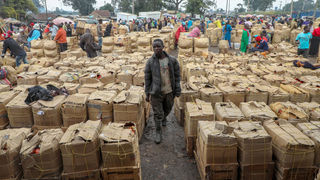
Traders sell tomatoes on Wednesday, July 10, 2024. A crate was sold between KSh 1,800 and KSh 6,000 depending on size, with supplies sourced from Mwea, Kimana, and Tanzania.
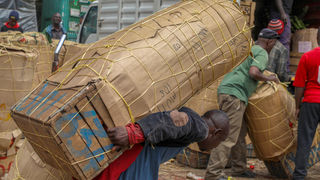
A man carries a crate of tomatoes on Sunday, July 21, 2024. Oversupply has driven prices down, with crates retailing between KSh 1,500 and KSh 7,500. Tomatoes are sourced from Kirinyaga County, Kajiado County, and Tanzania.
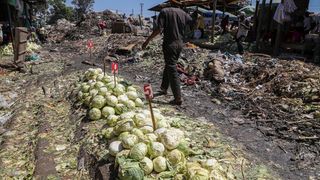
An impassable section of road at Muthurwa Market is turned into a cabbage price display in this picture taken on Monday, January 6, 2025, with a heap of garbage visible in the background.


A city resident walks past a heap of uncollected garbage at Muthurwa Market on Tuesday, December 16, 2025. Traders indicated that the waste had remained unattended for several days, highlighting a persistent sanitation problem that posed health risks to traders and customers.
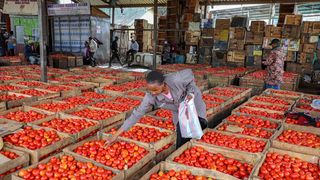
A trader arranges stacks of ripe tomatoes for sale at Muthurwa Market on Wednesday, October 29, 2025. Sourced from Oloitokitok, crates sell for KSh 1,500 to KSh 6,000 depending on size and quality.
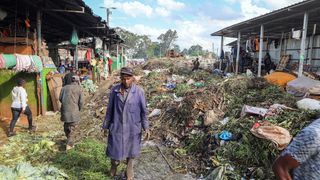
Traders walk past a heap of uncollected garbage at Muthurwa Market on Sunday, November 2, 2025.

A trader counting his money after a day's sale at Muthurwa Market on Thursday, June 1, 2023.

Traders count their earnings after the day’s sale on Thursday, March 19, 2020. A surge in tomato supply from Ethiopia, as well as Nyandarua County and Kajiado County, had driven prices down, with a crate now retailing at Sh 3,500 from Sh 8,000 the previous week.
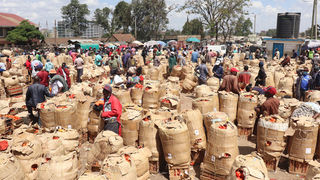
Traders sell tomatoes on Thursday, November 11, 2021. A crate retailed between KSh 2,500 and KSh 6,000 depending on size, with supplies sourced from Ethiopia, Tanzania and Kajiado County. Sales increased following the lifting of curfew hours.
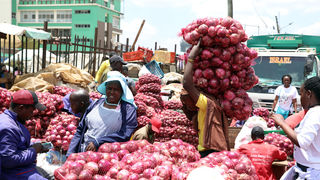
Traders sell onions in this picture taken on Monday, October 10, 2022. The produce, sourced from Nyeri County and Kajiado County, retailed at KSh 600 per 20kg bag.
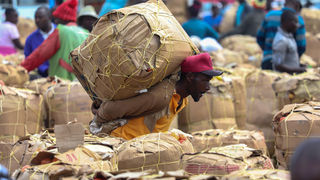
A man carries a crate of tomatoes on Wednesday, December 14, 2022. A crate retailed between KSh 3,500 and KSh 8,000 depending on size, with supplies sourced from Mashuru, Kimana, Kajiado County and Laikipia County.

A section of Muthurwa Market remained neglected, with uncollected garbage posing a health risk. And the rains worsened conditions for traders and buyers. March 26, 2023.
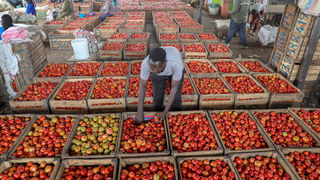
Titus Mwangi, 26, sells tomatoes on Wednesday, June 28, 2023. He sources produce from Kimana and Loitokitok, with a crate retailing between KSh 3,500 and KSh 9,000.
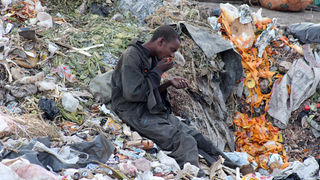
A street urchin eats a mango retrieved from a garbage pile at Muthurwa Market on Sunday, January 8, 2017.
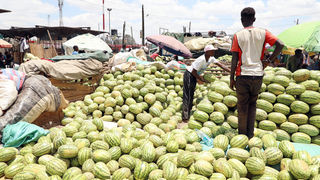
Traders sell watermelons in this picture taken on Monday, October 10, 2022. The fruit was sourced from Meru County, Mpeketoni, and Tanzania, retailing at KSh 40 per kg.

