An online spat between Nairobi United forward Ovella Ochieng and photographer Charles Kangwana last week reignited debate over intellectual property in sports photography.
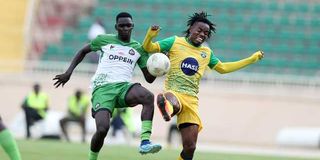
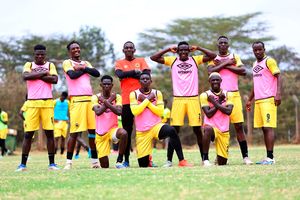
Kangwana had shared on his Facebook page -- Kangwana Media -- a photo he had taken of Ochieng doing a somersault to celebrate his goal against Mara Sugar in a SportPesa League match at Awendo Green Stadium.
When Kangwana pointed out the omission on the same medium, the Harambee Stars winger hit back, questioning who authorised the photographer to take his picture and why he was using it for personal gain.
“Kangwana Media, you are bashing me, first of all who gave you the right to take my picture? Do we have a contract? Secondly, we have our own photographer. Third, why are you using my image for your personal gain if we go by the law? So in a good way, it is not right to bring your followers here to bash me, yet I have gotten this photo this way,” Ochieng responded on Facebook
Following public backlash, the footballer publicly apologised, stating that the mistake had been made by his Facebook manager.
“It is important for me to clarify that the said page is managed and run by an assistant on my behalf. While I take full responsibility for any content that appears there, I was unaware that a photo had been posted without the rightful acknowledgment of the photographer -- something that goes against both my principles and values,” said Ochieng in a statement.
Lawyer Edward Rombo explained that under the copyright laws, the ownership of any photograph belongs to the person who took it, unless the work was commissioned by another party.
However, Rombo points out that the photographer must have the right or permission to take and use the photographs.
He adds that under the data protection laws, the ownership of a photo does not give the photographer unfettered right to use the image as they wish.
“Ordinarily, whoever creates work is normally the owner of the copyright at the first instance unless he has been instructed by someone else to do it,” explained the former rugby international.
“But it does not mean that the person who took your photo has the power or the rights on the image. The image rights are also part of somebody’s private information, so again you cannot just take my photo and use it the way you want unless I agree or consent to it.”
Section 33 (1) of the Data Protection Act states that “a data controller or data processor shall bear the burden of proof for establishing a data subject’s consent to the processing of their personal data for a specified purpose.”
In the context of sports leagues and tournaments, Rombo notes that federations hold the rights over participants’ images, which they then license to media houses.
“If it is a World Cup, you find that Fifa has the rights for the competition which it normally gives out to different media houses to record its games. With those rights come image rights of the players taking part in the games. It is implied that the consent for that photo has been given by the player to the club which then gives the consent to the federation and then to Fifa,” he elaborated.
The lawyer, however, notes that problems arise when a photographer uses the image beyond the accredited media house or agreed purpose -- for example, posting it on personal social media accounts without the subject’s consent.
He said that it remains an infringement regardless of whether or not the photographer made monetary gains from the photo.
“If you use the photos beyond your media house which is accredited then again the person can complain, because you are only allowed to use it to report games and it is presumed that the reporting is on your official media platform. If you go to another platform even if it is personal then it can create problems because the rights you are given do not extend that far,” said Rombo.
He added that a photographer could run into problems with the media house he works for if he uses the photo for personal purposes, like posting it on his own social media accounts. According to Rombo, using images beyond the agreed purpose can attract penalties from the Data Protection Officer.
He emphasised that under the privacy laws, no one has the right to post “your photo without your consent – even if it is part of a group photo.”
“Under the data protection law, you are not supposed to take someone’s photo without their permission. If you do so then it is just for your own phone. The moment you go and post it somewhere, it gives the person the reason to complain if he was not happy about it,” he said.
Section 30 (1) of the Data Protection Act states that “a data controller or data processor shall not process personal data, unless— (a) the data subject consents to the processing for one or more specified purposes.”
In 2012, former Harambee Stars striker Dennis Oliech threatened to take legal action against sponsor East Africa Breweries Limited for using his image in billboards promoting the team.
The striker reportedly asked for compensation, saying his image was used without his consent.
Rombo explained that since EABL had signed the contract with FKF, they did not need Oliech’s consent to use his image in promoting Harambee Stars. “EABL were under no obligation to get any consent directly from Oliech because that consent was given by FKF,” he said.
He said a problem would only arise if the image used did not depict him playing for Harambee Stars or wearing the team’s colours.