One of country’s top rugby clubs, Kenya Harlequin, has in an unprecedented move parted ways with 17 key players from a squad of 38 over a pay dispute.
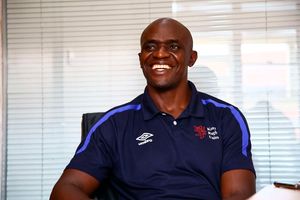
The departing players declined to sign a new remuneration arrangement by Quins who says it is based on revenue diversification and financial discipline. Quins chairman Victor Sudi said the move was geared towards strengthening the club's economic stability and long-term viability under a new restructuring plan.
Sudi and Joel Ng’ang’a, the Director of Rugby at the club, have outlined the financial status of the Ngong road-based outfit and stated what they can afford to pay the players. Sudi said revised terms were presented to all players and those willing to sign in were welcomed to do so. The Quins management told players who disagreed with their stipend structure to collect their release letters because they couldn’t continue offering what the club can’t afford.
“What we did away with were monthly stipends but continued to offer match day allowances, insurance and transport subsidy besides the gym facilities and meals after training and match day,” said Sudi, a former Kenya Harlequin and Kenya international player.
However Nation Sport has established from several players that monthly stipends have been stopped, training allowance has been halved from Sh1,000 a week to Sh500, while match day allowance was retained at Sh2,000. The players claimed that the club was silent on their medical insurance.
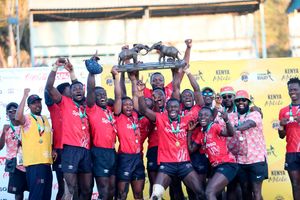
Sudi said their annual budget varied from Sh30 million to Sh35 million and it was not enough to continue paying at the current rate. Quins get revenue from SportPesa and Kenya Breweries sponsorship for Christie Sevens. SportPesa gives each leg hosting club Sh500,000 and Kenya Breweries Sh3 million in cash and kind.
The club also earns revenue from the Sports Arena at Ligi Ndogo, Alpha Fit Gymnasium, Agulu Restaurant and Orchid Lounge that are housed at the RFUEA. It also earns from gate collections.
They have not had a major sponsor for a while, and there is no Kenya Cup league broadcast rights or naming right deals that would conceivably financially benefit clubs.
“We could easily give them more stipends if we had budgets of about Sh80 million and above that clubs backed by companies have,” said Sudi.
KCB Rugby for example, sponsored by the mother company, had a budget of Sh60 million last season.
“A majority of the players understand the restructuring and have accepted the new terms presented,” explained Sudi.
He thanked the departed players for their service to the club and wished them success in their future endeavours. “We shall field a strong side in the coming season since we have close to 11 players attending training with us,” said Sudi.
Trouble at the club was visible at the start of the 2025 SportPesa National Sevens Circuit on July 26 with the Driftwood Sevens, when Quins were forced to field young players as senior squad members agitated for better pay.
Those who played were only paid their allowances at Kabeberi Sevens after going through Driftwood, Prinsloo and Christie without pay.
Sudi acknowledged that the delay in payment has caused friction but the club endeavoured to pay when there was money.
Among the players who are leaving Quins are the 2024/2025 captain Sheldon Kahi, Charlton Mokua and Nigel Wangila.
“This is too much to take even if you are so passionate about the game. It means you will fend for yourself in case you get injured since there is no insurance cover,” said Charlton Mokua, who has played for Quins for two seasons.
“Rugby is a high impact game and nobody can risk it without insurance. They never allowed room for negotiations, telling us to take it or leave it,” said Wangila, a Kenya Simba and Kenya Sevens centre, who has played for Quins for three seasons.
Wangila said that it was unethical to be forced to sign a Code of Conduct without a proper contract.
Kahi noted that while finance is the focus, lack of alignment between what Quins management and the players want is the main issue. “The previous arrangement wasn’t that lucrative but things worked. We are not being told what has changed. For me, it’s about the competency and what will work,” he said.
The club previously had a number of incentives that lured top players to Ngong Road. Besides a monthly stipend offered to players of between Sh14,000 and Sh3,000, the club offered training allowance of Sh1,000 and match day allowance of Sh2,000. Quins management also paid monthly rent, gas refilling and monthly shopping for some senior players. In 2022, Quins stopped paying rent for the selected players.
In 2024/2025, the club reduced monthly stipend to between Sh10,000 and Sh3,000, did away with training allowance but retained match day allowances of Sh2,000 for Kenya Cup players and Sh1,000 for ESS players. It seems the latest cuts were too much for a majority of the players who have decided to seek fame and fortune elsewhere.
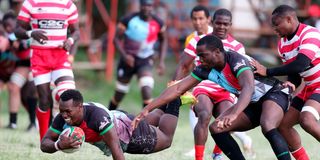
A resurgent Quins finished fifth on the Kenya Cup table last season before losing to Nondies 38-22 in the play-offs for the semi-finals.