Everything, good or bad, has a beginning and an end. It is no different with sporting careers.
Last month, former France and West Ham United midfielder Dimitri Payet became the latest big name to draw the curtain on a glittering career. He retired aged 38.
And Payet did it the only way a man of his class would. Gracefully, publicly, and with a heart full of gratitude.
France's forward Dimitri Payet applauds the fans after the Euro 2016 group A match between France and Romania at Stade de France, in Saint-Denis, north of Paris, on June 10, 2016.
Photo credit: File
“I want to take two minutes to thank everybody, to thank all those who shared these 20 years with me. It was something exceptional,” he announced during a half-time interview of a match between Marseille and Lille.
The dead-ball specialist had been without a club for nine months following a two-year stint with Brazilian side Vasco Da Gama.
When the moment came, he gladly embraced it.
“I come from an island, and my dream was to become a professional. I made it and did it for 20 years at the highest level. I managed to play for the national squad, and today is the end of a beautiful journey.”
Across Europe, this kind of farewell has become something of a sacred tradition. A rite of passage.
Sportsmen don’t just quietly leave; they announce their exit. They acknowledge the moment. They own it.
But in Kenya? The script seems to be different. Many high-profile Kenyan sportsmen don’t really quite “retire”. They drift.
One season in the cold blends into the next, then silence until it becomes the answer nobody wanted to give.
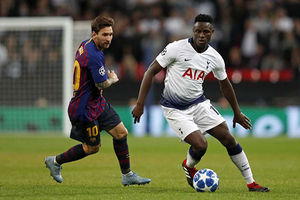
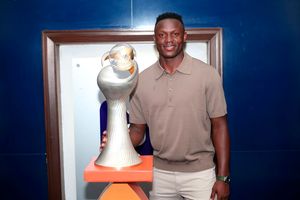
Three weeks ago, while appearing on a podcast hosted by Chacha Moroga, former Harambee Stars captain Victor Mugubi Wanyama, the first East African to play in the English Premier League, appeared uncomfortable while responding to a question over his future as a professional footballer.
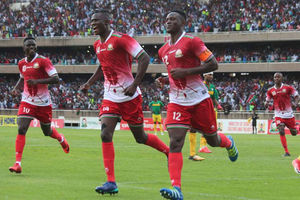
Over a 13-year international career, Victor Wanyama earned 65 caps under nine different managers, captaining the side in over 40 matches and leading Kenya to the 2019 AFCON in Egypt.
Photo credit: File | Nation
Despite not having played competitively for close to two years and having been unable to find a new club since ending his time at FC Montreal in Canada, Wanyama remained dodgy when he was asked if he was considering retiring.
“At the moment, I’m not entirely sure whether I will keep playing or retire. I’m a bit confused, but I’ll be making an announcement very soon,” he said.
Some quarters could easily argue that Wanyama is already retired from competitive football, having featured in a charity game for his former team, Southampton, on March 28, against Manchester United Legends.
A few fans were quick to take note of his “new” found physique, one not familiar to many from his competitive playing days.
At 34, time seems not to be on his side, with the only clarity being that it was perhaps time for the clubless former Harambee Stars captain to retire.
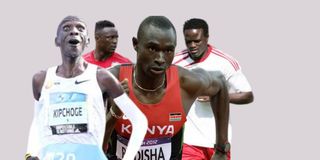
Eliud Kipchoge, arguably the greatest Marathoner of all time, has also been coy about his retirement.
Eliud Kipchoge after completing the Sydney Marathon in Australia on August 31, 2025.
Photo credit: Reuters
His last victory was the 2023 Berlin marathon. Since then, in every other competitive marathon he participated in, Kipchoge has not been the same dominant force of yore.
Finishing 10th in the 2024 Tokyo marathon 2024 and dropping out of the 2024 Paris Olympic Games marathon reflected a waning of powers that Kipchoge once possessed.
Running in the Paris Games aged 39 then, Kipchoge stopped after 31km due to severe hip and waist pain. It was the strongest suggestion that he was no longer in the same frame he was 21 years ago when he broke into the limelight, or when he broke the world marathon record in 2022.
He raced in last year’s New York Marathon, aged 40, finishing a distant 17th.
“What I am doing is not retiring. I am evolving. I am running for a purpose.” Kipchoge later told the BBC.
Kenyan footballer McDonald Mariga.
Photo credit: File | Nation Media Group
Former Inter Milan midfielder McDonald Mariga, now the FKF vice president, never formally announced his retirement from football. The world only connected the dots in 2019, when he declared his bid for the Kibra parliamentary seat. By then, his last competitive match for Real Oviedo was in 2017.
World 800m record holder David Rudisha during a past competition.
Photo credit: File
The 800m record holder and two-time Olympic champion quietly fizzled out of competitive athletics. His final race came unexpectedly nine years ago.
“My last race was in Budapest in 2017. It was an amazing race because I was preparing for the world championships. But unfortunately, a few weeks later, I had a muscle pull, which stopped me from taking part, even in the trials. I didn’t expect that to be my last race, but it happened,” he told the Olympic Games website.
Rudisha had hoped to reinvent himself as a distance runner, but recurring injuries, setbacks and weight struggles made that increasingly difficult, and he quietly made the decision to walk away.
“I had competed in 800m for a long time, and injuries had taken a toll on me. Some athletes are lucky to return and perform, but not in my case,” noted the 36-year-old.
Dennis Oliech, Musa Otieno, Ezekiel Kemboi, Asbel Kiprop, Pamela Jelimo, and others have all quietly faded away.
Why do Kenya’s sporting greats find it so hard to say goodbye when it’s obvious their time is up? They can’t keep going.
Is it pride, pressure, or simply the fear of stepping into the silence on the other side of sport where the crowds are gone, the medals are on the shelf, and you have to figure out who you are without the sport?
Kanyali Ilako, a Sports psychologist, attempts to explain.
“One key issue is what you might call athletic identity. Many Kenyan sportsmen don’t just compete in the game; they become it. So when that chapter closes, it doesn’t just feel like the end of a career. It feels like losing a part of themselves.
“And that’s where the struggle begins. Stepping away can feel less like a transition and more like starting life all over again, as someone new.
“For many, that’s a struggle. So instead, they choose to hold on, cling to that identity, the version of themselves they’ve always known, even though they are aware it’s already changing.”
According to Kanyali, the only reason it seems easier for their counterparts in the West to publicly retire is the set structures.
“I feel it’s an unfair comparison because in Europe, there are proper pathways that are set. These sportsmen and women already know that once they hang up their boots, there are options. They will either go into coaching, punditry, ambassadorial or anything related to their sport. The structures are well laid out, something we don’t have.”
She further notes that due to the well laid out structures, sportsmen in the West start early to prepare for their retirement as compared to Kenyans.
“Because of the proper pathways set, three to five years before an athlete’s career comes to an end, they start enrolling into career transitioning programmes where they will have a set of experts working with them during that period. So they will have a psychologist, a financial manager, a wealth advisor, and a life coach to help them phase out their athletic identity, and so when they get to the end of it, the fall is not as hard.”
Rowena Tirop, another sports psychologist, concurs.
“There is a lot we could do. There is a need to have more awareness and education of our sportsmen on career transition while they are still active, where they can be taught things like personal branding, career planning and other life skills that go beyond what they already know. It’s the lack of such skills that makes them cling to the only thing they have known for so long, their athletic identity.”
In one of his articles with Nation Sport s, Francis Mutuku, the former Secretary General of the National Olympic Committee of Kenya (NOC-K), offered a glimpse into the uncertainty that Kenyan sportsmen face when retirement comes.
“Sports can sometimes be very cruel because retirement is always one injury away. The fame, money, fun and influence can easily diminish or fade away. Since sports have an emotional connection, the fall of sportsmen is normally pronounced. With that in mind, preparation for retirement must start immediately when one begins their career,” he wrote.
Whereas it’s also been argued that many Kenyan sportsmen find themselves living in denial when retirement nears, and so they opt to quietly fade away without goodbyes that are illustrated with testimonial matches or races, Kanyali disagrees.
“I wouldn’t say it's denial per se, but rather the fact that an athlete has been close to a sport for so long that he or she is not able to see the options around them. You find that some have had tunnel-vision for so long to realise that there is actually life after their competitive career comes to an end.”
Rowena observes that many Kenyan sportsmen fear that announcing retirement will deny them brand partnerships and collaboration deals.
According to a study by the African Journal for Physical and Health Sciences conducted on 130 retired football players between the ages of 21 and 60 years, the majority had stopped playing voluntarily due to lack of attractive incentives, diminishing physical ability, lack of encouragement from significant others and de-selection or declined performance.
“They experienced problems of loss of identity, desperation for employment, depression, idleness and alcoholism. Upon retirement from sports, the process of adaptation is equally challenging and replete with adjustment problems,” stated the report.
“Adaptation to retirement begins with the causes of retirement (age, de-selection, injury or free choice); factors related to adaptation to retirement (developmental experiences, self-identity, perceptions of control, social identity or tertiary contributors); and available resources (coping skills, social support, pre-retirement planning). These factors address the quality of the career transition, resulting in either a healthy career transition or a retirement crisis,” the report said.