The 2027 General Elections are projected to create significant fiscal pressure, primarily through direct administrative costs and broader economic disruptions.
If not skilfully navigated, the electioneering period is likely to occasion a huge blow to the country’s fiscal consolidation efforts. It will be remembered that the Ruto administration started prioritising fiscal consolidation when it became apparent that the debilitating public debt burden was a threat to the smooth governance of the country.
Acquisition of huge offshore loans, especially between 2013 to 2022, to underwrite aggressive infrastructure expansion, particularly the standard gauge railway, drove Kenya to a debt-distress situation. It was forecast that Kenya would default on its international debt obligations by mid-2023. The fact that Kenya did not drift to the “junk-zone”, while commendable, is a warning shot that the country’s fiscal situation is hanging precariously on a cliff, and any slight mistake could be disastrous to its economy and international reputation.
The public debt-to-GDP ratio remains high at a high of 70 per cent, way above the IMF and World Bank recommended 50 per cent. More than 68 per cent of ordinary revenue goes towards debt repayment. If loan interest is factored in, then up to 81 per cent of all the KRA’s annual revenue collection is taken up by public debt obligations. This is putting a huge strain on the government’s ability to provide public services.
No State facing an election in under two years can afford to sit on its laurels in view of such fiscal distress. It is, therefore, critical that ongoing fiscal consolidation efforts be sustained, the imminent elections dynamics notwithstanding.
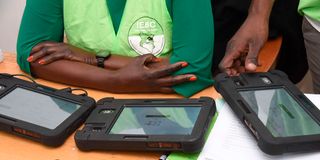
While the government aims to maintain fiscal consolidation, the electoral cycle introduces risks to debt sustainability and investor confidence. The Independent Electoral and Boundaries Commission (IEBC) has projected a budget of between Sh61.7 billion and Sh63.9 billion for the full electoral cycle, broken down into specific items.
One, technology upgrades, which primarily comprise replacing 45,000 obsolete KIEMS kits at a cost of Sh7.0 billion. Two, funding for registration of Sh5.7 million new voters. Three, unpaid obligations from previous electoral cycles totalling roughly Sh4.96 billion, which increase procurement costs as suppliers add their margins.
Besides the IEBC’s projected expenditure, a lot more cash is expected to be injected into the economy at the height of election campaigns. It is estimated that to mount an effective presidential campaign in Kenya, one requires up to Sh10 billion. Given the strong negative sentiments against the incumbent, President William Ruto , emanating particularly from the Mount Kenya region following the sacking of former Deputy President, Rigathi Gachagua, a grueling fight is in the offing.
Besides the presidential campaigns, there will be up to 1,882 more seats up for grabs (47 for governor, 47 for woman representatives, 290 for member of the National Assembly, and 1,450 for member of the county assembly).
The conservative estimates for mounting effective campaigns for governor, senator, woman representative and MNA are Sh1 billion, Sh100 million, Sh50 million and Sh40 million, respectively. In a nutshell, it is expected that additional Sh300 billion will be injected into the economy by candidates at all the six electoral levels, slightly more than the Sh292.8 billion physical cash currently in circulation.
This additional cash in the economy will be sufficient to push the inflation rate from the current 4.4 per cent (January 2026) towards 10 per cent by August 2027. Consequently, the value of the shilling will be battered, increasing the cost of debt that is denominated in major currencies such as the US Dollar and Euro. The result is likely to be a widened fiscal deficit due to offshore debt obligations. The National Treasury has proposed a record Sh4.73 trillion budget for the financial year 2026/2027, which translates to an increase of 9.9 per cent over the previous year, with a projected Sh1.1 trillion fiscal deficit to be covered by borrowing.
Further, there is likely to be an economic slowdown. Historical data shows Gross Domestic Product (GDP) growth trajectory dips during election years (e.g from 5.9 per cent to 3.8 per cent in 2017) due to a wait-and-see stance by investors. This reduces tax revenue, further straining the fiscal consolidation path. Moreover, increased election-related spending not only leads to a weaker shilling, inflationary spikes and increased cost of debt servicing, it also disproportionately increases cost of essential imports.
Kenya has proposed a raft of mitigation strategies to sustain fiscal consolidation efforts during the 2027 electoral cycle. First, the IEBC and Parliament have recommended front-loading of election funding, which entails spreading the election budget over three fiscal years, starting from 2025/2026, to avoid a massive single year spending shock.
While this is a positive signal, it amounts to a drop in the ocean given the expected massive cash injection into the economy by electoral candidates. There is, therefore, a need to fast-track the Elections Financing Regulations Amendment Act to curb the introduction of unchecked money, which can distort markets and increase corruption risks. The question is whether the Central Bank of Kenya and other authorities will have the wherewithal to control political activity- related cash from entering the economy.
The National Treasury’s plan to trim non-essential expenditures such as travel and hospitality is a great idea. However, this vote takes up Sh31.8 billion annually, making it another drop in the fiscal ocean of over Sh4.4 trillion budget proposed for 2026/2027 fiscal year.
Further, the government needs to sustain ongoing strengthening of tax compliance through tax base expansion and deepening digitalisation in order to enhance taxpayer compliance. This innovative thinking will replace the traditional approach of raising tax rates, which often proves to be counterproductive.
There is also need for prudent debt management by shifting towards more favourable financing terms, and aiming to bring down public debt to below 55 per cent of GDP by late 2028, from the current 70 per cent, to reassure international markets and private investors.
This will entail policy decisions, including re-denomination of offshore debt from the highly volatile US Dollar, in which up to 64 per cent of Kenya’s external debt is denominated, to other more favourable currencies such as Chinese Yuan.
Professor Ongore is a public finance and corporate governance scholar based at the Technical University of Kenya. [email protected]