This story is a revealing example of how parliamentary oversight in Kenya now exists in name only.
Consider the following: energy committees of both the National Assembly and the Senate launched concurrent investigations into a controversial transaction in which a company owned by Nairobi-based Nigerian investors, Asharami Synergy Ltd , was gifted a 31-year lease on land belonging to the state-owned Kenya Petroleum Refineries Ltd (KPRL).
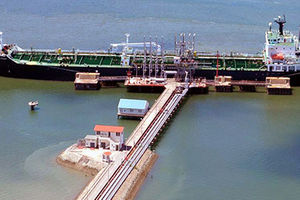
The same investors were also awarded a lucrative contract to build a 30,000-tonne Liquefied Petroleum Gas handling facility under a public-private partnership (PPP) arrangement.
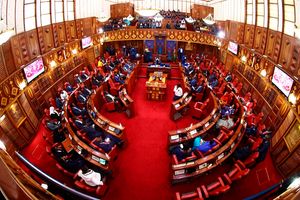
The National Assembly’s Energy Committee began its inquiry by summoning the heads of the two key entities involved: the CEO of the Kenya Pipeline Company Joe Sang, and the Principal Secretary for Energy and Petroleum Mohammed Liban. The committee announced it would release its findings in a short while.
Energy and Petroleum Cabinet Secretary Opiyo Wandayi.
Photo credit: Evans Habil | Nation Media Group
Meanwhile, the Senate Energy Committee — also probing the same transaction — summoned top government officials, including Energy Cabinet Secretary Opiyo Wandayi, for questioning. The committee even travelled to Mombasa to inspect the site and solicit views from those affected by the deal. They, too, promised to release their findings soon.
The usual practice in Kenya is that when investigations by anti-corruption oversight bodies are underway, all activity on the project is frozen until findings are announced and new directives issued.
However, The Weekly Review has seen correspondence indicating that, despite the ongoing investigations by both parliamentary committees, the deal with Asharami Synergy is proceeding unabated.
This saga starkly illustrates the growing impotence of Kenya’s anti-corruption oversight institutions when pitted against high-level political and commercial interests. Put plainly: parliamentary oversight now exists in name only—not in authority.
Evidence seen by The Weekly Review includes a recent memo from KPRL’s acting CEO Joseph B Ndobi, to the Ministry of Energy and Petroleum stating:
“Please note that the sublease agreement between KPRL and Asharami Synergy was successfully registered in July 2025 at the Mombasa Lands Office.”
It continues: “As per resolutions of the 113th KPC Board of Directors meeting held on June 11, 2025, KPRL will forward to KPC a copy of the duly registered sublease agreement to pave the way for commencement of the proposed Asharami floating barge and KPRL LPG facility.”
It appears the interests behind this controversial transaction have decided to proceed as if the investigations by both Houses of Parliament count for nothing.
So, what explains the rush to close this transaction?
A bit of background is instructive. Few may know that KPRL is currently in the process of being dissolved.
As far back as 2022, the government resolved that KPRL’s ownership be transferred to the Kenya Pipeline Company (KPC). In fact, since 2020, KPRL’s operations have been fully financed by KPC.
In October 2023, the share transfer agreement for the takeover of KPRL was signed and registered, making KPC the sole shareholder. The share transfer form was officially registered on November 16, 2023.
That KPRL continues to exist as an independent legal entity, with its own board of directors and management, is one of the more intriguing aspects of this controversy.
Equally baffling is the fact that a skeletal, cash-starved company has been left in charge of overseeing a multi-million-shilling infrastructure project involving complex design, financing, and construction processes.
What is the motive for delaying the full transition to KPC? The logical inference from the correspondence, and the picture you get from following the twists and turns taken by decision-makers, is that the delay in full transition has been orchestrated by vested interests circling the assets of the distressed company, as they fight to lock in economic rent before KPRL ceases to exist.
By exploiting this governance “grey zone,” they can avoid dealing with a more robust, better-governed entity — like KPC — that has the capacity to hire top consultants to steer complex negotiations with Asharami. As a result, the assets of the moribund company remain dangerously exposed.
One consequence of the delay in dissolving KPRL is that KPC—the sole shareholder and financier of KPRL’s operations—has been relegated to playing a minimal role in this controversial transaction.
At one point, a dispute arose over whether KPC or the moribund KPRL should negotiate and sign the documents with Asharami. The matter had to be referred to the Office of the Attorney General, which ruled that:
“KPC cannot lease land belonging to KPRL for the reason that, though being a subsidiary of KPC, it is a separate legal entity.”
Clearly, the delay in dissolving KPRL served the interests of those who wanted KPC kept out of the fray.
So, where are the irregularities and red flags in this transaction?
First, the original plan was for KPC to build the LPG terminal. The state-owned company had intended to finance the project using a mix of commercial loans and equity—just as it did with Line 5. Indeed, KPC had already spent around KSh 250 million on front-end engineering designs, pre-feasibility, and feasibility studies.
According to correspondence seen by The Weekly Review , the genesis of the controversial transaction was a letter from then-Energy Cabinet Secretary Davis Chirchir directing KPC to drop its project and instead lease land from KPRL to Asharami. The Attorney General later flagged this directive as irregular, noting that ministerial authority over parastatals does not extend to giving instructions on procurement methods.
Such was the influence of the deal’s backers that they quickly contrived a new route: abandoning competitive bidding and opting to procure the project through the so-called “specially permitted procurement” method.
Competitive bidding procedures
This was also irregular. That method is only allowed in situations where exceptional requirements make it impractical or uneconomical to follow international competitive bidding procedures.
Of the few companies invited to bid, only Asharami and Gulf Energy submitted responsive offers.
At another stage, the Attorney General raised a further red flag: when Asharami presented a draft lease agreement to the State’s chief legal adviser, the AG noted that a new, unrelated company—Sahara Energy Resources, which had not participated in the tender—had been inserted into the proposed contract.
More red flags: the deal with Asharami was signed without the mandatory approval of the Attorney General. Correspondence reveals that comments and concerns raised by the AG were wilfully ignored.
Despite legal provisions requiring that intentions to lease public land be gazetted and sufficient time allowed for public feedback, this deal was signed within just two days of the gazette notice. The deal was signed on April 6, while the gazette notice was published on April 8.
The Nigerian investors have not conducted a valid Environmental Impact Assessment (EIA). They are relying on a study conducted nearly seven years ago by KPC, which—under Kenyan law—must be revalidated. This is a serious omission, as the construction of an LPG facility carries significant public safety risks.
Correspondence shows that when the AG insisted that a letter of support for the LPG project from the National Treasury could not be given without feasibility studies and front-end engineering designs provided by Asharami, KPRL responded that the Nigerians planned to rely on the studies conducted by KPC.