Barely three months after the demise of ODM leader, Raila Odinga, there seem to be irreconcilable differences within the party, with several factions pulling in different directions.
The tensions pose a real existential threat, which might be preceded by an implosion and free-fall. The interim leader, Oburu Oginga, is not sitting pretty. As the tug-of-war ensues, it is becoming crystal clear that Dr Oburu’s strengths and comportment are exactly what the situation does not require at the moment.
Dr Oburu is a seasoned technocrat, a structured thinker and a boardroom strategist who inspires confidence and trust with his gentlemanly mien, and thrives best in town hall–type meetings where policies are articulated.
For decades, Dr Oburu was Raila’s confidant, who represented ODM in high-profile negotiations. No wonder his name keeps coming up with regard to the nuts and bolts of the Broad-Based Government (BBG) negotiations, architecture and fine print.
Unfortunately, all these admirable personal attributes are not helping to calm the strong headwinds that are currently hindering ODM’s smooth sail towards the 2027 political shores. Dr Oburu’s attempts to play Raila have fallen flat on their bellies, leaving him exposed, with rotten eggs on his face, and widening the schism.
Raila Odinga mastered Kenya’s political terrain, and often leveraged his personal charisma to cobble together movements that resonated with all categories of Kenya’s demographics, evoking imaginations of a more prosperous and inclusive country. Dr Oburu’s goose seems to be on its way to Kenya’s political kitchen. The ODM interim leader lacks the right political parlance, typically characterised by fiery speeches, podium theatrics, songs and defiance, all carefully choreographed to charm youthful rally attendees, who are usually the main purveyors of political messages.
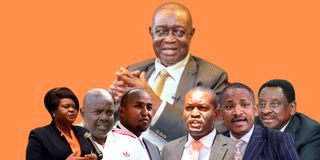
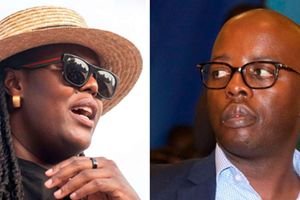
Therein lies Dr Oburu’s Achilles’ heel that Edwin Sifuna, Babu Owino, Godfrey Osotsi and Winnie Odinga are exploiting in a bid to make him politically irrelevant, and ultimately edge him out of ODM leadership. The brigade of young, maverick and impatient hotheads, going by the moniker of “ODM reformists”, want political leadership now, not later, and are prepared to go to any length to achieve their ambition.
The high-octane politics in ODM is affording the public a glimpse into the tensions that have been simmering within the party since it formally got into the Broad-Based Government (BBG) arrangement. Undoubtedly, such disagreements were bottled up within the party, and could not spill out uncontrollably during Raila’s stewardship for fear of reprisals.
ODM members loved Raila more than the party, and any sign of disrespect towards him would immediately attract their ire. Now, Raila is gone, flinging the party into the deep end of Kenya’s political sea, a situation that is akin to George Orwell’s Animal Farm, where only the fittest will survive. This leads us to the question: why this overt and unrelenting defiance and blackmail against Dr Oburu? This matter is way more convoluted than the simplistic picture that commentators have attempted to paint of it.
The popular lines that have so far been presented are basically two. First, that some progressive forces within ODM are concerned that the party’s continued stay within BBG could potentially undermine its credentials as a reformist party. Second, that there is a need for generational change in the party leadership. In my view, these arguments are mere smokescreens; the truth lies elsewhere.
The so-called “reformist” group has several formations within it, with some of them intersecting. As the Secretary General of ODM, Edwin Sifuna was privy to the discussions that led to BBG and the resultant 10-point agenda. As a matter of fact, it was Sifuna, in his official capacity as SG, who read out the contents of the 10-point agenda to the mammoth ODM crowd that gathered at the KICC grounds.
It should therefore raise eyebrows that the same Sifuna is now complaining about the very document that he read out to the public. But what exactly is making Sifuna uncomfortable in the whole thing?
Three things. First, Sifuna and Osotsi have spent the last two years castigating President Ruto’s stewardship of the country. The duo fears that if ODM and UDA formalise a pre-2027 election pact, with President Ruto as the overall leader of the outfit, they will probably miss out on the preferred list of party candidates.
Second, things are not made any better by the fact that Sifuna’s political foothold in Bungoma is threadbare. In fact, he owes a great deal of his meteoric rise in politics to Raila Odinga, who single-handedly appointed him to the position of SG, and cushioned him politically over the years. With Raila’s demise, Sifuna is exposed.
Third, Sifuna and Babu Owino have real concerns about their future survival in Nairobi politics in the absence of Raila Odinga. The late ODM leader had an unmatched political war chest and persuasive ability that enabled him to easily galvanise voters from across most major communities in Nairobi. This helped to form an invincible bloc against the numerically strong Mount Kenya voters.
The ODM candidates, including Sifuna and Owino, easily swam with the waves to clinch their seats. In the absence of Raila, and given the stated determination of the Mount Kenya region to reclaim all the elective positions in Nairobi, which were taken away by Raila’s political waves, these two leaders are facing a real threat to their re-election bids in 2027. That is why they are trying to endear themselves to the Mount Kenya voters by posing as anti-BBG and anti–President Ruto.
As to whether this strategy will work for them, it is neither here nor there. Pundits, however, argue that it will be a hard nut to crack for Sifuna and Owino to win re-elections in 2027. By declaring his intention to vie for the Nairobi gubernatorial seat in 2027, Babu Owino has heightened his ambition to the next level. The Embakasi East MP is fully cognisant of the need to woo Mount Kenya voters in Nairobi in order to realise his ambition.
The challenge, however, is that if both he and Sakaja go for the gubernatorial seat, they will share the same vote basket, clearing the way for a third candidate to easily snatch the trophy from them. That candidate is likely to be from the Mount Kenya bloc. Babu Owino has an additional grand ambition of becoming the Luo Kingpin, a position that combines both political and cultural responsibilities. He sees Dr Oburu as an impediment to his ambition. Someone should advise Babu not to open too many war fronts; he might be exhausted before he gets the prize.
The entry of Ms Winnie Odinga into the ODM fray has confounded both friend and foe. Ms Odinga, who is generally believed to be Raila’s heiress apparent, has not hidden her political ambition, with observers placing a safe bet that she will probably go for the Kibera parliamentary seat in 2027. That perhaps explains her mother, Ida Odinga’s unexpected rapprochement with the hitherto recalcitrant Edwin Sifuna. Those who are in the know opine that Ida Odinga remains a solid supporter of the BBG arrangement. However, the matriarch is alive to the fact that the Sifuna–Babu axis is more popular among the Nairobi voters than the Oburu wing.
So, in treating Sifuna with kid gloves, Ida Odinga is essentially seeking to create formidable alliances that can bolster Winnie’s chances of becoming an MP in Nairobi. At the same time, the Raila family cannot countenance Dr Oburu inheriting the party that their father painstakingly built for two decades.
This intra-family rivalry among the Odingas over “ODM ownership” poses a threat to the party’s stature and national appeal, and might, in fact, reduce it to a purely Luo Nyanza political outfit. Down in Luoland, there is the never-ending competition between ODM members and their UDA nemeses, with the latter claiming that political zoning has previously worked against them. In the last three years, the UDA party has gained substantial membership in Luoland.
These people are now demanding a fair playing field where they can showcase their political mettle. In fact, the UDA team in Nyanza would rather the ODM party is annihilated in the region so that a new leadership, devoid of party patronage, can sprout. Two factors have contributed to the speedy penetration of UDA in the region.
First, President Ruto has consistently committed resources to build physical infrastructure, appointed members of the community to senior positions in the government, and shown affection to the region. Second, the youth and widows’ empowerment and capacity-building programmes spearheaded by Interior PS, Raymond Omollo, have tremendously changed the people’s perception of President Ruto and his government, and created huge goodwill in Luoland.
If I were President Ruto, I would leverage this goodwill and ensure fair competition between ODM and UDA during joint primaries, so as to stem fallout and bolster voter turnout in the 2027 general elections. How can ODM be rescued? Simple. Create a Caretaker Council of five members, headed by a hugely respected leader, preferably Professor Peter Anyang’ Nyong’o, to stabilise and run ODM on an interim basis until party elections are conducted. Professor Nyong’o is retiring from politics in 2027, and therefore has no vested interest in the party other than the need to see it succeed.
Besides, the so-called reformist hotheads are fully cognisant that the good professor is highly principled, and not an easy intellectual tackle. The Caretaker Council should comprise members drawn from regions where ODM has traditionally had a large following, such as Maasailand, Coast, Turkana, Luhyaland and Kisii. The so-called reformist wing should also be incorporated into the council to achieve their buy-in.
That way, the party will stem any potential fallout that may be precipitated by internal disillusionment or external forces.
Prof Ongore is a Public Finance and Corporate Governance scholar based at the Technical University of Kenya. [email protected]