Zimbabwe’s ruling Zanu-PF is in the eye of a storm after introducing radical constitutional reforms that mirror Kenya’s botched Building Bridges Initiative (BBI) in an attempt to consolidate power and extend President Emmerson Mnangagwa’s rule.
Just like Kenya’s BBI by ex-President Uhuru Kenyatta and former Prime Minister Raila Odinga, Zimbabwe’s Breaking Barriers Initiative (BBI) seeks to address “political instability and perennial electoral conflicts” through constitutional restructuring.
Proponents say the BBI seeks to fix elections and their perennially disputed outcomes, winner-takes-all politics in and across parties, governance processes and public service systems.
In some of its controversial proposals, Zanu-PF seeks to extend presidential terms from five years to seven, a move that will effectively delay the presidential election from 2028 to 2030.
It also seeks to alter the choosing of the president by replacing direct election by voters with parliamentary selection.
A joint sitting of Parliament would elect the president under the supervision of the electoral commission or a judge, with the candidate who garners more than half of the valid votes cast declared the winner.
With the Zanu-PF’s majority in Parliament, the proposal could see it maintain its stranglehold in the running of the country. Mr Mnangagwa was elected for his second and final term in office in 2023. If the proposal is implemented, it means he will be in office until 2030 when he turns 88.
BBI critics see it as an attempt by the President to consolidate power and block Vice-President Constantino Chiwenga from succeeding him.
Zimbabwe's Vice-President Constantino Chiwenga.
Photo credit: AFP
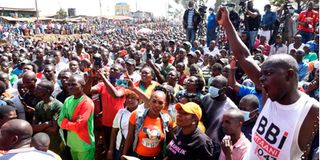
In Kenya, the BBI was presented as a major political process designed to promote national unity, address ethnic divisions and end electoral violence.
Kenya’s BBI highlighted lack of inclusivity in governance and the winner-takes-all electoral system as the primary causes of electoral conflicts.
Other issues the initiative sought to address were ethnic polarisation during election campaigns, skewed sharing of national resources, inequality, corruption and lack of accountability.
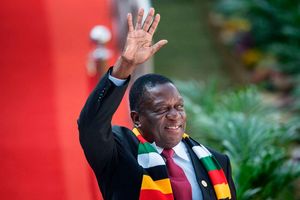
Zimbabwe President Emmerson Mnangagwa salutes provincial leaders and other party delegates during the Zimbabwe African National Union Patriotic Front (ZANU-PF) annual people's conference in Goromonzi, on December 13, 2019.
Photo credit: Jekesai Njikizana | AFP
Though framed as a people’s initiative, opponents perceived Kenya’s BBI as an elite political pact with limited public participation. It was seen in some quarters as part of Mr Kenyatta’s plot to block his then-deputy William Ruto, from succeeding him.
The initiative was a product of the famous March 9, 2018, handshake between Mr Kenyatta and then-opposition leader Odinga.
Even though courts threw out the BBI, the political cooperation lay the foundation to craft the Azimio la Umoja One Kenya coalition that fronted Odinga as its presidential candidate. He lost to Dr Ruto in the 2022 contest.
“What Odinga and I wanted was for the country to be united and to be led by policies and principles, not ethnic bitterness and hatred,” Mr Kenyatta said at a funeral in Kirinyaga County on Wednesday.
Mr Chiwenga has been quoted in some of Zimbabwe’s publications describing the BBI as a treason, designed to alter the country’s political system and suspend elections beyond 2030.
The vice-president has linked Prof Jonathan Moyo to the initiative. Prof Moyo served as Minister of Higher Education during the tenure of Zimbabwe’s longest serving president Robert Mugabe. He also served as Minister of Information and Publicity.
He once worked in Nairobi as the Director for the Ford Foundation. Prof Moyo went into exile when Mugabe was removed from power.
“Comrade President, you recall I brought to your attention the treasonous project which has been penned by Jonathan Moyo for our Parliament to implement, the so-called Breaking Barriers Initiative, which is seeking to change our political system and suspend elections to 2035,” the VP was quoted as saying.
“Not only is this project treasonous and a huge scandal, but it is also being championed by people like Moyo, who we dismissed from the party. This Breaking Barriers Initiative has also never been discussed and approved at the party’s last congress, nor has it ever been discussed and approved by the Central Committee.”
The country enacted its current constitution in 2013 when Mugabe had been in power for 33 years. In an attempt to end his rule, the Constitution included a two-term limit for the presidency.
The 2013 constitution also introduced public interviews in the appointment of judges and senior state officials. Some of these reforms have been eroded by Zanu-PF, which continues to exploit its numerical strength in Parliament to introduce piecemeal changes to the law.
Parliament, on February 16, gazetted the Constitution of Zimbabwe Amendment Bill No. 3. It conducted nationwide hearings that ran from March 30 to April 2.
From the hearings, the proposed constitutional amendment drew mixed reactions.
“Despite the sweltering heat, Chashawasha residents showed up at St Peter Claver Primary School grounds this afternoon, eager to share their thoughts on the Constitution Amendment No.3 Bill,” Parliament posted on X.
A citizen was quoted saying during a public hearing: “We need to focus on development and not stay in election mode. I would propose we have a 10-year presidential term.”
“Charades, not hearings. What were supposed to be public hearings on the Constitutional Amendment Bill have turned out to be a circus of choreographed, coached and rehearsed Zanu-PF slogans and rallies,” opposition politician Nelson Chamisa posted on X a few days ago.
“This is nothing but a desperate attempt to create manufactured consent and lie that citizens support this otherwise hugely unpopular Bill.”
In a phone interview, Mr Chamisa told the Daily Nation that he opposes the “malicious” bill.
“We thought Mugabe was bad, but this is worse. It is like jumping from the frying pan into the fire,” he said.
In the preamble, the 24-page BBI notes that it seeks to “identify and break chronic toxic barriers to efficient and effective public services, infrastructural development and socio-economic progress in Zimbabwe primarily caused by the scourge of perennially disputed elections and the resultant scourge of a toxic governance and policy environment in-between disputed elections”.
“The goal of the initiative is to strengthen governance and policy-making to enable Zimbabwe to realise its full potential and achieve developmental goals by industrialising and modernising to sustain lives and uplift the livelihoods of its people, leaving no one and no place behind,” it says.
The document lists “successive toxic elections with invariably disputed outcomes”, toxic policy-making environments in local government, public service and public enterprises that lock the country into a perpetual election mode in between elections due to disputed toxic election outcomes and rampant corruption in the local and public services enabled by the toxic policy-making environment, as among five barriers facing Zimbabwe.
Also outlined is “manipulation of elections with disputed outcomes, and the toxic policy-making environment; and their abuse by some meddlesome Western countries as pretexts to justify their nefarious regime-change agendas to impose unilateral, illegal and coercive sanctions on Zimbabwe, which have arrested and derailed the country’s development”.
According to ConstitutionNet – an online knowledge-sharing hub for the constitution-building community – it remains technically possible, but highly implausible, that the proposal will be defeated in Parliament.
The publication says Zanu-PF secured a super-majority in the National Assembly after a series of parliamentary recalls by the main opposition party.
“The traditional leaders in the Senate consistently vote in accordance with the Zanu-PF caucus, meaning the ruling party will need about three defections in the Senate to pass the bill. These could come from the representatives of people living with disabilities or the already pliant main opposition party,” ConstitutionNet notes.
“This Bill reveals a troubling truth: The Second Republic longs for the powers of the First. Yet for all his faults, Mugabe prided himself on the ritual of regular elections, and even put a draft constitution to a referendum that he was not legally required to hold. President Mnangagwa, in contrast, is seeking to postpone elections, scrap direct presidential voting and evade referendum requirements.”
In Kenya, Dr Ruto opposed the BBI, accusing its proponents of using the document to manage the 2022 succession. President Kenyatta was seen as fronting Odinga as his successor in an attempt to continue ruling through proxies.
The document also sought to create more seats in what was seen as a ploy to craft a political juggernaut with key political players in an effort to block the then-deputy president, with whom he had fallen out.
Kenya’s BBI had proposed major constitutional and policy reforms that sought to restructure governance structure by creating a Prime Minister position, two Deputy Prime Ministers and official Leader of Opposition.
The proposed amendments to the 2010 constitution also sought to increase the number of constituencies as well as to have each of the 47 counties represented by a man and woman.