Safina Party leader Jimi Wanjigi is proposing an economic overhaul built around auditing public debt, cutting taxes, shrinking government and making credit cheaper, arguing that successive administrations have crowded out private enterprise and burdened citizens with the cost of borrowing.
Mr Wanjigi calls his 2027 presidential campaign an “economic insurgency”, promising to put the economy first. He blames corruption, excessive taxes and questionable borrowing for Kenya’s debt crisis.
“We are now borrowing to survive, not to develop,” he said, pledging a debt audit to identify loans that violate constitutional and legal requirements.
He claims Parliament approved Sh2 trillion in development borrowing during former President Uhuru Kenyatta’s two terms, while national debt rose by more than Sh8 trillion. He attributes the Sh6 trillion difference to borrowing that did not benefit Kenyans.
“Why should we pay for what we did not approve?” he asked, estimating that rejecting illegitimate debt could save nearly Sh2 trillion annually, subject to an audit’s findings and the loans’ legal status.
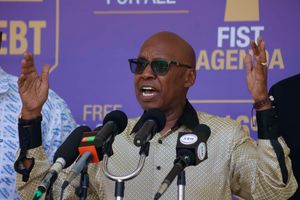
Safina Party Leader Jimi Wanjigi speaks during the party's leadership transition ceremony at Ngong Racecourse in Nairobi on September 18, 2025
Photo credit: Bonface Bogita | Nation
Mr Wanjigi says projected annual tax collections of Sh2.9 trillion could fund development if corruption and waste were eliminated.
Healthcare and education would be priorities, with free primary and secondary education costing an estimated Sh200 billion annually and universal healthcare Sh178 billion. He proposes replacing the Social Health Insurance Fund (SHIF) with taxpayer-funded healthcare delivered through private hospitals.
He also wants to abolish the Affordable Housing Fund, arguing that the government should not levy taxes to build houses and then sell them to taxpayers. Mr Wanjigi proposes replacing the 16 per cent value-added tax (VAT) with a five per cent sales tax to lower living costs and stimulate spending. He blames excessive taxation and borrowing for stagflation.
“You fight stagflation not by raising interest rates, but by cutting taxes,” he said, arguing that greater disposable income would boost business and employment.
He also wants to end domestic government borrowing, arguing that the State crowds businesses out of credit markets. He estimates government borrowing at Sh6.2 trillion against Sh8 trillion in domestic financial assets, saying an end to this competition could bring interest rates below three per cent.
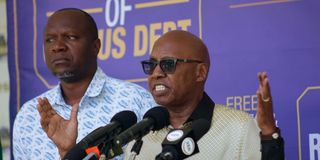
Safina Party Leader Jimi Wanjigi addressing journalists at his offices in Nairobi on June 15,2026 where he called for the rejection of Finance Bill 2026 and for the end to illegal borrowing and oppressive taxation.
Photo credit: Evans Habil | Nation Media Group
“Let Mama Mboga borrow a million shillings and pay just 30,000 a year in interest,” he said.
His plan would cap ministries at 14, focusing government on core functions, including defence, policing and regulation.
“Government should not be building houses or running businesses,” he said, arguing that state involvement fuels corruption and undermines private enterprise. Mr Wanjigi frames his proposals as the next stage of Kenya’s struggle for independence, saying political freedom has not delivered economic sovereignty.
“We replaced white faces with black faces, but the exploitation continues,” he said.
However, his proposals raise questions about the legal consequences of withholding debt payments, the feasibility of financing public services without borrowing and whether lower taxes could generate sufficient revenue to meet government obligations.
A debt audit would also need to distinguish unlawful loans from legally contracted borrowing whose use or value is disputed.
For Mr Wanjigi, Kenya cannot tax its way out of an economic crisis while continuing to borrow to meet its obligations.