More fertiliser? What our soils have been telling us for years
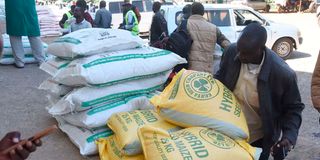
A farmer prepares to transport government subsidised maize seeds and fertiliser that he bought at the National Cereals and Produce Board Eldoret Depot in Uasin Gishu County on April 2, 2026.

Across much of Kenya’s maize belt, farmers are watching their crops endure another prolonged dry spell. Weather forecasts point to generally dry conditions through July across many of the country’s principal grain-growing regions, raising fresh concerns about the coming harvest.
But drought alone cannot explain why yields have remained stubbornly below their potential even in years of good rainfall. Another constraint has been quietly accumulating beneath the surface, one that has received far less public attention, and media coverage than fertiliser subsidies or seasonal forecasts.
The experience varies greatly between farmers, but by most objective measures, fertiliser is now more accessible than it has ever been in the country.


Government statements exalt the increased availability of subsidised fertiliser sitting in depots across the country, redeemable by e-voucher at half the commercial price.
Yet, even in wetter years, yields have scarcely moved in many of the country’s most intensively cultivated maize fields. Conversations with scientists in the country reveal that this mystery has long been figured out, but just like in many national interventions, policy has largely lagged behind the science.
20 major soil types
For two decades, Kenyan fertiliser policy has been an exercise in logistics, focused on getting more bags to more farmers, more cheaply, with less theft along the way. That project has largely succeeded by most estimates. However, an accumulating body of soil science, which even the government’s own Kenya Fertiliser and Soil Health Action Plan 2026-2035, acknowledges, points to a more fundamental constraint. It turns out that in the midst of this fertiliser distribution blitz, Kenyan farmers have rarely known, with any precision, which fertiliser their particular field actually needs.
The old assumption behind this blanket prescription has been that soil in the country may have small differences, but is roughly a uniform medium, where you can add a bit nitrogen, phosphorus and potassium in some standard ratios, and yields will rise in proportion.
Modern soil science is now dismantling that assumption county by county, and in some instances, even field by field.
A summary of various studies suggests that Kenya sits atop more than 20 major soil types, ranging from the volcanic loams of the central highlands to the leached, acidic soils of Western Kenya, and their capacity to hold and release nutrients varies just as much.
The level of acidity or alkalinity of the soils, commonly known as soil pH, can vary by several units within a single sub-county or location. Organic matter, which determines a soil’s ability to retain nitrogen and water, can range from healthy to critically depleted on adjoining farms.
Phosphorus, which is often considered as the energy hub of any plant, may be abundant in one field and chemically locked and unavailable in the next.
Potassium, which has historically been assumed to be plentiful everywhere in Kenya, turns out to be deficient across large swathes of the maize belt, yet it is absolutely critical for plant health and water management.
Furthermore, micronutrients such as zinc and copper, which are absent from most standard prescriptions, can silently cap yields regardless of how much nitrogen is applied.
A long-running national survey by the Kenya Agricultural and Livestock Research Organisation (Kalro), covering 231 sites, found that 100 per cent of soils tested had a pH below 7, with 63 per cent below 5.5, the threshold at which acidity begins to seriously impair nutrient uptake.
Roughly 13 per cent of Kenya’s land area, concentrated in the high-potential North Rift and western counties that form the country’s maize basket, is now classified as strongly acidic.
The chemistry is unforgivingly clear that acidic soils bind phosphorus into forms plants cannot absorb, so a bag of diammonium phosphate (DAP) applied to such land delivers only a fraction of its nominal nutrient value, however faithfully the farmer follows instructions on the label.
The same national survey found a critical depletion of organic matter, which is what allows a soil to hold nitrogen and water between rains. The slow erosion of this essential element is the result of many years of intensive cultivation without adequate replenishment. This depletion is hardly ever visible to a farmer but over time, it steadily diminishes what any fertiliser application can achieve.
The third element in this string of invisible yield killers is that nutrients long assumed to be abundant often are not.
Potassium, for instance, was excluded from most recommended blends for decades on the assumption that Kenyan soils held plenty of it.
But a 2014 survey of nearly 4,500 farms across four Western counties found potassium below adequate levels on more than half of them, and subsequent trials in Bungoma and Trans Nzoia showed sharp maize yield jumps once potassium was added. Similar trends were observed with zinc, which among other functions, supports root development and crop resilience against drought and cold.
In simple terms, a farmer applying a textbook dose of nitrogen and phosphorus to acidic, potassium-poor, zinc-deficient soil is, for all practical purposes, treating the wrong ailment.
The Kenya Fertiliser and Soil Health Action Plan 2026-2035 represents the first official acknowledgement that Kenya’s fertiliser challenge is fundamentally a problem of diagnosis.
The plan’s central proposals, thankfully, concern mandatory soil testing, region- and eventually farm-specific fertiliser recommendations to replace the blanket prescriptions that have dominated policy since independence, and a digital soil information system to help extension officers with site-specific advice.
That said, the country has no shortage of stories where a beautiful plan on paper keeps gathering dust on government shelves, as intended beneficiaries contend with suboptimal outcomes. This is even more pertinent as the country enters the election season where optics will increasingly trump substance.
Calibrated soil analyses
This is because governments naturally find it easier to fund what voters can see. A truck delivering subsidised fertiliser, or a beaming farmer carrying a fresh bag of DAP, is immediately visible.
But a laboratory producing calibrated soil analyses is hardly noticeable. Yet in the end the lab may matter way more than the truck.
A further angle in this story, is the herculean task of retooling a government system that has for decades accumulated expertise in procurement and logistics of fertilisers, to now focus more on soil chemistry and data systems.
Turning that machinery toward generating scientific intelligence, rather than simply distributing sacks, will require investment in laboratories whose testing methods are standardised.
This shift in development thinking is hardly restricted to agriculture. Across sectors, progress increasingly depends less on moving more physical resources than on generating better intelligence about where, when and how those resources should be deployed.
While in agriculture, that may mean understanding the soil before subsidising the fertiliser, in public health, it often means predicting outbreaks before healthcare systems become overwhelmed, and in climate adaption, anticipating risk before the disaster strikes.
That is why Kenya’s new fertiliser policy is cause for hope, because it signals, perhaps belatedly, that the real subsidy of the future may not simply be the bag itself, but the knowledge that determines what is put inside the bag, where it should be applied, and whether fertiliser is the first intervention required at all.
Follow our WhatsApp channel for breaking news updates and more stories like this.
Dr Ageyo is the Editor-in-Chief of the Nation Media Group. He holds a PhD in media studies with a focus on science and environment communication. [email protected]