When I wrote in July about Tata Magadi Soda and how, after more than a century of extraction, the surrounding community had little to show for it, I did not expect President William Ruto to enter the fray so quickly. But whether one supports him or opposes him, President Ruto is right to raise the matter. Tata Chemicals, or whichever company is ultimately allowed to mine the lake, must understand that Lake Magadi is a national asset, not merely a mineral extraction camp for foreign industries.
But the Magadi debate must not be reduced to the politics of “Wantam” and “Tutam” as the opposition wants to herd people into. It is neither a referendum on Ruto’s presidency nor a test of whether one wants him re-elected or defeated next year. Equally, the President must not turn Magadi into political bait for Maa votes.
The real question is much bigger: will Kenya continue exporting raw and semi-processed materials, only to buy back the finished products, technologies and even jobs created from its own resources? To advance this debate, we have to look beyond Magadi which is our test of whether the country can finally move beyond extraction and build an economy anchored in value addition, domestic manufacturing and shared prosperity.
Ruto: I told Tata Chemicals to go, all their money was going to India
The only problem I foresee, and President Ruto needs to understand this as a scientist, is that Magadi’s trona exists only because the vast surrounding ecosystem has been preserved. Anyone contemplating carving up or grabbing land held by the company, reportedly in pursuit of other minerals or possible oil deposits, must first understand the lake’s delicate geology. Lake Magadi’s trona forms on the lakebed after groundwater flows through cracks in the Rift Valley’s volcanic rocks, absorbing heat and dissolved sodium salts before rising into the lake through hot springs. The salts crystallise into trona after water evaporates.
This process was explained to me during my first visit to Magadi years back by James Mathenge, a former company director. It also explains why the company supplied local communities with free cooking gas to reduce their dependence on firewood and protect the forests surrounding the lake. If anyone disturbs that environment, the natural process that replenishes the trona deposit will suffer and bring mining at Magadi to an irreversible end.
Magadi should become the beginning of a wider national debate. Take coffee for example. Kenya grows one of the world’s most prized coffees, yet green beans continue to dominate our exports. We do the exhausting and uncertain work: growing, pruning, spraying, picking, pulping and drying. The bean then travels abroad, where somebody else roasts it, blends it, packages it, brands it and sells it by the cup at many times the farmer’s return. We celebrate export earnings while surrendering the most profitable sections of the chain.
Dear President Ruto, where are the factories in the coffee growing zones? Historians will tell you that colonialism did not merely take land and political sovereignty. It organised African economies around extraction. In this arrangement, Copper left Zambia, cocoa left Ghana, cotton left Uganda, and that is how coffee leaves Kenya. That is why the railway systems in Africa were designed to carry cheap raw materials outward and to bring expensive finished products inward.
Value addition in coffee does not mean banning green-bean exports overnight or pretending every market wants coffee roasted in Kenya. Roasted coffee has a shorter freshness window, and global distribution is controlled by powerful brands. It means deliberately building Kenyan roasting, soluble-coffee, packaging, branding and marketing capacity; financing cooperatives and local firms; negotiating shelf space abroad; protecting quality; and ensuring that a growing share of the final retail price returns to farmers and Kenyan workers.
On Magadi, you are asking the right questions but to the wrong people. You don’t have to do policy on top of your car while campaigning. That is what Mwai Kibaki called ‘roadside declarations.’
The same principle on Magadi must govern Mrima Hill in Kwale. Its rare-earth and niobium deposits have attracted international interest because these minerals are critical to batteries, electronics, aerospace and defence technologies. Kenya must not repeat Magadi there. No company should be permitted merely to dig ore, load it at Mombasa and leave Kenyans with a scarred sacred hill, displaced communities and a royalty cheque.
Any Mrima agreement must begin with the land, environmental and cultural rights of the Digo community. It must then demand the highest technically and commercially feasible level of processing in Kenya: mineral separation, refining, research partnerships, laboratories, technical training and linkages to domestic manufacturing. The government should negotiate from knowledge, not desperation. If Kenya lacks a particular technology today, the contract should specify how and when that capacity will be transferred.
When Kenya discovered titanium deposits worth billions of shillings, the country was promised that mining would transform Kwale into an industrial hub. It did not. For more than a decade, Kenyans watched as titanium-bearing minerals were dug from Kwale, transported to Base Titanium’s export facility in Likoni, loaded onto ships and carried abroad. When the commercially viable ore was exhausted, the enterprise wound down. In February 2025, the MV Devbulk Sinem sailed away with the final bulk shipment—leaving behind a powerful lesson: extracting and exporting minerals is not the same as industrialisation.
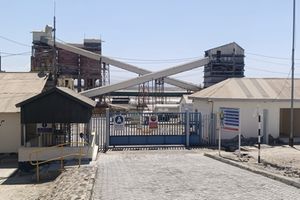
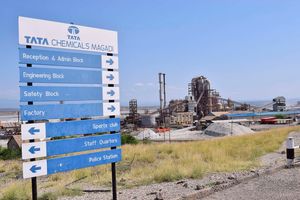
Tata Chemicals Company Magadi factory on June 14, 2025.
Photo credit: Stanley Ngotho | Nation Media Group
Kwale taught Kenya that export earnings, royalties, taxes and jobs, valuable as they may be, cannot substitute for an industrial policy. A mine is finite. Once the deposits are depleted, the ships leave, the machinery falls silent and the local economy must confront what remains. The true measure of a mineral project is therefore not simply the tonnage exported or the revenue declared, but whether the country acquires the factories, technology, technical expertise and downstream industries needed to continue creating wealth after mining ends.
That is why the case for revisiting Magadi is neither anti-Indian nor anti-investment. It arises from the lessons Kenya has learned about extraction without transformation. Kenya needs foreign capital, technology and access to international markets. What it no longer needs, whether the investor is British, Indian, Chinese, American or Kenyan, is a business model whose ambition ends when a raw or semi-processed mineral reaches the port.
A genuine partnership must leave behind more than an exhausted deposit. It must build industrial capacity, transfer technology, train Kenyan specialists, support local suppliers, create skilled employment and sustain viable communities. It should also establish industries that convert the mineral into higher-value products at home. Otherwise, Kenya supplies the raw material while other countries capture the manufacturing jobs, patents, technology and profits.
The lesson from Kwale is straightforward: a mineral beneath Kenyan soil may be a natural asset, but it becomes a national resource only when its exploitation advances the long-term interests of the Kenyan people. Magadi must not become another enclave from which wealth is removed, counted and celebrated—until the final ship or truck leaves and the country discovers that industrialisation was only ever a promise.
We must distinguish extraction revenue from development. A mine can contribute taxes and still leave an economy structurally unchanged. A company like Magadi can build boreholes, clinics and classrooms and still capture the commanding heights of the value chain. Corporate social responsibility is welcome, but it is not a substitute for industrial transformation. A borehole cannot replace a binding value-addition agreement; a sponsored classroom cannot replace technology transfer.
Nor should Kenya fall for the fiction that demanding more value will automatically frighten away every investor. Serious investors want predictable rules, not weak states. The rules should be clear before capital enters that Kenya welcomes investment, protects lawful property and honours legitimate contracts, but finite national resources must build enduring national capabilities. What frightens responsible investors is arbitrariness, corruption and agreements that change according to the political calendar.
There are many colonial or colonial-like agreements that Kenya must review—not as campaign theatre, and not to reward new favourites, but as settled policy. Parliament should establish a transparent audit of long-term mineral, land and infrastructure concessions. Each should be tested against the Constitution, current environmental standards, community rights, public revenue and the national goal of value addition. Renegotiation should be lawful, evidence-led and insulated from presidential appetites.
The choice is not between servility to foreign capital and reckless expropriation. It is between bad investment and developmental investment. It is between a railway that only carries wealth away and an industrial network that multiplies wealth at home.
Hate Ruto or like him, Magadi is the right argument to have. If his government converts the rhetoric into an open, lawful and durable value-addition policy, it deserves support. If it merely changes the beneficiary of the concession, it will deserve condemnation.
The task ahead is larger than closing one company. It is to close the colonial chapter in which Africa digs while others manufacture, Africa extracts while others prosper, and Africa is left with exhausted mines and impoverished communities. Kenya must now open a new industrial chapter—one in which what lies beneath our soil creates factories, technology, skilled jobs and lasting prosperity above it. Our minerals must cease to be the starting point of other nations’ wealth and become the foundation of our own.
John Kamau is a PhD candidate in History at the University of Toronto. Email: [email protected] . X: @johnkamau1