Kenya-India trade relations are facing a fresh test following President William Ruto’s order for multinational soda ash manufacturer Tata Chemicals Magadi to ship out of the country, with the State insisting that the move is not a diplomatic row but part of a broader review of bilateral trade relations.
The President’s directive has also triggered a political backlash, with opposition leaders accusing the government of undermining investor confidence.
During a tour in Kajiado County on Thursday, President Ruto confirmed that he had sanctioned the closure of the giant soda ash manufacturer, a month after the Ministry of Mining suspended its operations over alleged non-compliance.
Ruto: I told Tata Chemicals to go, all their money was going to India
The President cited unfulfilled promises, including the company’s failure to establish a local glass and chemical manufacturing plant, among other shortcomings.
Before the dust could settle, and with President Ruto expected in Kajiado on Saturday to continue his three-day tour, the Ministry of Industrialisation defended the President’s move, saying it amounts to a bold step towards addressing the imbalance in Kenya-India trade ties.
Dr Juma Mukhwana, Principal Secretary for Industrialisation, said in a statement that, while cognisant of the two countries’ historical and cultural ties, the Magadi Soda operation could be a game changer for Kenya’s industrialisation.
He insisted that the future Kenya-India relationship ought to move beyond a seller-and-buyer arrangement to a relationship of co-investors, co-manufacturers and co-exporters.
He said that Kenya has been an underdog in bilateral trade over the years, according to official Indian trade figures, which indicate that bilateral merchandise trade reached approximately US$4.31 billion in the 2025/26 financial year.
The figures give India a head start, exporting approximately US$4.01 billion worth of goods to Kenya, while importing only about US$290 million from Kenya.
“Approximately every dollar India bought from Kenya, Kenya bought nearly 14 dollars from India. That is an extraordinary imbalance. More importantly, the structure of this trade tells an even bigger story,” said PS Mukhwana.
He said the trade imbalance indicates that India sells Kenya petroleum products, pharmaceuticals, machinery, vehicles, electrical equipment, plastics, chemicals and other manufactured products, while Kenya’s exports to India comprise a variety of products, including tea, coffee, soda ash, vegetables, scrap metals and other largely primary or minimally processed products.
He termed the skewed trade pattern familiar in Africa, where the continent exports commodities while Asia exports manufactured products, insisting that the structure is not tenable in a 21st-century partnership.
“Kenya does not seek to stop Indian companies from selling products to our market. Quite the opposite. We want Indian companies to succeed in Kenya. But increasingly, we should be asking them to make in Kenya what they sell in Kenya and Africa. The pharmaceutical sector is an obvious starting point. India is one of the world's pharmaceutical manufacturing powerhouses,” he added, saying that this would strengthen Kenya as an East African commercial hub, especially in pharmaceutical manufacturing.
PS Mukhwana insisted that the new company expected to take over from Tata Chemicals, without revealing its name, will be central to soda ash value addition and job creation in the spirit of Buy Kenya, Build Kenya.
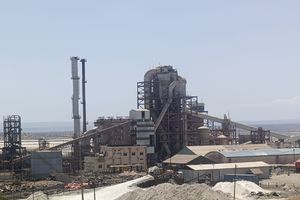
Tata Chemicals Magadi, Kajiado County on August 11, 2026.
Photo credit: Stanley Ngotho | Nation
The Democracy for Citizens Party (DCP) on Thursday accused President Ruto of scaring away investors to serve his personal interests.
Nairobi Senator and Linda Mwananchi leader Edwin Sifuna, in his X account, waded into the matter, saying that when companies make decisions about where to put their investments, the dispute resolution regime in place is key because disputes arise all the time.
“The ‘Mambo Matatu, pack and go’ approach where the President can just shut down your business is very bad for investment and consequently, job creation. It is why we in Linda Mwananchi insist on a return to the Rule of Law. That’s our Plan!” said Mr Sifuna.
Wiper Patriotic Front leader Kalonzo Musyoka, in a statement, said thousands of Magadi residents were in limbo, urging President Ruto to reveal to Kenyans who would benefit from the proposed reorganisation and the law anchoring the change to a non-disclosed company.
“A colonial-era concession must not be replaced by a twenty-first-century concession negotiated with the same secrecy, the same disregard for the Maasai, and the same contempt for Parliament,” Mr Musyoka said.
Former Law Society of Kenya President Nelson Havi, in his X account, wondered: “Why do we need Parliament if the President has all these powers?”
Tata Chemicals, formerly Magadi Soda, is among the country’s largest mining employers and the largest producer of soda ash in Africa. It is also one of Kenya’s largest single exporters, contributing approximately six per cent of Kenya’s exports and generating nearly USD100 million in foreign exchange earnings annually.
Over the years, the company has undertaken several Corporate Social Responsibility (CSR) initiatives in health, water supply, education and other empowerment programmes. In the last one month, the company has reportedly downsized its services.
According to the company website, TCML directly employs approximately 800 people and supports many more indirectly through transport, logistics, local suppliers and community businesses. Last year, the company rehabilitated the Sampu water pipeline, which taps fresh water from the Nkurumani water towers to Magadi Township.
Over the decades, the company claims many families in Magadi have worked with the company across multiple generations, reflecting the deep social and economic relationship between the business and the wider community.
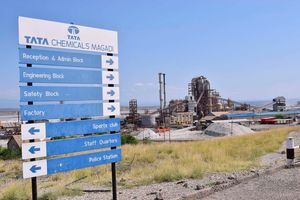
Tata Chemicals Company Magadi factory on June 14, 2025.
Photo credit: Stanley Ngotho | Nation Media Group
An earlier visit by the Nation after the closure painted a picture of a deserted town, characterised by minimal business activity.
Currently, along the Kiserian-Magadi road, women and children queue for hours waiting for water tankers from a nearby General Service Unit (GSU) camp for at least a jerrycan of domestic water per homestead.
“The Tata Company water tankers are no more. We depend on GSU tankers for few a containers of water. Sometimes it can take a week before the tanker supplies us with water,” said Shananga.
At Magadi Level Four Hospital, the number of patients seeking treatment has also dropped significantly. On Monday, the 52-bed facility had only nine patients.
A retired chief, Joel Sayinka, 72, urged the State to intervene to solve the stalemate amicably.
“Let the two warring parties acknowledge lives of hundreds of locals are at stake. They ought to ensure a seamless flow of humanitarian assistance. Availability of a medical facility has reduced infant and maternal mortality, especially from the interior part of Magadi,” said Sayinka.
However, a section of locals lauded the President’s move, pushing for more jobs in all cadres and more CSR projects.