There were serious worries about how this World Cup would turn out. Would Americans, for whom soccer is not a major sport, purchase exorbitantly priced tickets for this drastically enlarged tournament, in which there would be 104 matches compared with 64 in previous editions? And would expanding the field from 32 to 48 teams lower the standard of play?
We need not have worried. This World Cup turned out beautifully. Stadiums in the US, Mexico and Canada were packed, and some of the so-called “smaller” teams proved stronger than the more renowned ones. Headlines such as “Biggest, Giddiest Time for Men” and “A Spectacle That Is Bigger, Brighter and Bolder Than Ever” were commonplace in the American media. The Cup’s miracle team was Cape Verde, the land of Amílcar Cabral and home to just half a million people. It held both finalists, Spain and Argentina, to draws in regular time and almost eliminated Argentina in the Round of 32. More on Africa later.
But behind this glorious tournament, and out of sight of most of the world’s more than one billion soccer lovers, profound changes have been quietly under way within Gianni Infantino’s FIFA, which is radically reorganising the way soccer will be played worldwide.
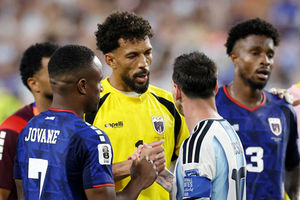
Cape Verde players celebrate after their Group H Fifa World Cup match against Saudi Arabia at Houston Stadium in Texas on June 26, 2026.
Photo credit: Reuters
Hints of these changes had been emerging over the past few months, but most people are unaware that they are part of a much bigger shift centred on FIFA prioritising commercial revenue for itself and giving elite corporate interests a bigger foothold in the game, especially well-funded American ones. Do we really want the Americanisation of soccer when the US has very little soccer history?
The most significant public impact of the Infantino-led changes was the cost of World Cup tickets, which were quadruple what they were at the last tournament. Before the competition started, the average price of the least expensive tickets for a knockout-round match was an astronomical $1,600, thanks to FIFA’s adoption of the “surge pricing” model used by the private sector. The best tickets for the final are now selling for $33,000.
Mr Infantino defended the pricing but seemed tone-deaf in asserting that he was merely following normal private-sector policies. FIFA is a non-profit organisation with very different ideals and goals. Such stratospheric ticket prices are utterly unacceptable for a body whose stated mission is to bring football to the world’s youth and make this universally beloved game a cornerstone of a peaceful, coexisting global culture.
The other major “innovation” we witnessed was even more radical for the game itself. Breaking with 155 years of tradition, FIFA divided 2026 World Cup matches into four periods instead of the traditional two 45-minute halves, in the manner of popular American sports such as NFL football, basketball and ice hockey.
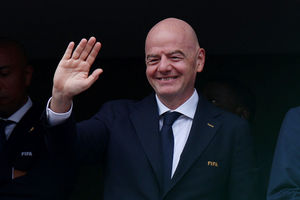
Fifa President Gianni Infantino attends a reception at Trump Tower in New York City on July 17, 2026.
Photo credit: Reuters
The rationale FIFA gave for this change — the hot American summer, which it said required two rehydration breaks regardless of whether conditions were scorching or cool — undermines soccer’s compelling qualities of fluidity and uninterrupted attacking play. The real reason for the breaks, of course, was that they would generate additional billions of dollars in advertising revenue for the powerful corporations that now own virtually every mainstream media outlet.
Headlines such as these reflected the backlash: “World Cup Decision Sparks Outrage as FIFA Could Change Football Forever to US-Style Tournaments” and “FIFA Confirm Radical NFL-Style Rule Change for 2026 World Cup.”
Interestingly, the irrepressible Diego Maradona predicted this would happen when the US was chosen in 2018 as the main venue for the World Cup. He criticised the decision, predicting that the US would use it “to four 25-minute halves to put in commercials. There will be no passion left.”
Ironically, his Argentina turned out to be the major beneficiary of the third change FIFA introduced: new refereeing rules. These sparked the tournament’s biggest controversy during Argentina’s Round of 16 match against Egypt. The Egyptians played with magnificent inspiration and skill, stunning Argentina by scoring in the 14th minute before adding what appeared to be a glorious second goal in the 58th.
Egyptian players remonstrate with referee Francois Letexier after Enzo Fernandez scored Argentina's their third goal in their Fifa World Cup 2026 Round of 16 match at Atlanta Stadium in Georgia on July 7, 2026.
Photo credit: Reuters
It began with a fiery 75-yard run at supersonic speed by Haissem Hassan, who sped past four Argentinian defenders before passing to Mohamed Salah. Salah eluded two defenders and, while running at breakneck speed, beautifully lifted the ball to striker Mostafa Ziko, whose unerring right foot drove it deep into the net. The referee awarded the goal without hesitation, putting Egypt 2-0 up with what many regarded as the finest team goal of the 21st century.
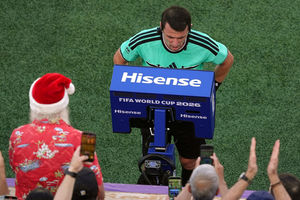
For a full two minutes, there was sheer ecstasy among Egyptians and the tens of millions watching across Africa and much of the developing world. It is not easy to recover from a two-goal deficit. But under the controversial VAR (Video Assistant Referee) system, referee François Letexier was instructed to review the incident on the pitch-side monitor. He returned to announce that Egypt had committed a foul at the start of the move, about 100 yards from the Argentinian goal, and therefore the goal would not stand.
There were literal gasps of disbelief all around. Most commentators and refereeing experts said the Egyptian player had not committed a foul and that, even if he had, it was so minor that it should not have been subject to a VAR review under the rules.
Heroically, Egypt went on to score again in the 69th minute. There was terror on Messi’s face. But in the final 13 minutes, Argentina scored an astonishing three goals. Equally astonishingly, the referee declined to consult VAR over what Egypt argued were far more credible claims of serious fouls, including one on Salah that they believed warranted a penalty. This refereeing scandal will live on in the annals of soccer infamy as a cautionary tale. FIFA must review this scandalous farce.
Fans across the developing world have long been aware of FIFA’s historic — though often restrained — bias in favour of powerful football nations and globally renowned players, since the continued presence of such teams and stars in a World Cup significantly boosts audiences and revenues.
Argentina's Lionel Messi celebrates scoring their second goal against Egypt FIFA World Cup 2026 in the Round of 16 match at Atlanta Stadium, Atlanta, Georgia, US on July 7, 2026.
Photo credit: Carlos Barria | Reuters
But the addition of VAR has greatly increased the possibility of even more subjective or politically motivated decisions. We urgently need a much more transparent system.
America looms large in this new direction. To ensure maximum corporate engagement, Mr Infantino took the bold step of openly politicising FIFA by reaching out to President Donald Trump and awarding him a newly created FIFA Peace Prize last December, even though he had bombed Iran alongside Israel a few months earlier. When he accepted the FIFA Peace Prize, Mr Trump was making violent threats of war against Venezuela and Iran — threats he soon carried out.
Such engagement with a president invariably leads to favours being returned, and Mr Trump did so by asking Mr Infantino to remove the suspension imposed on US striker Folarin Balogun after he received a red card. FIFA obliged.
This new US outreach and focus inevitably come at the expense of FIFA’s raison d’être: to serve the interests of soccer and its young fans worldwide, and to use this universally loved sport to promote global amity and peace.
For tens of millions of young people, this “beautiful game” is both their central pastime and a vital means of social interaction in the world’s impoverished favelas and informal settlements. Soccer is perfectly suited to deprived children because all that is needed is a ball — sometimes homemade — and a little space. That is why three of the greatest players — Pelé, Maradona and Messi — came from Latin America, while Africa is poised to produce the next generation of greats, such as Kylian Mbappé and teenage sensation Lamine Yamal.
To conclude, apart from the new champions who will emerge today, Africa was the biggest winner at this World Cup. Morocco, Egypt and the DRC all played brilliantly. Morocco reached the quarter-finals after defeating the Netherlands, while war-ravaged DRC gave England a huge scare. In addition, players of African origin continued to excel for Western teams, including Kylian Mbappé, Ousmane Dembélé, Jude Bellingham, Folarin Balogun and Lamine Yamal. It was a great World Cup for Africa. Enjoy the final tonight. Let’s go, Spain!