Hello

Your subscription is almost coming to an end. Don’t miss out on the great content on Nation.Africa

Ready to continue your informative journey with us?

Hello

Your premium access has ended, but the best of Nation.Africa is still within reach. Renew now to unlock exclusive stories and in-depth features.

Reclaim your full access. Click below to renew.

Why Kenya’s public finances may take up to five years to stabilise

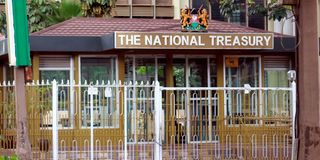
National Treasury

The National Treasury Building in Nairobi.  

Photo credit: Pool

Much has been said about Kenya’s burgeoning debt and its impact on fiscal consolidation.

As stakeholders in the social contract, Kenyans deserve to know how the country got into the debilitating debt situation.

But first, it is critical for citizens to appreciate the processes through which a country generates wealth, income and taxes. The total value of a country’s wealth is referred to as Gross Domestic Product (GDP). A country’s wealth has two components – capital stock and new investments. Capital stock is the capital already in existence.

This is the capital that grows organically, even if no more investments take place. When new investments are added, the capital stock grows faster, thus expanding the GDP at a faster rate.

Higher GDP creates more wealth and income to investors. With more income, the country can collect more taxes to underwrite the cost of governance and debt-servicing. This is the crux of Kenya’s current fiscal situation. For about a decade (2012/13-2021/22), Kenya’s GDP expanded at a slow pace, thus grossly undermining wealth accumulation, income generation and tax revenue. In the period under review, the GDP expanded by a paltry $56.3 billion from $57.4 billion to $113.7 billion, according to the IMF World Economic Review.

To better appreciate the numbers, let’s use the figures for Ethiopia and Tanzania, two neighbouring countries of comparable economic sizes. In the same 10-year period, Ethiopia and Tanzania’s GDPs expanded by $81.47 billion from $37.5 billion to $118.97 billion, and $56.88 billion from $29.1 billion to $85.98 billion, respectively.

Generated more taxes

Kenya generated more taxes than the two countries put together in the same period. Kenya also borrowed heavily from offshore financiers to underwrite infrastructure projects.

In a nutshell, Kenya had a lot more money at its disposal, but performed poorest among the three countries with respect to GDP expansion. It may, therefore, be safely concluded that, in the period under review, Kenya did not apply adequate resources to its productive sectors – agriculture, mining, tourism, manufacturing and ICT – to spur growth. These sectors grew by less than three per cent over the period under review.

Pundits argued that the huge investments in roads and railways had infinitesimal multiplier effects on the economy. This is because large proportions of the building materials, including cement and metals, were either imported or manufactured by the foreign contractors.

At the same time, the government sustained a subsidies that targeted fuel and selected consumer goods such as sugar, flour and bread. Subsidies tend to strengthen demand while utterly neglecting the supply side of the economy.

If subsidies are sustained for long, as was witnessed in Kenya, the economy loses the capacity to produce goods and services, and begins to rely almost exclusively on imports. Payments for value-addition end up in the hands of foreign producers.

Besides huge amounts that were diverted from productive sectors to support consumption, foreign suppliers and a handful of local middlemen ended up pocketing most of it at the expense of ordinary Kenyans.

The economy took a thorough beating for about a decade as the country went on an autopilot mode, with little investments being injected into the capital stock. No wonder, tax revenue sources were equally drying up every year.

In the circumstances, the Kenya Revenue Authority could hardly achieve its targets, yet the cost of governance was quickly skyrocketing. This forced the government to go for domestic and foreign loans for budget support.

Domestic loans

While the domestic loans put upward pressure on interest rates, the foreign debt started burgeoning at unprecedented speeds. Before long, the country was saddled with debt amidst struggling revenue collection. The ratios of debt-to-ordinary-revenue and debt-to-GDP started rising at alarming rates, surpassing the 70 per cent mark.

This is the situation National Treasury Cabinet Secretary John Mbadi and his team have to grapple with. In his endeavour to attain fiscal consolidation, the minister proposed strategies that included additional tax revenue-raising measures, deepening revenue administration restructuring to seal loopholes for tax leakages and austerity to force the government to live within its means.

For these measures to succeed, the government needs the goodwill and support of citizens, something that is largely lacking. The hostility towards the government by young Kenyans has scuttled fiscal strategies, forcing the administration back to the drawing board.

Meanwhile, infrastructure-related offshore loans of the last decade are maturing in rapid succession. More than Sh7 out of every Sh10 of ordinary revenue is being spent on loan repayment, leaving the government with less than Sh3 for recurrent and development expenditure.

At as April, the public debt had topped Sh11.5 trillion, with interest repayment of about Sh1 trillion for this year alone. This is not sustainable.

At the same time, politicians have gone on an overdrive in the propaganda about the economy. They want the government to provide public services to their constituents, the financial difficulties notwithstanding. Some have even thrown caution to the winds and are inadvertently sending wrong messages and negative signals to potential investors, all in the name of political competition. Capital is highly resentful of uncertainty. Whenever politicians cast aspersions on the government’s preparedness to protect private investments, they undermine commitment of private equity into the economy. No investors want to commit their capital to economies that are laden with political risks.

Economy remains stagnant

The result is poor capital formation in the economy. The economy remains stagnant, with low incomes, jobs and taxes being generated. As Mr Mbadi endeavours to steady Kenya’s fiscal ship, detractors are busy undermining his efforts. Some politicians have urged their supporters to hold onto capital and taxes until the current government is out of office.

It is high time we look one another in the eyeballs and tell ourselves that Kenya is bigger than our selfish political interests. As politicians are at it, it must not be lost on policy makers that by this time next year, Kenya will be in a full campaign mode. The stakes will be high in the 2027 elections.

Already, some politicians have promised a duel like none witnessed before. War drums are beating. As should be expected, there will be introduced into the economy huge amounts of campaign cash. The most probable result will be inflationary spiral that may last up to a year before it is stabilised.

In situations of inflation, the value of the national currency goes down. It takes a lot more money to repay offshore loans. If not carefully managed, the envisaged inflation may lead to Kenya going for foreign loans restructuring, thereby extending repayment periods by three or more years.

Mr Mbadi must move cautiously to avoid the pitfalls that followed the 1992 elections, the repercussions of which took about five years to mitigate.

Prof Ongore is a Public Finance and Corporate Governance Scholar based at the Technical University of Kenya. [email protected]