Beyond mourning Raila Odinga: Transforming memory into knowledge
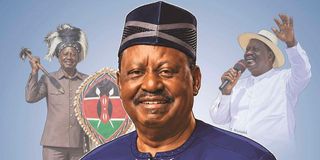
Former Prime Minister the late Raila Odinga.

For weeks leading up to the first anniversary of his passing, Kenya was reminded of what it lost a year ago.
Much has been said about the life and death of Raila Amolo Odinga, a man whose political influence and symbolic power were unlike any other in modern Kenya.
He was no ordinary politician. He embodied a political movement, a national conversation, and for millions, a symbol of resistance, hope, and democratic struggle. Raila Odinga occupied a unique place in Kenya’s public life. He could declare a day of action and bring parts of the country to a standstill. He could reject official authority, march to Uhuru Park, and be sworn in as the ‘People’s President’, and the nation would be compelled to take notice. Whether one agreed with him or not, his ability to shape public sentiment was indisputable.

When his life ended in India, the country found itself confronting an unprecedented moment. Kenya had mourned presidents, freedom fighters, and national heroes before. Yet mourning Raila Odinga demanded something different. Existing protocols seemed inadequate for a figure whose influence transcended formal office and whose political footprint touched every corner of the republic.
When the aircraft carrying his remains landed at Jomo Kenyatta International Airport, convention gave way to uncertainty. How does a nation mourn a man whose significance cannot be measured merely by the offices he held? How does one tell the story of a leader who was simultaneously celebrated, contested, admired, and criticised, yet remained central to Kenya’s democratic journey for more than four decades?
Then, within seventy-two hours, the ceremonies were over. Raila Amolo Odinga was laid to rest in Bondo beside his father, Jaramogi Oginga Odinga. The public mourning ended. But that is precisely where a different responsibility began.
Newspapers and broadcasters document history as it unfolds. Academic institutions, however, are tasked with something deeper. Their responsibility is not only to record events but also to interrogate their meaning, analyse their consequences, and preserve their lessons for future generations. They transform memory into knowledge.
Historic significance
It is within this context that Daystar University’s African Institute for Strategic Communication, Journalism and Media Research, in short, the Afriscom Institute, assumed a critical role. Recognising the historic significance of Odinga’s life and legacy, the institute brought together scholars, researchers, journalists, communication experts, and practitioners for rigorous reflection and debate. The result was the RAO2026
Conference, which concluded last week after two days of intense scholarly engagement.
Yet the conference was never merely about one man. It also showed why institutions such as the Afriscom Institute matter.
Africa is currently experiencing one of the most profound communication revolutions in human history.
Social media, artificial intelligence, digital platforms, and rapidly evolving media consumption patterns are fundamentally reshaping how information is produced, shared, interpreted, and acted upon. Across the continent, communication increasingly influences governance, public health, business, education, climate action, and social cohesion.
Recent history has shown just how consequential communication systems can be. The COVID-19 pandemic exposed the dangers of misinformation. The rapid spread of artificial intelligence is raising new ethical and societal questions. Online networks increasingly shape political discourse, with influence that extends beyond traditional newsrooms. In many respects, the strength of a society now depends on the strength of its communication ecosystem.
Yet despite these realities, much of the theory, research, and intellectual frameworks that guide communication practice continue to originate outside Africa. The continent often consumes knowledge produced elsewhere rather than generating sufficient scholarship rooted in its own experiences, cultures, and realities.
Ethical practice
This is the gap that the Afriscom Institute seeks to fill.
The institute was established to serve as a centre for thought leadership, research, publication, training, and innovation in strategic communication, journalism, and media studies. Its commitment to ethical practice, evidence-based research, and African-led scholarship is both timely and necessary.
If Africa is to shape its own narratives, strengthen democratic discourse, and navigate the complexities of the digital age, it must invest in institutions that produce knowledge rather than merely consume it. The Afriscom Institute represents more than a new academic centre. It is an investment in Africa’s intellectual sovereignty and communicative future.
In spearheading the RAO2026 Conference, the institute gave practical expression to this mission. Scholars from approximately ten African countries gathered to examine Raila Odinga’s life, leadership, political communication, and enduring influence. Their discussions extended beyond biography to broader questions of democracy, governance, social movements, citizenship, and the power of communication in shaping national destinies.
Now that the conference has concluded, the real work begins. The presentations, debates, and reflections will become enduring scholarly resources that future generations can access, study, and learn from. In doing so, the Afriscom Institute is ensuring that Raila Odinga’s legacy does not remain confined to memory or political folklore but becomes part of Africa’s growing body of intellectual knowledge.
The nation has mourned. History has recorded. Now scholarship must interpret.
The writer is dean of Daystar University's School of Communication, language and performing arts.
Follow our WhatsApp channel for breaking news updates and more stories like this.