Correcting the map, rebuilding global trust
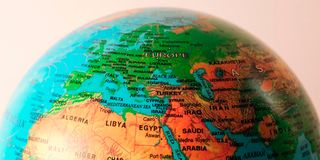
A fair map does not change geography; it changes how we see the world.
What you need to know:
- Africa has 54 countries and more than 1.4 billion people, yet no permanent seat on the United Nations Security Council.
- Some will dismiss the map resolution as symbolic. But symbols influence what people consider normal, possible and important.
On September 4, the United Nations General Assembly voted 164 to 1 to encourage governments, schools, international organisations and technology companies to use world maps that more accurately represent countries’ sizes. Led by Togo on behalf of the African Group, the resolution followed an African Union-backed campaign to correct a distortion that has shaped generations’ understanding of the world.
For me, the vote resonated deeply.
As we prepare for The Trust Summit in Nairobi, we ask why the world struggles to trust Africa, and vice versa. The resolution reminded us that trust begins with seeing one another accurately.


Developed in 1569 for navigation, the Mercator projection distorts relative sizes. Yet Greenland appears almost as large as Africa, which is 14 times bigger. Europe and North America are enlarged, while equatorial regions appear smaller. As Togo’s Foreign Minister Robert Dussey observed, a fair map does not change geography; it changes how we see the world.
Representation shapes perception, and perception influences decisions. African countries often face borrowing costs that constrain investment in infrastructure, health, education and industry. Concerns about credit-rating methodologies and perceived risk have prompted calls for assessments that better reflect countries’ economic realities.
Correct inequalities
The distortion is equally evident in global governance. Africa has 54 countries and more than 1.4 billion people, yet no permanent seat on the United Nations Security Council. When institutions make decisions affecting billions without adequately representing them, questions about legitimacy and trust are inevitable.
Statements alone will not correct these inequalities. Sustained work is needed to demonstrate Africa’s capacity and ensure its institutions are recognised on their merits. At the LéO Africa Institute, I have worked to build a network of young African leaders committed to investing their talent and ambition in the continent. Our programmes draw on agaciro, a Kinyarwanda concept of dignity and self-worth. African leadership should not need external validation to be credible.
At The Trust Summit, we frame this challenge around five ideas: agency, dignity, systems, delivery and identity. Africa must help shape decisions affecting it, be recognised beyond narratives of crisis, and have its courts, universities, regulators and financial institutions judged on their capabilities. It must also be assessed through evidence of achievement, while Africans, including the diaspora, define their place in the world.
These principles will inform The Trust Summit: Nairobi Dialogue on Global Trust, taking place in Kenya from October 21 to 23 under the theme Weaving Trust: Binding Strands for a Stronger Global Order.
We intend to carry this conversation into the proposed Nairobi Call to Action on Global Trust, advancing a simple principle: correct the record. Institutions seeking Africa’s trust must examine assumptions embedded in their data, risk assessments, governance arrangements and public narratives, and change them when evidence demands it.
Accountable governance
There are signs of progress. The African Union joined the G20 as a permanent member in 2023, and the International Monetary Fund added a third sub-Saharan African seat to its Executive Board in 2024. These changes do not resolve the challenge, but show that organised African engagement can advance reform. Such changes matter because trust is built not only through declarations, but through institutions that listen, represent people fairly and make decisions transparently.
Some will dismiss the map resolution as symbolic. But symbols influence what people consider normal, possible and important. An image on a classroom wall can shape how a child in Kampala, Lagos, Nairobi or London imagines Africa—and their own place in the world.
The vote is a beginning, not an endpoint. Global institutions must translate recognition into fairer representation, more transparent financial assessments and decision-making structures that reflect today’s realities. African leaders, too, must match a fairer map with accountable governance, reliable public institutions and measurable results. Recognition cannot substitute for performance; it should create space for performance to be judged fairly. To Africa’s young people, the message is clear: do not mistake the old picture for the limits of your possibilities.
Participate, build, innovate and insist on a voice wherever decisions about the continent’s future are made. The map is beginning to show Africa at its true scale. The task is to ensure our institutions, partnerships and ambitions do the same.
Awel Uwihanganye is chief executive of The Trust Summit: Nairobi Dialogue on Global Trust. Follow him on X @Uwihanganye_A and on LinkedIn: https://www.linkedin.com/in/awel-uwihanganye-58a96b149/


