President William Ruto’s recent address at the United Nations General Assembly was one of the most powerful statements ever delivered by an African leader on the global stage. He spoke with conviction about reforming outdated global systems, about Africa’s right to representation, and about our continent as a source of climate solutions rather than a victim of climate change.
As an African and as a conservationist, I was proud. Here was our president presenting Kenya and Africa as leaders, visionaries, and architects of a climate-resilient future. His words resonated with hope and with a sense of historic responsibility.
But here is the uncomfortable truth: while the world applauds our rhetoric, at home the reality tells a different story.
Our children are not listening to speeches; they are watching what we do. And what they see is deeply troubling.
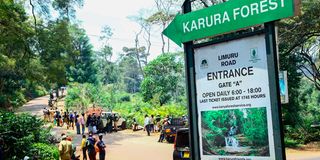
Karura Forest – once a global symbol of citizens’ power to reclaim nature – now facing insane pressure from encroachment and vested interests.
Imenti Forest – threatened by plans to build a state lodge, as though our few remaining old-growth sanctuaries are disposable land banks.
The Mau Forest – Kenya’s water tower – left in deplorable condition despite repeated promises of restoration.
Mangroves – still being destroyed along our fragile coasts, eroding fisheries, biodiversity, and climate buffers.
Sandalwood – a rare and precious species, cut and smuggled with impunity while communities and ecosystems lose irreplaceable wealth.
Urban Forests – Ololua Forest, Ngong Road Forest, City Park and others sliced by train lines and roads in the name of development.
The call to mobilise Kenyans to plant 15 billion trees may sound visionary, but it rings hollow against the backdrop of rampant forest destruction. No number of saplings can replace the living complexity of old-growth forests – the soils, the fungi, the pollinators, the intricate web of life that has taken centuries to evolve.
To suggest otherwise is to fool ourselves. And worse, it teaches our children that we can lie to one another, get away with corruption, and call it science.
If we are to create a citizenry that is inspired, informed, and capable of building a climate-resilient, green, and economically viable future, our people must experience and understand natural ecosystems firsthand.
The recent suggestion of free entry to national parks for children under five or adults over seventy is welcome, but not good enough. Science shows that learning in nature is one of the most powerful ways to reconnect with other beings ; trees, birds, insects.
Given our climate and our challenges, our schools should be great green playgrounds, evidence of respect for nature. Every child should visit a park, forest, or sanctuary at least once a year – not as a day out, but as a day of learning.
Our spectacular nature should not be seen, as some politicians suggest, as wastelands ripe only for development. They should be places for recreation, play, education, art, and entrepreneurship. Our natural spaces are our classrooms and our teachers. To lose them to concrete is the most short-sighted decision any leader can make.
That is why we call for free entry for all children up to the age of 19. Only then can we truly deliver on the promise of a world-class green philosophy.
Mr President, your UN speech made Africa proud. It showed the world that we can speak not as victims but as solution-bearers. But history will judge us not by our words but by our deeds.
Will Kenya protect Karura, Imenti, Mau, Ololua, and our mangroves with the same zeal with which you speak in New York? Will we finally stop the logging mafias, enforce our own conservation laws, and prioritize science and truth over short-term deals?
Children are watching. They will not forgive us if we trade away their inheritance while standing on world stages demanding justice.
This is not a condemnation, but a call. Mr President, you have shown vision. You have the authority, the power, and the opportunity to be remembered as the leader who did not just speak of Africa’s climate leadership but embodied it at home.
Kenya, and the world, needs you to walk the talk.
Dr Kahumbu is a Kenyan conservationist, CEO of WildlifeDirect, and a National Geographic Explorer. She is widely recognised for her work in environmental education, wildlife protection, and championing Africa’s leadership in global conservation. These views are my own.