When most people picture a lion, they imagine dominance—a creature that commands its landscape. But almost a decade of continuous monitoring across the Maasai Mara reveals a fragile truth: Lions are being displaced by the way we use land.
Between 2014 and 2023, Kenya Wildlife Trust (KWT) researchers conducted surveys across eight conservancies and the national reserve, combining lion sightings with data on livestock, vegetation and tourism infrastructure.
The results: Land-use patterns explain 85 per cent of the variation in where lions can or cannot live.
Cattle are the strongest driver of displacement. With cattle abundance, the probability of lion presence drops sharply. Crucially, this avoidance persists even on days when no cattle are present—meaning lions remember and avoid livestock-used zones long after herds have moved on. Sheep, goats and homestead density also push lions away but to a lesser effect.
Where displaced lions retreat, they crowd into semi-closed woodlands, riverine habitats and greener vegetation—the remaining safe spaces. This results in higher competition between prides, reduced cub survival, disrupted social structures and increased conflict along community edges.
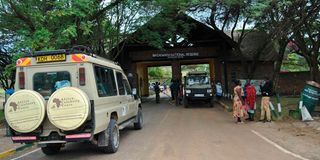
The research also reveals that as tourist camp density increases, that of lions decreases—even after accounting for prey availability and habitat quality. That is, lions are not simply avoiding food-poor areas; they are avoiding us. The cumulative effects—night lighting, generators, vehicle traffic, noise, staff activity—erode lion space over time.
Tourism remains essential to conservation funding and Kenya’s economy. However, the physical footprint of tourism infrastructure is shaping predator distribution in ways we can no longer ignore. This is not an argument against tourism, it is an argument for spatial intelligence.
The Mara does not need less tourism, it needs more thoughtful tourism; not removal of cattle, but balanced grazing. We have the data to plan.
Whether lions continue to rise above the Mara’s grass depends on how seriously we treat science in land-use decisions.