We need to fix the skills gap in Africa’s aviation
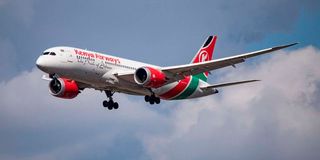
Kenya Airways Boeing 787-8 Dreamliner aircraft.

At Aviation Africa 2026 in Nairobi, one question was unavoidable: as Africa’s airlines acquire more aircraft, who will maintain, operate, finance and digitally support them? Boeing’s 2026 Commercial Market Outlook forecasts Africa’s fleet will grow from 755 aircraft in 2025 to 1,625 by 2045, with airlines receiving 1,165 new aircraft.
Passenger traffic is expected to grow 5.8 per cent annually, while intra-African traffic could more than triple. Aircraft do not create connectivity alone. They need engineers, pilots, cabin crew, controllers, financiers, software specialists and maintenance facilities.
Without that support, a new aircraft is an expensive asset awaiting its next technical delay. Africa will need 75,000 additional aviation professionals by 2045 — 22,000 pilots, 25,000 technicians and 28,000 cabin crew — requiring 3,750 professionals annually.


Training must be treated as aviation infrastructure. Kenya has laid a foundation. The Kenya Airways Pride Centre, with a Metropolitan University partnership, is an important regional training institution. Kenya Airways’ engineering division maintains Boeing 787s, Boeing 737s and Embraer E190s, covering airframes, engines, avionics and interiors.
Kenya Airways Engineering has completed advanced maintenance on Boeing 787 landing-gear systems and major 787 overhaul work, showing African teams can handle complex maintenance once outsourced, reducing turnaround times and costs.
These capabilities are building blocks for a regional services industry. Boeing forecasts the African commercial aviation services market will be worth about KSh18.12 trillion over 20 years, including KSh11.65 trillion in maintenance. None of that value can be captured without people.
Financing training is critical. Training a pilot costs at least KSh8 million, while an engineer or technician costs about KSh7.5 million. Such costs are out of reach for most individuals, although returns benefit airlines, airports, tourism and the wider economy.
Governments, development-finance institutions and industry should establish aviation-skills funds to finance training in exchange for employment pathways. Airlines can work with universities, colleges and manufacturers on apprenticeships, scholarships and type-rating programmes.
Kenya’s National Aviation Policy provides a foundation for capturing a share of Africa’s expanding Maintenance, Repair and Overhaul (MRO) and aviation services market. Measurable targets could create jobs, expand hangar capacity and strengthen Kenya’s regional role.
Digital skills also matter. Health-monitoring systems, predictive analytics and digital maintenance records are reshaping aviation work. Training must produce pilots and engineers who can manage data, safety records and airworthiness credentials.
The 2045 fleet forecast will test readiness. If aircraft arrive faster than trained personnel, growth could produce congestion and disruption. Africa’s aviation future will depend on having enough people to keep aircraft safely, efficiently and affordably in the air.
Follow our WhatsApp channel for breaking news updates and more stories like this.
Mr Obonyo is a public policy analyst. Email: [email protected]