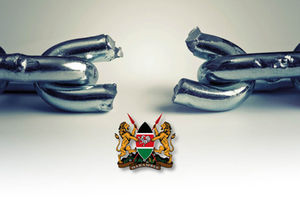
There is a letter of the alphabet that tells the Kenyan story better than any state of the nation address, and it is the humble K. Its two arms spring from a single joint and part company, the upper one carrying the fortunes of the wealthy few ever higher while the lower one drags the many steadily down, and in economic terms this is known as a K-shaped recovery, the joint being a crisis, in our case the Covid pandemic. In Why We’re Getting Poorer , the economist Cahal Moran recalls his father putting it more plainly: the story is about most people getting poorer while some get much, much richer. Kenya lives on that letter, which is why every shiny statistic from State House translates in ordinary homes as an insult, one that will be answered on 10 August 2027.
The same letter is written across India, where the top 10 per cent of earners now take over half of national income while the bottom half’s share has fallen from 22 per cent to 15 per cent, and in June the shape acquired a familiar face when SpaceX’s stock market debut made Elon Musk the first trillionaire.
Kenya’s upper arm shows in the UN’s World Investment Report 2026, which recorded a record $3.2 billion of FDI in 2025, and in the NSE, which crossed Sh4 trillion for the first time in August. That same month, Treasury CS John Mbadi cited rising soda consumption as proof that Kenyans have money to spare, asking who takes sodas otherwise.
Of the 822,100 jobs the Economic Survey counted in 2025, more than 87 per cent were informal. The World Bank warned in July that up to 2.4 million more Kenyans could fall into poverty this year as fuel prices from the Middle East war seeped into food and fares. Safaricom lent Sh1.47 trillion through Fuliza in the year to March, up 49 per cent, while the average loan shrank to about Sh218, and the Central Bank’s own FinAccess survey found that the share of financially healthy Kenyans fell from 39.4 per cent in 2016 to 18.3 per cent in 2024.
Let’s use inflation to try explaining what is happening. Imagine the rich eating only cake and the poor only bread, with cake holding its price over 10 years while bread rises 10 per cent, so the official measure reports 5 per cent, a number that applies to, you guessed it, nobody. Kenya’s October inflation of 7.3 per cent is that kind of average. The Kenya National Bureau of Statistics splits it into core inflation, which leaves out food, fuel and energy and ran at 4.3 per cent, and non-core inflation, which is food, fuel and energy and ran at 15.1 per cent. A family whose money goes on unga, sukuma, paraffin and the matatu lives on the 15 per cent side of that line, while the professional paying rent and soda lives near 4 per cent.
On November 18, President William Ruto told Parliament that his proposition had always been to reduce costs for families and increase their incomes, though no voter was ever consoled by an indicator that has ceased to describe her life. Donald Trump spent this autumn calling affordability a hoax. In November, 3 nearly 9 in 10 American voters told exit pollsters that the cost of living weighed on their vote. Democrats winning both houses in the midterms was a direct message to anyone downplaying the cost of living.
Zohran Mamdani, the Kampala-born democratic socialist elected mayor of New York on a cost-of-living platform, is focusing on what matters most. In June, his appointees froze rents on about 1 million stabilised flats, and he struck a childcare deal with the state, with the government cutting the price of what families cannot avoid buying. It is sound economics too, since unmaintained infrastructure, failing public services and an undereducated, unhealthy population are no foundation for lasting growth, while public spending on essential services repays itself over time.
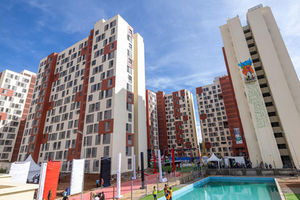
Kenya has taken the opposite road, charging more for services that deliver less. The Social Health Authority takes 2.75 per cent of every salary, yet the Auditor-General found its digital system was procured without competitive bidding and judged the contract against the public interest, and some private hospitals have withdrawn SHA services over unpaid claims. The housing levy raised Sh73.2 billion in 2025, a year in which the Affordable Housing Board counted 1,795 homes completed. The university funding model of 2023 has been rewritten, and in July the President promised yet another, while parents took children to campus not knowing the fees.
The alternative to Mamdani is what the writer Alex Hochuli calls Brazilianization, a country modern but never modern enough, where “the only people satisfied with their situation are financial elites and venal politicians”. Kenya fits uncomfortably well, as a country where a record bourse coexists with a mother borrowing Sh218 on her phone for flour and a clerk paying levies for a house they may never see. The government is welcome to its record FDI inflows, but the voter on the lower arm of the K lives in an alternative reality, and next August she will vote on the 15 per cent she actually pays.