Why Kenya must resist anti-foreigner politics
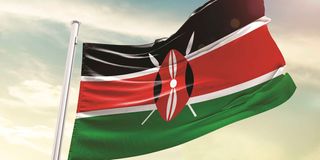
The Kenyan flag.

What you need to know:
- Blaming foreigners may generate temporary political applause, but it rarely generates jobs, growth, or prosperity.
- Kenya's economic challenges cannot realistically be explained by the presence of foreign traders or entrepreneurs.
Political leaders carry a special responsibility. Their words do not merely describe reality, they help shape it. For that reason, leaders must weigh their public pronouncements carefully, especially when discussing groups that may already be vulnerable to prejudice or suspicion.
Recent comments targeting foreigners engaged in business in Kenya are, therefore, deeply troubling. If there are businesses operating illegally, they should be investigated and prosecuted. If taxes are being evaded, the law should be enforced. If criminal activity exists, those responsible should be arrested.
But the target should be unlawful conduct, not nationality. The rule of law depends on this distinction.


A business does not become unlawful because its owner was born outside the country nor does a business become lawful because its owner is Kenyan. The relevant question is whether the law is being obeyed. Once public debate shifts from conduct to identity, society enters dangerous territory.
History offers many warnings. South Africa provides a particularly painful example. For years, frustrations over unemployment, inequality, and economic hardship have periodically been redirected toward foreign nationals. Migrants from elsewhere on the African continent have become convenient targets for public anger. Shops have been attacked. Property has been destroyed. Lives have been lost.
Yet these episodes have never solved the underlying economic problems that allegedly inspired them. Blaming foreigners may generate temporary political applause, but it rarely generates jobs, growth, or prosperity.
Suspicion and hostility
Our own history ought to make us cautious. Kenya is a nation of extraordinary diversity, but it is also a nation in which questions of belonging have often generated political conflict. Throughout our history, communities have occasionally been labelled outsiders in regions where they have lived for generations. Some groups have periodically been treated as if they were less authentically Kenyan than others. At various moments, debates over citizenship, identity, ancestry, and settlement have fuelled suspicion and hostility.
Once politicians begin dividing people into insiders and outsiders, the boundaries rarely remain stable.
Today the target may be foreign nationals. Tomorrow another group may be told that it does not belong. The logic of exclusion is difficult to contain once it is unleashed.
That is why responsible leadership requires precision. Public officials should condemn illegal activities without attaching those activities to entire nationalities or communities.
The irony is that Kenya itself has benefited enormously from openness. Across East Africa and beyond, Kenyans work, invest, trade, study, and build businesses. Thousands of Kenyan professionals contribute to economies outside our borders. Many of them hope to be treated fairly on the basis of their conduct rather than their nationality.
Surely the same principle should apply at home.
Confront entrenched corruption
Moreover, Kenya's economic challenges cannot realistically be explained by the presence of foreign traders or entrepreneurs. Corruption, public debt, unemployment, weak industrial growth, inequality, and governance failures are complex problems with complex causes. They will not disappear because a foreign business closes its doors.
The danger lies in creating the illusion that difficult structural problems have easy scapegoats.
This is where political leadership matters most. Leaders are expected to channel public frustrations toward constructive solutions rather than vulnerable targets. It is easier to identify an outsider than to confront entrenched corruption. It is easier to blame foreigners than to fix regulatory failures. Good leadership chooses the harder path.
There is also a moral dimension to this issue. Kenya remains a predominantly Christian nation. Whatever one's religious commitments may be, Christian teaching has long placed special emphasis on hospitality, compassion, and the humane treatment of strangers. A society shaped by those values should be especially careful about rhetoric that encourages hostility toward neighbours seeking honest livelihoods.
Kindness is not weakness. Hospitality is not surrender. A nation can enforce its laws firmly while treating all people with dignity and fairness.
None of this means illegal conduct should be tolerated. On the contrary, the law should be enforced consistently and impartially. But consistency demands that violations be addressed regardless of whether the offender is Kenyan or foreign. Selective outrage undermines the credibility of the law itself.
Kenya's future will not be secured by turning nationality into a political issue. It will be secured by strengthening institutions, enforcing laws fairly, and ensuring that opportunity and justice are available to all.
When leaders speak, they should build confidence rather than suspicion, unity rather than division. In a diverse nation, words matter. And wise leaders choose them carefully.
The writer is Professor of English and Comparative Literature at Northwestern University, US, where he is also the Melville J. Herskovits Professor of African Affairs. Email: [email protected]