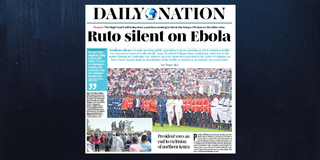
It is an open secret that the headlines of Kenya’s newspapers are circulated in some quarters well before press time.
Some former chief executives of the media firms and senior editors have confessed to being confronted with copies of newspaper pages in various stages of completion, sometimes with demands to withdraw a story or headline.
They have often suspected that moles — human or otherwise — inhabit the newsrooms, and no amount of surveillance has succeeded in unearthing or exposing them.
It is not clear if this was the case on Monday night or a sheer coincidence. At around 9.30pm, the time the press should have been churning out the Daily Nation of Tuesday, June 2, 2026, radio stations in the North-Eastern region began broadcasting an important statement by President William Ruto.
Video clips of the president addressing what has now been described as a Northern Media round table also surfaced on social media.
President Ruto finally confirmed that he, indeed, authorised the establishment of a quarantine centre at the Laikipia Airbase to host Americans following a request by US President Donald Trump.
As the president broke his silence on the matter, the Daily Nation rolling off the press was declaring: “Ruto silent on Ebola”. The NTV had carried a similar report in its 9pm bulletin.
The headline was an expression of mounting frustration and unmet expectations. After a week of vague statements and half-denials by government officials, the media anticipated some clarity from the president.
They did not expect the president to altogether ignore the issue, which had dominated the national agenda, sparked off street demonstrations, and become the subject of a restraining order from the court.
Most national media houses had crews in Wajir, and the major television stations aired the proceedings live to thousands of Kenyans. Why didn’t the president address this hot potato then? Did he not consider it an issue of national importance? Were his handlers, perhaps, unsure of how the crowd would respond and, therefore, advised against it?
Or, could the president’s people have had other ideas?
This was the first time in 63 years that a national event was being hosted in northern Kenya, and the president had an important message to deliver to the residents. In his national address, he vowed an end to the exclusion of northern Kenya.
The president listed policies by his administration to benefit the region, including amending the vetting system to make it easier for the area’s residents to acquire national identity cards, and funding of three extra teacher training colleges.
His team, especially the speechwriter, did a good job of preparing the message for this unique occasion.
Clearly, the communication strategist did not wish to have such a well-articulated issue subsumed by the pesky issue of an Ebola quarantine centre.
So, they must have banked on denying the media a headline about Ebola. They failed miserably. The Nation editors chose to focus not on what the president said, but on what he failed to say. Ebola still made it to the headlines.
In communication, silence on an important issue not only creates an information vacuum but also reflects poorly on the leader. It leaves many questions: Is he hiding something? Does he not care about the concerns being raised about the possible health risks of the planned centre? Will he obey or ignore the court order?
Was the so-called northern media roundtable, which deliberately excluded journalists from national media houses, a desperate attempt to preempt the Daily Nation headline?
Why was the statement made late in the night? In the past, when a statement from the president was expected, his media handlers would prepare editors.
They would even request the editors to “stop press,” or hold the newspaper for a while to ensure the important information saw the light of the next morning. Editors at the Nation say Monday was an exception.
The end result was confused messaging. As online platforms reported the president’s statement, the print media told a different story. News from the president’s statement, which should have been served to readers on Tuesday, was published on Wednesday.
Contact the Public Editor to raise ethical concerns or request a review of published material. Reach out: Email: [email protected] . Mobile number: 0741978786.