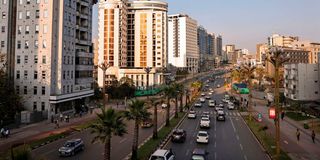
As we step into 2026, Nairobians should look back at 2025 with clear eyes. The year taught us uncomfortable truths about the leadership we tolerate and the standards we accept. While our politicians perfected ribbon-cutting ceremonies and social media photo opportunities, cities across Africa demonstrated what genuine leadership delivers.
“No one visiting the Ethiopian capital Addis Ababa can fail to be impressed by the ongoing metamorphosis of the city,” writes Prof Jon Abbink of Leiden University’s African Studies Centre. He describes a city that feels like “one big building site”, with new and often spectacular structures appearing in no time. But the most powerful symbol of Addis’ shift is not a tower. It is a river.
There is a river flowing through Addis today that would make any Nairobi resident weep with envy; it is clean. You can walk along terraced banks, past manicured parks and cycling lanes, watching families picnic where raw sewage once flowed. In 2025, Addis installed water purification plants, enforced stricter anti-pollution rules, and brought in specialists from the Konso region to terrace riverbanks and reduce flooding. An African capital decided that dirty water was not “normal” and acted like it.
Meanwhile, the Nairobi River ended 2025 exactly as it began: a festering open sewer choking on plastic waste, industrial effluent and broken promises. Governor Johnson Sakaja’s County Integrated Development Plan covers 2023 to 2027. With just one year remaining, delivery should be visible and measurable. Instead, we have been moving in circles, except for the one thing that moves fast: approvals for more glass and concrete, without the pipes and drains to support them.
Functional infrastructure
Nairobi’s development plan promised sewerage coverage would increase from 50 per cent to 80 per cent by 2027. The lived reality is obvious: no city that floods into sewage every rainy season is on track. The plan committed to a “functional public transport system” and bus rapid transport lines, yet we still endure matatu anarchy. The plan promised to decommission the Dandora dumping site, yet the waste still poisons surrounding neighbourhoods. The plan pledged pedestrian walkways and cycling infrastructure, yet Nairobi remains hostile to anyone not in a car. The plan vowed to protect riparian land, yet luxury apartments continue rising on riverbanks like the law is optional for the wealthy.
In 2025, Ethiopia Prime Minister Abiy Ahmed and Addis Mayor Adanech Abebe pushed a 132-kilometre corridor development vision centred on fundamentals: sewerage, drainage, flood management and roads built to last. Addis invested in civic identity too, building the Adwa Museum as a statement that public memory belongs in public space. Nairobi, by contrast, spent 2025 watching heritage bulldozed for speculative high-rises. Addis created pathways for youth to build businesses. Nairobi’s youth were too often used as political goons, mobilised for noise rather than equipped for livelihoods.
Nairobians want transformation. Residents would welcome real urban planning, functional infrastructure and enforced building standards. Nairobi is not a city resisting progress. We are held hostage by leaders and networks that profit more from chaos than order. The only people truly opposed to Nairobi’s modernisation are the ones who make money when things stay broken.
Mr Sakaja presided over this mess through 2025. Nairobi’s revenue climbed to 13.8 billion shillings, yet the city still struggles to convert income into visible development. Money vanished into salaries, allowances and per diems while infrastructure decayed. President William Ruto made the Nairobi River a repeated stage for announcements—multiple clean-up “launches”, each with deadlines and photo opportunities. Yet the river is still black.
Collapsing infrastructure
There is no sewerage expansion matching approved density. What persists is choreography while toxic sludge continues flowing through our capital.
Nairobi’s leaders love invoking Singapore, but you cannot leapfrog to First-World status without the basics. No amount of glass changes the reality of a city that floods into sewage and forces pedestrians to negotiate for survival.
Mr Sakaja has one year to show real movement on his own plan. With 2027 looming, where is the sewerage expansion? When will matatu chaos turn into functional public transport? When will riparian land be protected without exceptions?
This new year must mark a turning point. Nairobians must demand prosecutions for officials approving illegal construction. Demand a public register of every permit issued. Demand signed commitments with delivery measured in kilometres, budgets, and enforcement actions—not speeches. And remember 2025’s brutal lesson: when you vote in clowns, you get a circus, not development.
Addis and Nairobi are not separated by resources or systems. The gap is leadership. Competent builders versus populist performers. Voters who fall for charisma without credentials, promises without track records, and slogans without substance get exactly what they deserve: collapsing infrastructure and rivers that flow black.
When the curtain rises on 2027, Nairobians must either witness the transformation we were promised or remove every leader who failed to deliver. The choice is ours to make. Happy New Year 2026!
The writer is a whistleblower, strategy consultant, and a startup mentor. www.nelsonamenya.com