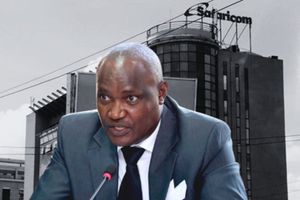
In one stroke, Kenya traded a recurring income stream for immediate cash and handed majority control of its most profitable company to a South African multinational.
What drives many African economies today is not development but liquidity. Quick money, not long-term value, too often determines the direction of policy, investment, and political decision-making. Call it liquidity politics: an operating system where the speed of money matters more than the structure of value.
Development demands strategy, sequencing, and institutional patience. Liquidity politics rewards those who can release funds quickly, distribute opportunities immediately, and convert resources into political credit without delay. The consequences are predictable: consumption grows faster than production, tariffs are adjusted to fill revenue gaps rather than nurture industry, and infrastructure projects are shaped by short-term fiscal needs instead of long-term transformation.
Development is built, not bought
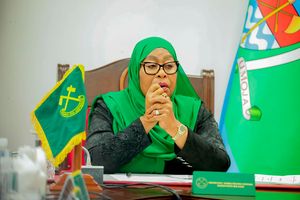
President Ruto embodies this logic. He has repeatedly declared that Kenya needs Sh5 trillion to become a first-world nation, as though development is something you purchase rather than something you build. But if money were the answer, Kenya would already be transformed.
Our debt has quadrupled in a decade, from roughly Sh3 trillion to nearly Sh12 trillion, with little to show for it. The problem was never cash flow. It was capability.
Here is what the government fundamentally misunderstands: the debate over privatisation versus state ownership is a false binary. Whether an asset sits in public or private hands matters far less than whether it is competently managed. Singapore’s Temasek Holdings has been state-owned since 1974. It has grown from S$354 million to S$484 billion, a return of over 23,000 percent in fifty years. Singapore Airlines, Singtel, DBS Bank, and the Port of Singapore remain under its stewardship, generating returns that fund schools and healthcare for future generations.
The secret was not public ownership itself. It was commercial discipline, professional management, and performance accountability.
Kenya tried privatisation before. Martin Meredith’s The State of Africa documents how, during the 1980s lost decade, politicians discovered that privatisation itself could be weaponised for patronage. Assets were sold to cronies at minimum prices, deals conducted in secret, and crony capitalism flourished across the continent. By the decade’s end, nothing had improved. The World Bank finally conceded: “We don’t just need less government but better government. Better governance requires political renewal.”
We learned nothing. Today, Kenya Pipeline is being privatised in processes critics describe as rushed and opaque. The Safaricom sale was a negotiated block trade rather than an open, competitive process. The patterns of the 1980s are repeating.
The contrast with Singapore could not be sharper. When Lee Kuan Yew’s government established Temasek, the objective was to separate the government’s regulatory role from its commercial interests while ensuring assets would be professionally managed for long-term value. Temasek imposed commercial discipline: underperforming companies were divested or liquidated, not protected. Performance determined outcomes.
Kenya operates on the opposite logic. Safaricom and KPC are being sold precisely because they are profitable. CS Mbadi himself noted that other state corporations were unsuitable for privatisation because they have been mismanaged for years. So the reward for building a successful public enterprise is divestment, while the reward for failure is continued state ownership. This is an incentive structure that guarantees mediocrity.
With public debt at Sh11.5 trillion and interest payments now exceeding development expenditure, the government is not unlocking value. It is plugging holes. The World Bank’s May 2025 review was blunt: Kenya remains at high risk of debt distress, with interest payments absorbing roughly a third of tax revenue.
Kenya’s new Sovereign Wealth Fund claims to be anchored on intergenerational savings. But a fund seeded by selling your most valuable assets is not wealth creation. It is wealth transfer: from the public to private shareholders, from future generations to present consumption.
African countries lack an institutional environment that rewards durability over immediacy, coordination over fragmentation, and strategic accumulation over the perpetual search for liquidity. The challenge is to redesign the incentive structures that shape how the economy works in the first place. Until we do, we will keep selling what Singapore would have grown.
The writer is a whistleblower, strategy consultant and startup mentor