As the country prepares for elections, it seems opportune to consider the issues of power and authority, as they are at the heart of the outcome of the choices we shall make. Power is the ability to influence the behaviour of others with or without resistance.
Authority is power that is perceived as legitimate by the social structure. Power is sometimes seen as evil or unjust. Exercising power is, however, endemic to human beings. If power is the ability to get one’s way even in the face of opposition, authority is the power to enforce rules or give orders.
Power closely resembles influence. It is not necessary to use force, threats or coercion in order to be powerful. Power emanates from material wealth, money, property and food, among others. There is also personal or group charisma, ascribed power (such as perceived or assumed abilities) and social tradition.
People use tactics such as information, rewards and threats to influence others. Other tactics include inspiring, demanding, manipulating, humour, negotiating, bullying, collaboration, supplicating, complaining, criticising, disengaging, evading, animus and socialising.
Cleopatra famously used animus. Mandela used inspiration, suffering and sympathy. Mother Theresa used empathy. Hitler used persuasion, fear, manipulation, complaining and bullying. Churchill used inspiration, persuasion and sometimes bullying.
Obama used humour, inspiration and negotiation. Kibaki used collaboration and disengaging, creating a mystic around him that was hard to read.
Sociologists suggest that powerful people are thrice more likely to offer help to a stranger in distress. They call this the “bystander effect”. It is no wonder, therefore, that politicians are regular givers.
On a less charitable note, some experimental psychologists suggest that the more power a person has, the less likely she is to welcome the perspective of others. Simply put, the powerful have less empathy. No wonder many political heavies bully us off the roads and lead lavish lives amidst abject squalor.
Authority, on the other hand, is both recognised and or socially approved. Authority depends on the subordinate person or group consenting to the use of power that is wielded by the superior person or group.
It is this legitimacy that distinguishes authority from force, or coercion. The superior have the right to issue a command and a subordinate an obligation to obey.
Legal authority is based on rules and laws. Traditional authority derives from culture and customs. Individuals with lots of charisma have charismatic authority.
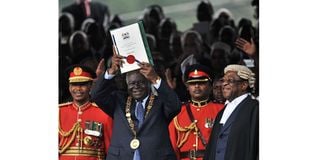
Although he had legal authority as president, most of Obama’s authority derived from his charisma. Kibaki, on the other hand, had both legal and traditional power. The same can be said of Jomo Kenyatta. President Uhuru has both legal and charismatic authority.
Many individuals with power but no legitimacy often use coercion, fear and manipulation. As you make your choices kindly ponder!