Premium
Journalism fast becoming a risky profession
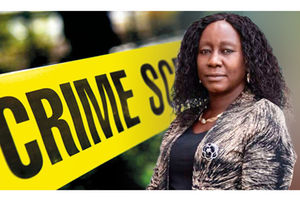
Cecilia Ngunjiri, a journalist who was attacked by police.
Cases of journalists being attacked while on duty are on the rise and it is alarming. On the night of April 9, while covering a police-mounted blockade at Kirobon Girls High School preventing playwright Cleophas Malala from accessing students from Butere Girls High School to rehearse the controversy riddled Echoes of War play prior to their performance at the National Drama Festivals in Nakuru, six journalists from Nation Media Group, Standard Group Limited and Royal Media Services were attacked by police officers who lobbed tear gas on them while some were live on television. A teargas canister struck Citizen TV reporter Maryanne Nyambura on the leg. Standard Group photographer Joseph Kipsang had his camera vandalised.
Despite the extreme force by the police to deter the journalists from covering what ensued, no action has been taken against the officers who assaulted the six journalists. On April 26, Nation Media Group’s Sports photographer Chris Omollo was attacked by police while covering a football match at Dandora stadium. Chris was struck on the head, he lost consciousness and is currently recuperating at home after being admitted to hospital. Again in this instance, no action has been taken by the National Police Service with regard to the police officer who attacked Chris days after the event.
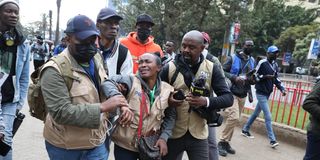
Last year, at the height of the anti-government protests across the country, Mediamax journalist Catherine Wanjeri became the poster child of the unimaginable levels of violence against journalists who were covering the anti-tax protests that had spread across the country. She sustained three rubber bullet wounds to her left leg and had to undergo surgery to remove them.
Industry regulator Media Council of Kenya has often accompanied reports of attacks against journalists with condemnation. However, the weakest link in pursuit of justice for journalists has always been reporting to the same police who are in this case the aggressors.
Article 19 of the Universal Declaration of Human Rights is the foundation of media freedom across the world. With the understanding that one’s right stops at the point another person’s right begins ; it is disturbing to witness extents to which journalists are being subjected to harm. Should this force remain unchecked then it can only spell doom as we head to the 2027 General Election. The Media Council of Kenya reported of 24 journalists being attacked during the June anti-tax protests, but if what has happened this year is anything to go by, this number has so far risen to 30.
While Kenya enjoys a robust media space ranked 9th in sub-Saharan Africa as having a less restricted media environment, there needs to be mechanisms to protect journalists from violence while in the course of duty. In this age of misinformation and disinformation, journalists still have a role to play in the society by providing clarity and sifting through the noise.
This violence is not only physical, but also emotional and psychological. Journalists are now also facing threats on their social media platforms and the intensity of these attacks is expected to increase as the political temperature in the country rises in coming days.
It’s been said that the pen is mightier than the sword, but in the times we are living in, the pen is under attack from all corners. Journalism should never be equated to one being a criminal.
Ms Ngana is NMG Regional Editor for Nakuru