In 1789, the French monarchy discovered that a hungry population could bring an entire political order to its knees. For years, the monarchy had mistaken obedience for loyalty and the suffering of ordinary people for a problem that could be managed with a few concessions. Then the people of Paris stormed the Bastille, and the idea that power belonged to a select few began to crumble.
History is full of rulers who made the same mistake: they believed that because they controlled the institutions, they controlled the people. Kenya's political class would do well to study that history. You can command the police, occupy parliamentary seats and pass laws with a comfortable majority. But you cannot legislate away public anger forever.
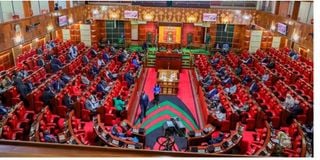
On June 25, 2024, Kenya's young people gave Parliament a lesson in what happens when elected leaders stop listening. MPs had passed the Finance Bill, and thousands of Kenyans took to the streets to oppose it. Protesters entered Parliament. The state responded with deadly force. Young people died, families buried their children, and a generation that politicians had dismissed as politically indifferent forced the country to confront a question: who exactly do our leaders think they are serving?
Two years later, with another General Election approaching, we are once again debating the rules that govern our democracy. This time, the controversy concerns changes proposed to the Elections Act and the question of livestreaming election results .
The Senate passed the Elections (Amendment) Bill, which proposed changes to Section 39 of the Elections Act, the provision governing the transmission, tallying and declaration of election results. The National Assembly subsequently deleted Clause 22, which contained the proposed changes. The Assembly maintains that it did not adopt those changes, and the Bill must return to the Senate for consideration of its amendments.
To be precise, the National Assembly has not passed an amendment removing the livestreaming provision through this particular vote, according to its own explanation. But the controversy surrounding the Bill deserves public attention. We are approaching an election in a country where the consequences of electoral distrust are well documented.
Kenya does not need another lecture about the importance of peace. We have heard enough of them. What we need is a political class that understands why peace cannot be built on citizens simply accepting whatever decisions are made on their behalf.
The 2007/2008 post-election violence remains one of the darkest chapters in our history. More than 1,000 people died, hundreds of thousands were displaced, and communities were torn apart.
Livestreaming is not the only way to guarantee credible elections, and nobody should pretend that switching on a camera automatically prevents electoral malpractice. But the public's ability to follow results as they arrive provides an additional layer of visibility. The philosopher Étienne de La Boétie wrote about the strange relationship between power and obedience: rulers often remain powerful because ordinary people continue to participate in the systems that sustain them.
Our MPs need to understand that their greatest protection is not a parliamentary majority. It is the confidence of the people they represent.
This is why I believe MPs need to go back to fearing their citizens. Not fearing violence or threats, but fearing the consequences of betraying public trust. They should worry about the voter who remembers how they voted on the Finance Bill. They should worry about the constituent who asks difficult questions about electoral reforms. They should worry about losing an election because the people have decided that their record does not deserve another term.
Parliament is supposed to check the Executive, scrutinise legislation and protect the public interest. Yet our biggest institutional weakness can sometimes be the very people elected to defend us.
When politicians return to their constituencies in search of votes, Kenyans must remember that elections are also an opportunity to judge their conduct. Ask your MP what position they took on the Finance Bill. Ask what they have done to defend constitutional rights and protect electoral transparency.
The ballot is one of the few instruments that allows ordinary citizens to remove those who have failed them without having to ask permission from the people in power. We should use it deliberately. Organise. Question. Attend public participation forums. Kenyans must remain alert to proposals that affect the credibility of the 2027 elections. Transparency must never become a political inconvenience.
The French monarchy did not collapse because the people suddenly discovered that they were suffering. They had suffered for years. What changed was their willingness to accept that suffering as the natural order of things.