President William Ruto’s November pitch to spend 4.5 trillion shillings to make Kenya a “first world nation” by 2055 mistakes money for transformation. If cash alone created prosperity, we would already be Singapore.
Over the past decade our public debt jumped from roughly 41 per cent of GDP in 2014 to a projected 78 per cent in 2024; in shilling terms it rose from about Sh6.7 trillion in June 2020 to roughly Sh10.6 trillion by July 2024, yet the quality of services, the predictability of rules, and the trust that citizens and investors place in the state have not kept pace. You can announce an impressive number, but without the scaffolding of integrity, competence and accountability, the result is waste, not wealth.
We have seen this movie before. In the 1980s and 1990s, African governments queued at the Bretton Woods window and swallowed structural adjustment. The script was familiar, privatise the parastatals, cut spending, liberalise the market. Politicians resisted until they learned a new trick, the sale itself could be used for patronage mush as state run parastatals were run. Assets shifted to friends and financiers at throw away prices, deals were concluded in secrecy, and when the dust settled citizens were left with neither efficient services nor stronger institutions. Even the lenders eventually conceded the obvious. Economic reform without better governance is a dead end.
Fast forward to today and the temptation to repeat old errors is alive. Parliament has cleared the path to sell Kenya Pipeline Company, targeting roughly Sh100 billion in proceeds against an indicative valuation near Sh120 billion amid minimal transparency for taxpayers who own the asset. We are told, again, that privatisation will unlock efficiency and new investment. Perhaps it could, if the process were clean, the data rooms were public, the valuations independent, and the proceeds fenced to clear specific, audited obligations. Without those guardrails we are not modernising. We are recycling the 1990s with better suits and brighter slogans.
Kenya’s grand transformation
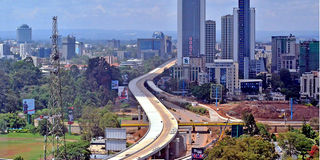
Even the arithmetic of the Sh4.5 trillion dream is unconvincing. Britain spent about £18.9 billion to build the Elizabeth Line, a single railway crossing one city — roughly Sh3.2 trillion for one project. Kenya’s grand transformation pot would be barely larger than that, yet it is supposed to deliver national highways, airports, power plants, irrigation schemes, urban transit, water networks and digital infrastructure across dozens of counties over three decades. Development is not a wish list. It is a costed pipeline that survives contact with reality. When numbers do not add up on paper, they will not add up in the field.
Kenya is edging away from free education just when we should be expanding it, deepening quality and aligning it to the jobs of the future. For perspective, in the latest PISA 2022 assessment, Singapore ranked first overall, No. 1 in mathematics, reading and science, and also topped the new Creative Thinking domain. Human capital is our single greatest resource, more valuable than any mineral or megaproject. When a bright child from Kisii or Turkana is priced out of school, the country loses an engineer, a nurse, a teacher or an entrepreneur. We keep talking about productivity while stripping the pipeline that creates it.
Predictability matters just as much. Investors and citizens can live with high taxes if the rules are stable, the services reliable and the courts trusted. What they cannot price is chaos. In recent years businesses have faced shifting tax guidance, abrupt policy pivots and contradictory signals from regulators. Importers have seen levies morph between order and delivery, small firms are treated like targets rather than partners, and counties layer their own tolls on top of national uncertainty. The result is an environment where only the well-connected can plan, because only the well-connected can get exceptions when the rules change. That is not how you build a competitive economy.
Capacity also matters. The quality of people in charge is policy in practice. Appointments made for factional balance instead of mastery leave ministries hollow and agencies adrift. Nairobi, the country’s commercial heart, is a daily case study in what happens when leadership outpaces competence. Garbage piles up, drainage fails, permits multiply while sidewalks vanish, and the city’s most valuable assets, its green spaces and liveability, are surrendered to unplanned concrete sprawl. If the public sees impunity at the top and lawfare against dissent at the bottom, if peaceful protesters are abducted while cronies are embraced, any talk of investment climate will sound like a bad joke.
Kenya does not need Sh4.5 trillion to become a first world country. If we build a predictable, competent and honest state, the money will come, the projects will get done, and the social fabric will hold. If we do not, we will spend another decade selling the family silver to political cronies while telling ourselves we are becoming Singapore. We know what we are doing wrong. The question is whether we care enough to change course.
The writer is a whistleblower, strategy consultant and start-up mentor. www.nelsonamenya.com