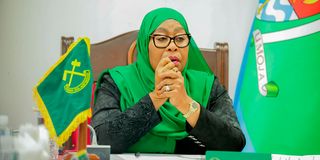
The blood had barely dried on Tanzania’s streets when the applause started. Samia Suluhu Hassan was declared the winner with roughly 98 per cent after an election that observers said did not meet democratic principles.
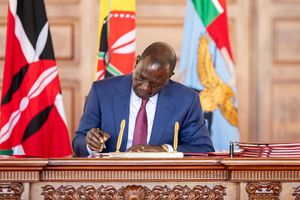
Opposition figures and rights networks counted deaths in the hundreds, with Chadema putting the toll near 700. In the face of that, regional leaders rushed to send congratulations. Kenya’s President William Ruto called for dialogue and tolerance as he hailed her win. Uganda’s Yoweri Museveni praised the result as reflecting Tanzanians’ confidence. Zimbabwe’s Emmerson Mnangagwa chimed in. Somalia’s Hassan Sheikh Mohamud added his own congratulations. Zambia’s Hakainde Hichilema travelled to Dodoma and offered a supportive address at the inauguration. The African Union Commission chair issued congratulations, adding only a brief expression of regret for the loss of life. This was not leadership. It was a choreographed display of impunity.
One African body did its job. In its preliminary statement, the SADC observer mission said plainly that “in most areas, voters could not express their democratic will” and that the 2025 election “fell short of the requirements of the SADC Principles and Guidelines Governing Democratic Elections.” It also flagged “covert acts of generalised intimidation,” highlighted arrests of opposition figures including Tundu Lissu, and noted that such actions “appear to create an uneven political playing field” that discourages participation. SADC even recorded its own observers being aggressively interrogated in Tanga, with passports seized and photos forced to be deleted. In a season of ritual applause, SADC chose the truth, and that choice matters for Tanzanians and for the region’s credibility.
Chorus of congratulations
What this chorus of congratulations does is create moral hazard at scale. If leaders believe peers will validate any outcome so long as the streets are controlled, then the incentive is to tighten fists rather than fix rules. The message to every interior minister is simple. Close the internet, flood the streets with riot police, manage the optics, and the region will call it stability. That is how constitutional promises turn into stage props. It is also how citizens lose faith in ballots and drift toward the kind of dangerous politics that nobody can control once it ignites.
The costs are not abstract. Opposition and civil society say hundreds were killed in Dar es Salaam, Mwanza and beyond. The UN and major outlets reported credible evidence of lethal force and urged restraint. On the ground, curfews, internet blackouts and security deployments stalled ordinary life. When leaders validate this with congratulatory notes, they send a simple message to every police commander on the continent: fire first, legitimacy will be handled by the summit communiqué later.
Julius Malema once dismissed the AU as a club of old fellows who protect each other and never call each other out. You do not have to agree with Malema on everything to see how this week made his charge look uncomfortably accurate. The point is not to sneer at institutions. It is to force them to live up to the charters they cite.
Kenya cannot treat this as a neighbour’s headache. Our exporters, our airlines and our Northern Corridor logistics depend on predictability in Tanzania. Each time an election is settled by force, the region’s risk premium widens, trucks idle and tourism thins. Congratulating a colleague after a bloodstained process may feel like diplomacy, but to the market it reads as rules are flexible. That is expensive for wananchi who pay in fares, food prices and lost shifts.
Rule of law and free choice
There is also a civic lesson here that we cannot outsource. Kenyans should insist that our foreign policy reflect what we preach at home. If we claim to defend life, rule of law and free choice in Nairobi, then we should not applaud their opposites in Dar. A clear public position from Parliament and a principled statement from opposition and civil society would not be interference. It would be alignment with the standards we say define us.
The responsible path is simple. Treat SADC’s observation as the baseline and publicly adopt its recommendations. Pair that with an African led push for accountability so victims are counted, evidence is preserved and reforms are unavoidable. That protects both Tanzanians and the region’s economy.
Democracy, like justice, must be seen to be done. When a president who claims 98 per cent takes the oath as hospitals and morgues fill and streets are sealed, there is nothing to applaud. When neighbours cheer anyway, it is not African unity. It is unity in impunity. The young Tanzanians who marched were not begging for foreign saviours. They were asking for a voice in their future. If hundreds of deaths cannot move this region to act, what will. What these leaders have failed to see is that the world is shifting. Africa’s Gen Z, the most consequential share of our population, wants real structural change and they will get it.
Mr Amenya is a whistleblower, strategy consultant and startup mentor. www.nelsonamenya.com